Learning and Impact: Selected Work
I build the measures, feedback practices, and decision processes that let staff, leaders, and partners see whether their work is making a difference. These five case studies come from a university career center, a national network of career centers, a national credentialing organization governed by volunteers, and grant and fellowship programs I have run and served on.
- 50+ initiatives moved from activity counts to a progress measure
- 6 to 7.5 peer advising Net Promoter Score after a listening-led redesign
- 27 program outcomes ratified by a volunteer faculty workgroup
- $250K grant program designed and run, from rubric to outcome report
Jump to a case study
01 → Replacing the metrics we inherited, and redesigning around a Theory of Change
02 → Listening before redesigning
03 → A credential quality framework
04 → Building outcomes with the people who own the decision, and running grants from both sides
01. Replacing the metrics we inherited, and redesigning around a Theory of Change
DePaul University, Director of Career Education
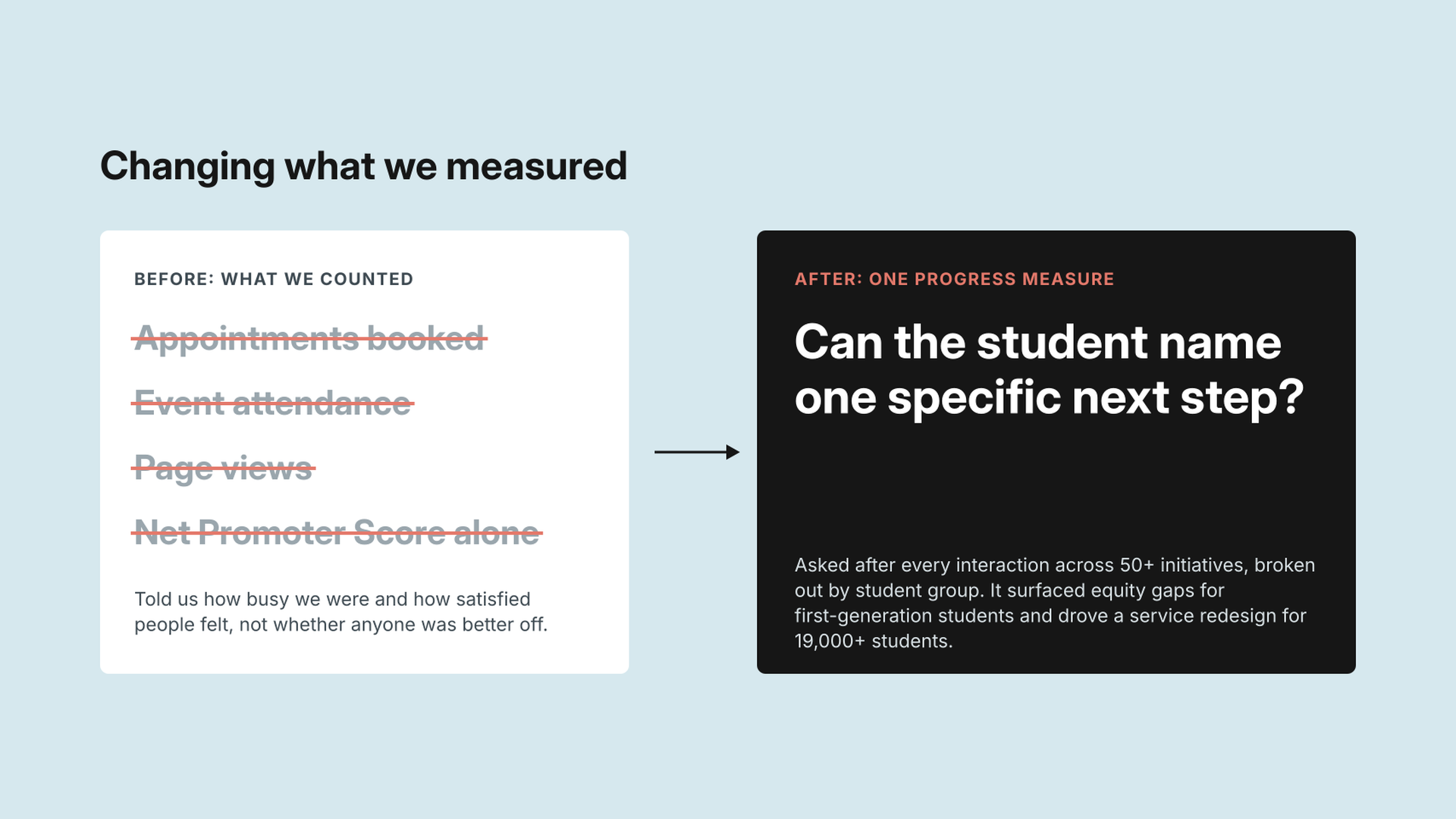
Our numbers told us how busy we were and how satisfied people felt, not whether anyone was better off. I changed what we measured, then used a Theory of Change to rebuild how the center was organized.
The problem
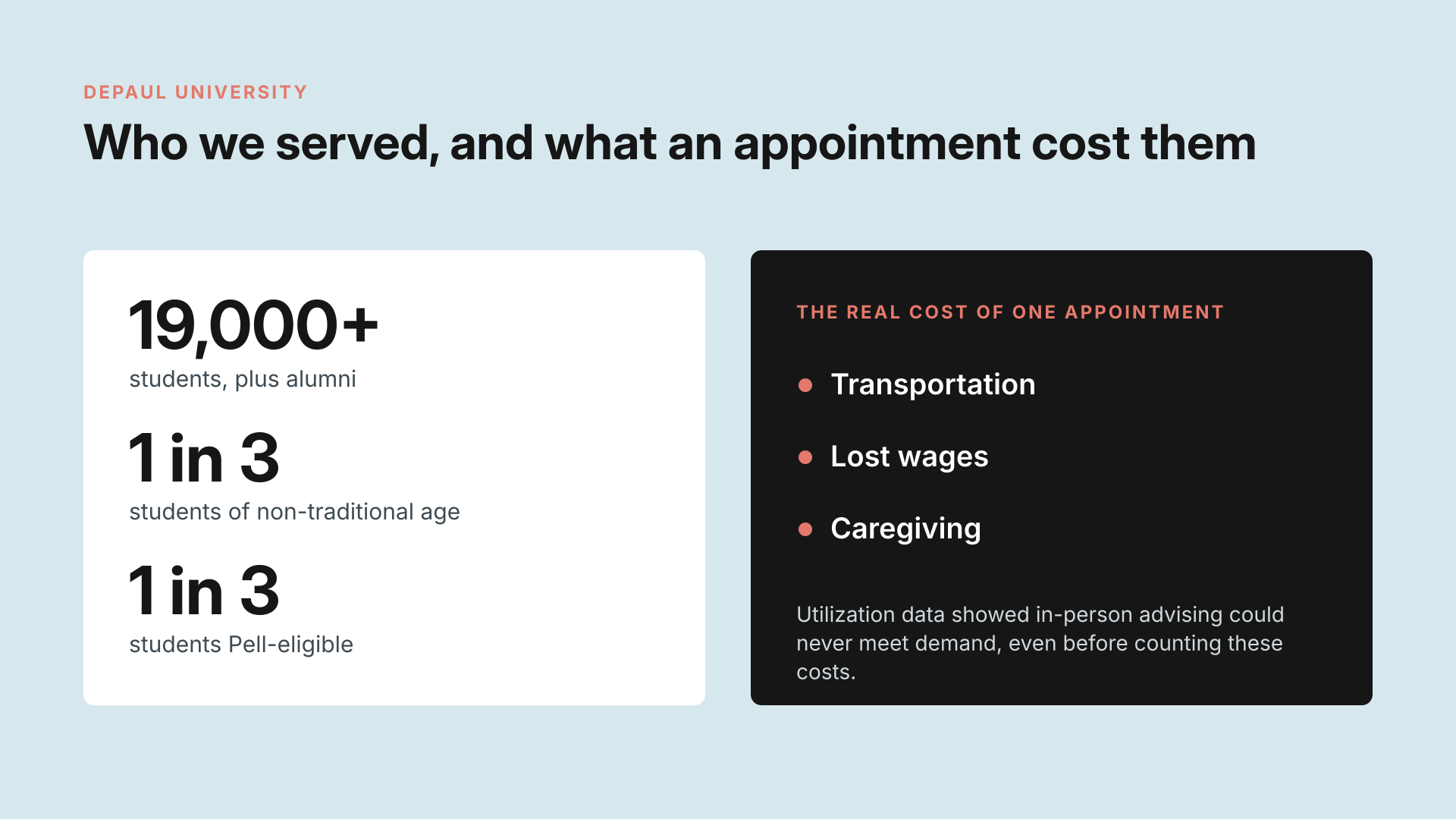
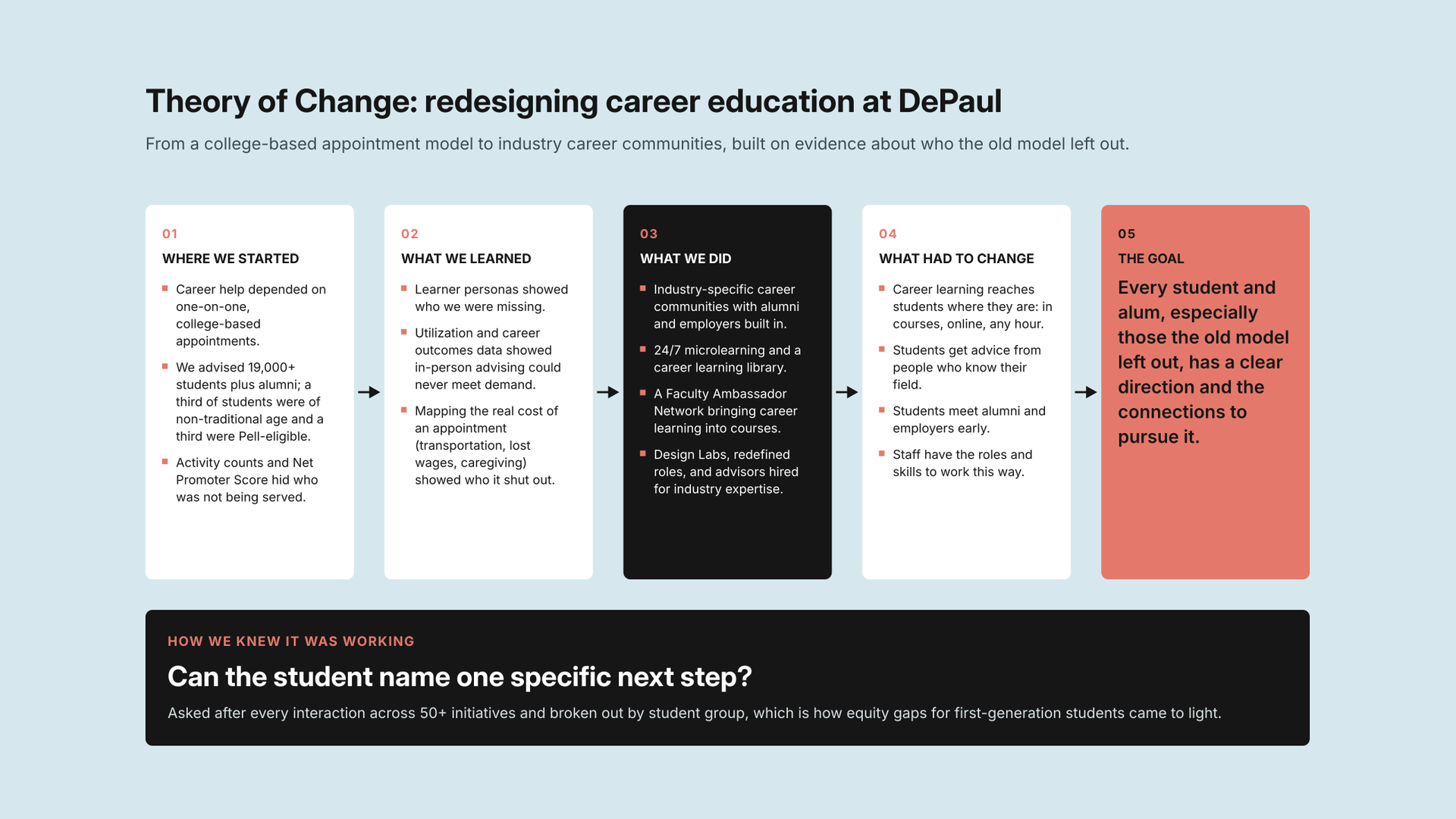
We advised more than 19,000 students plus alumni, and a third of our students were of non-traditional age and a third were Pell-eligible. Yet career help depended on one-on-one, college-based appointments. We counted appointments, event attendance, and page views, and tracked Net Promoter Score on its own. None of it told us who was not being served or whether an interaction helped anyone move forward.
What we learned
Learner personas showed who we were missing. Utilization and career outcomes data showed that in-person advising could never meet demand. Mapping the real cost of an appointment, including transportation, lost wages, and caregiving, showed who that model shut out.
What I did
- Replaced activity counts with one progress measure across 50+ initiatives: after any interaction, can the student name one specific next step?
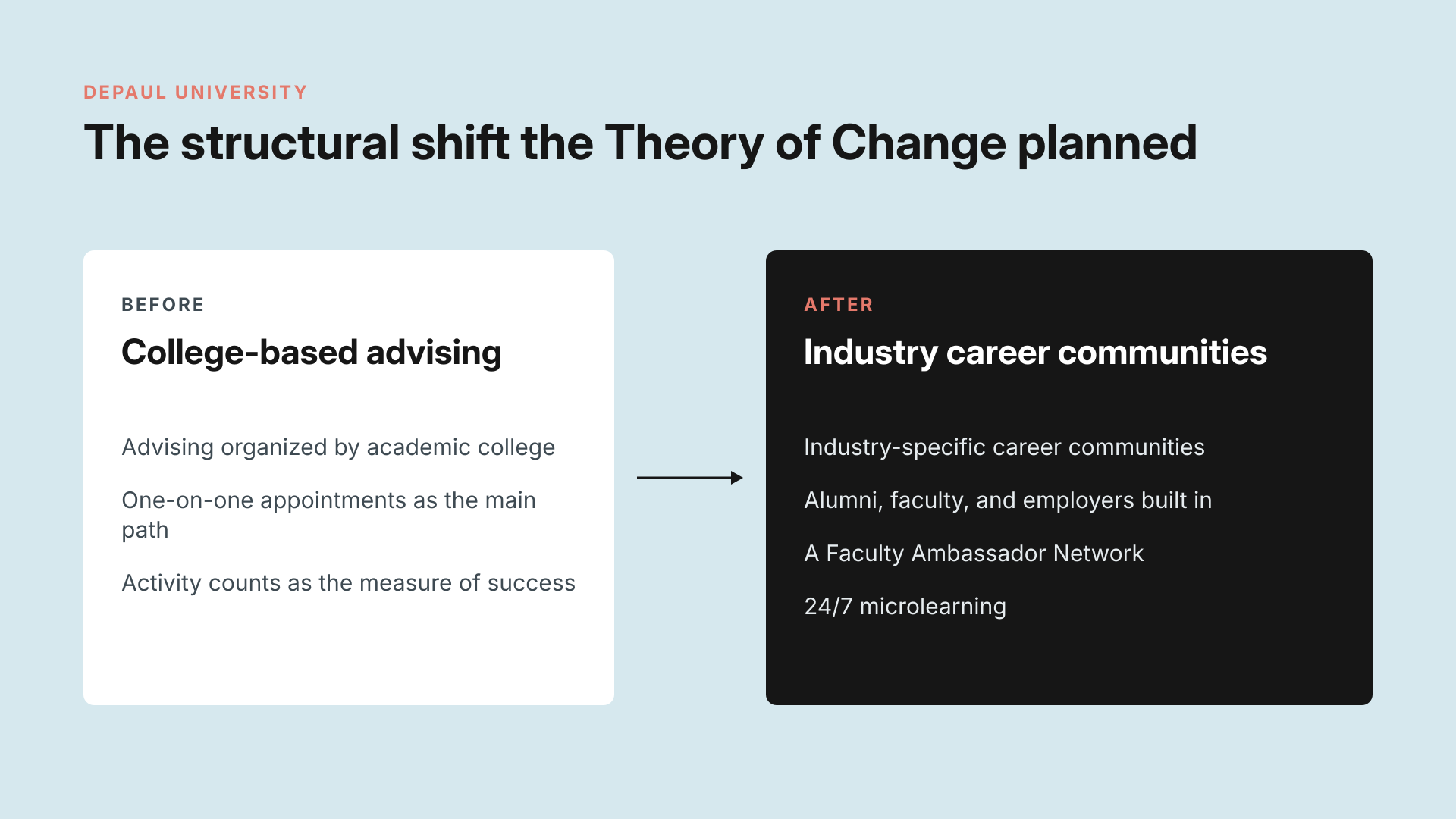
- Used a Theory of Change to plan the move from college-based advising to industry-specific career communities that brought in alumni, faculty, and employers, supported by 24/7 microlearning and a Faculty Ambassador Network.
- Designed and facilitated the Design Labs that helped staff understand the new model, shape it, and move into redefined roles with clear competencies.
- Led the learning outcomes, success metrics, and assessment plan in the center's three-year strategic plan, and contributed to its data goal.
What changed
The progress measure surfaced equity gaps for first-generation students that the old numbers had hidden, and those findings drove a redesign of services for more than 19,000 students. I wrote about this approach in my essay Beyond the Metrics We Inherit.
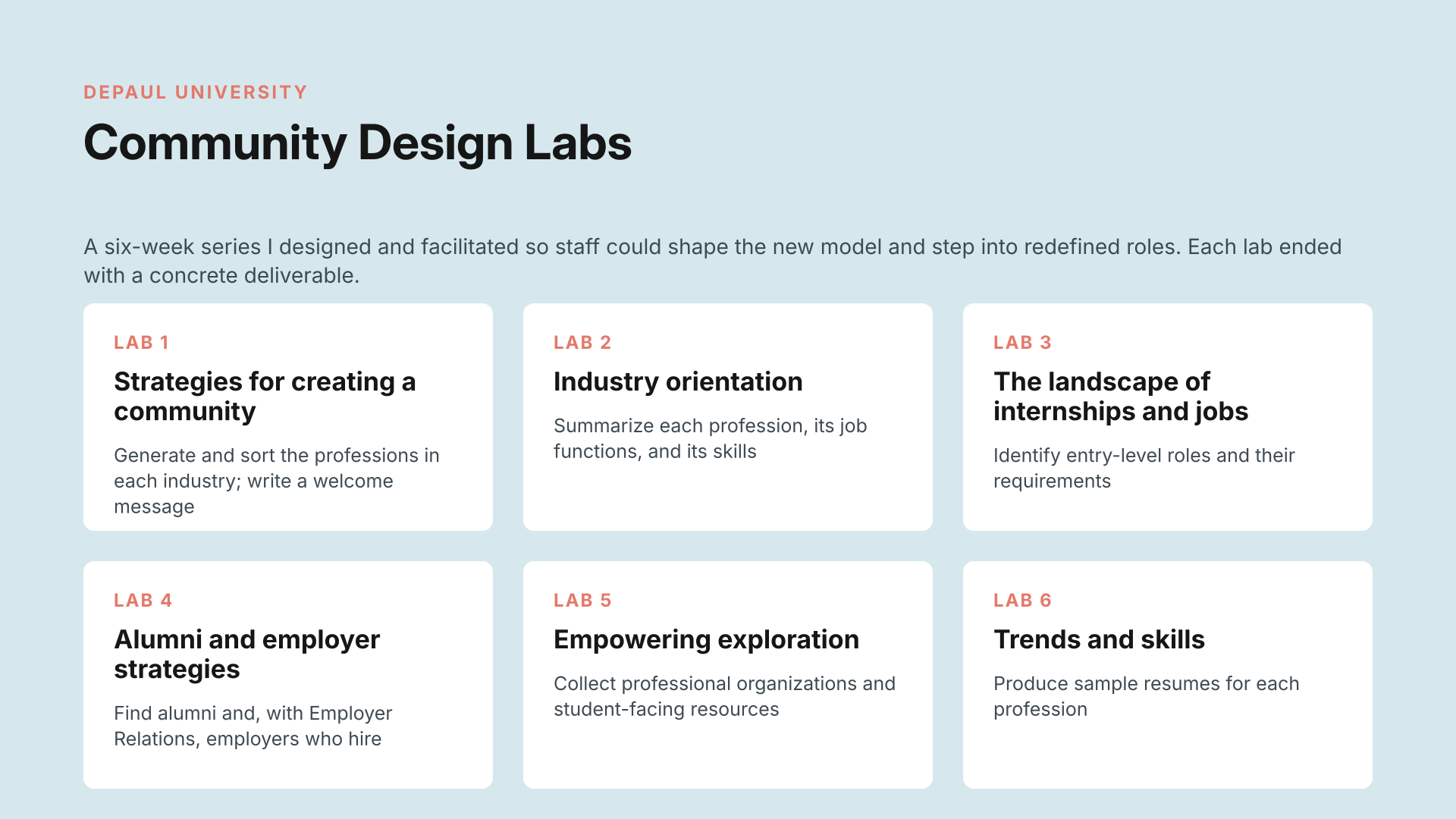
5 slides · swipe or scroll sideways · tap a slide to open it full size
02. Listening before redesigning
DePaul University, peer advising redesign
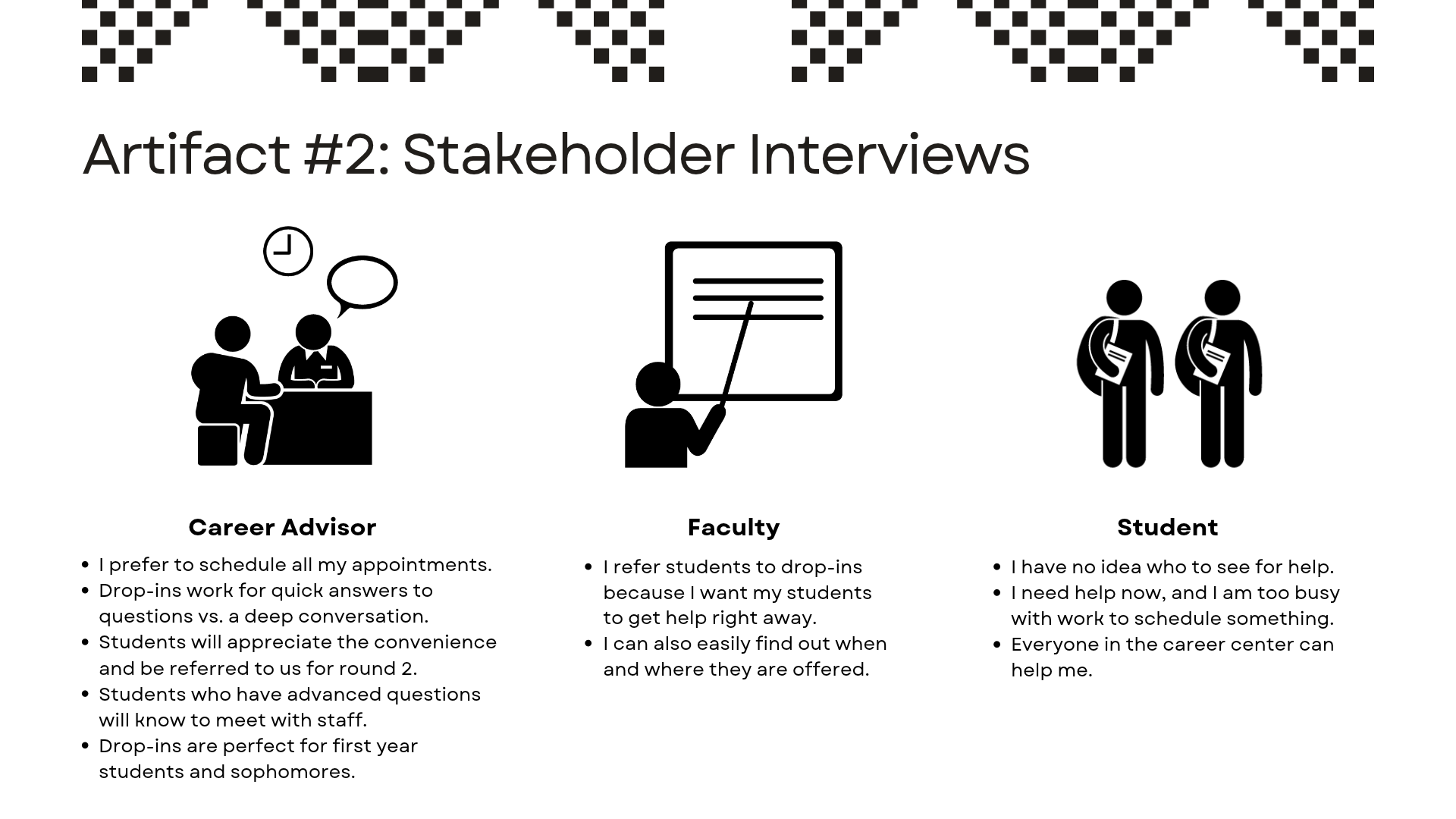
A service everyone assumed was working had the lowest satisfaction scores we offered. Instead of fixing the service we had, I asked the people using it, and the people sending students to it, what they actually needed.
What the data showed
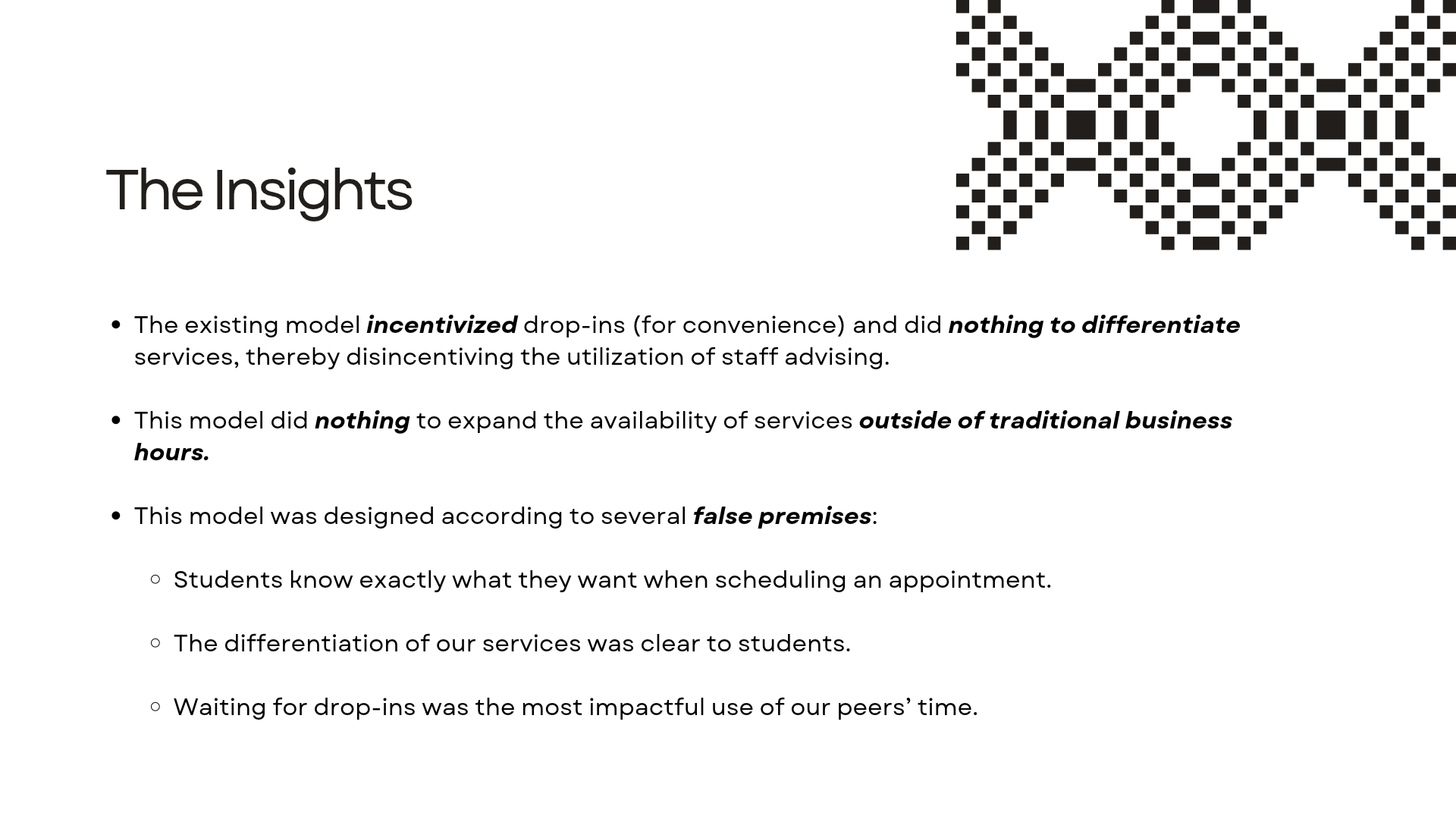
- Peer drop-in advising had our lowest Net Promoter Score.
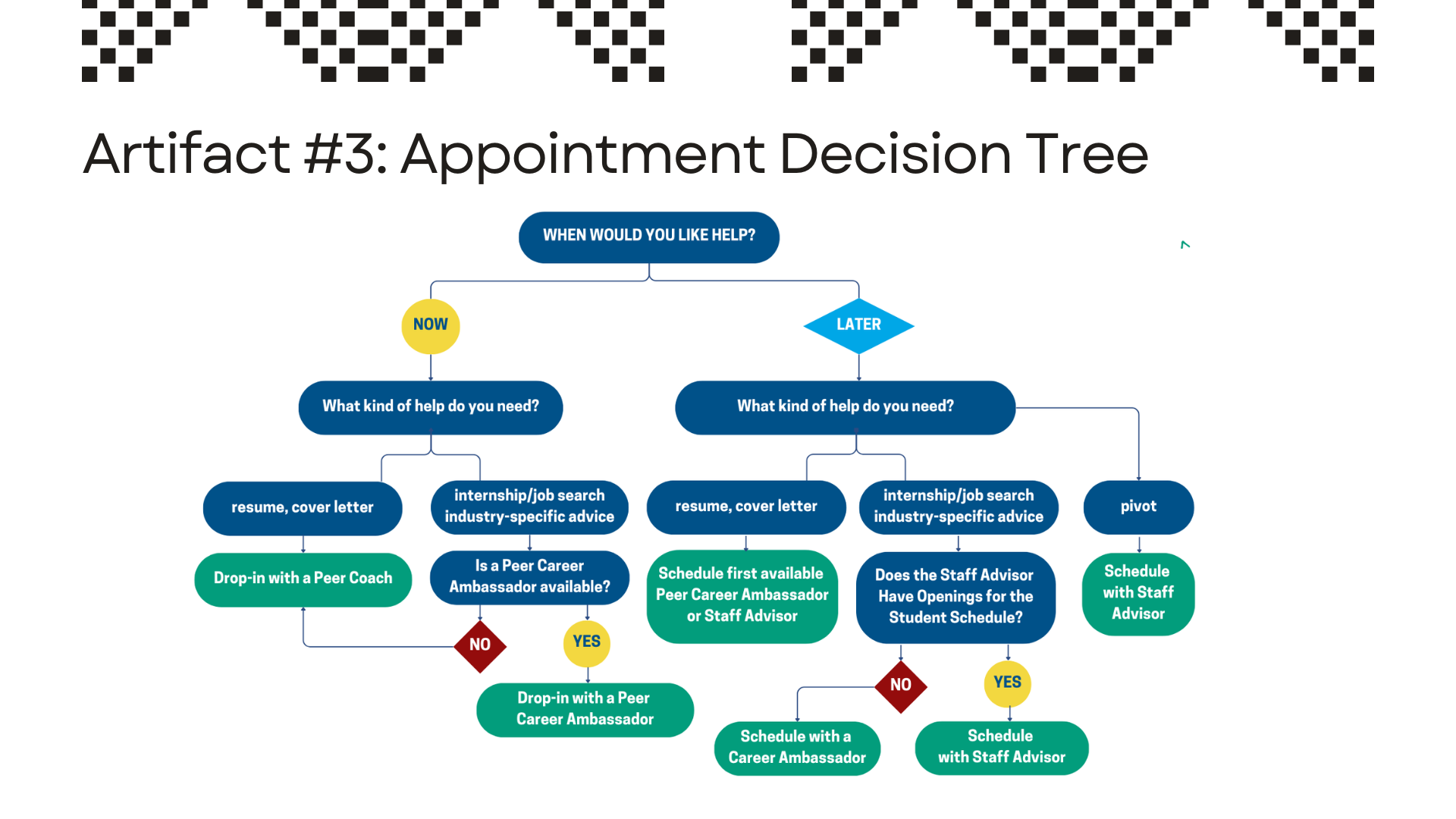
- Staff advising hours went unfilled while peers sat idle, then faced long waits.
- Most drop-in users were alumni, graduate students, and seniors, not the first-year students the service was built for.
I designed and led the evaluation and the new service model, and collected and analyzed the Qualtrics and Handshake data, working with the associate director who led our peer team and the front desk coordinator whose observations started the inquiry.
What changed
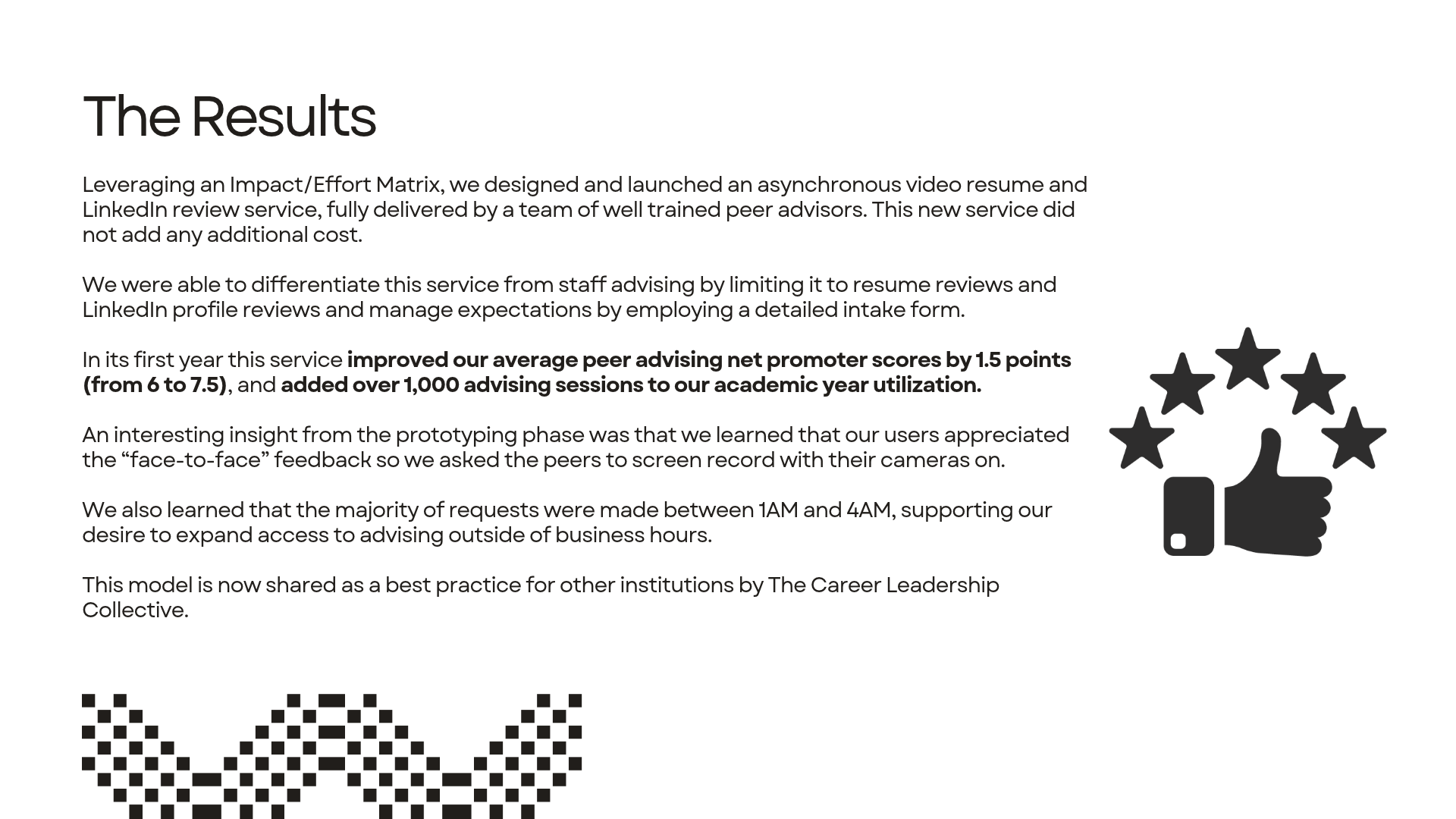
- Peer advising Net Promoter Score rose from 6 to 7.5 in the first year.
- The new asynchronous video resume and LinkedIn review service added more than 1,000 advising sessions a year at no added cost.
- Most requests arrived between 1 and 4 a.m., confirming the need for help outside business hours.
The Career Leadership Collective now shares this model with other institutions as a best practice, and I later trained member institutions in the same methods. The slides below are from the original case study.
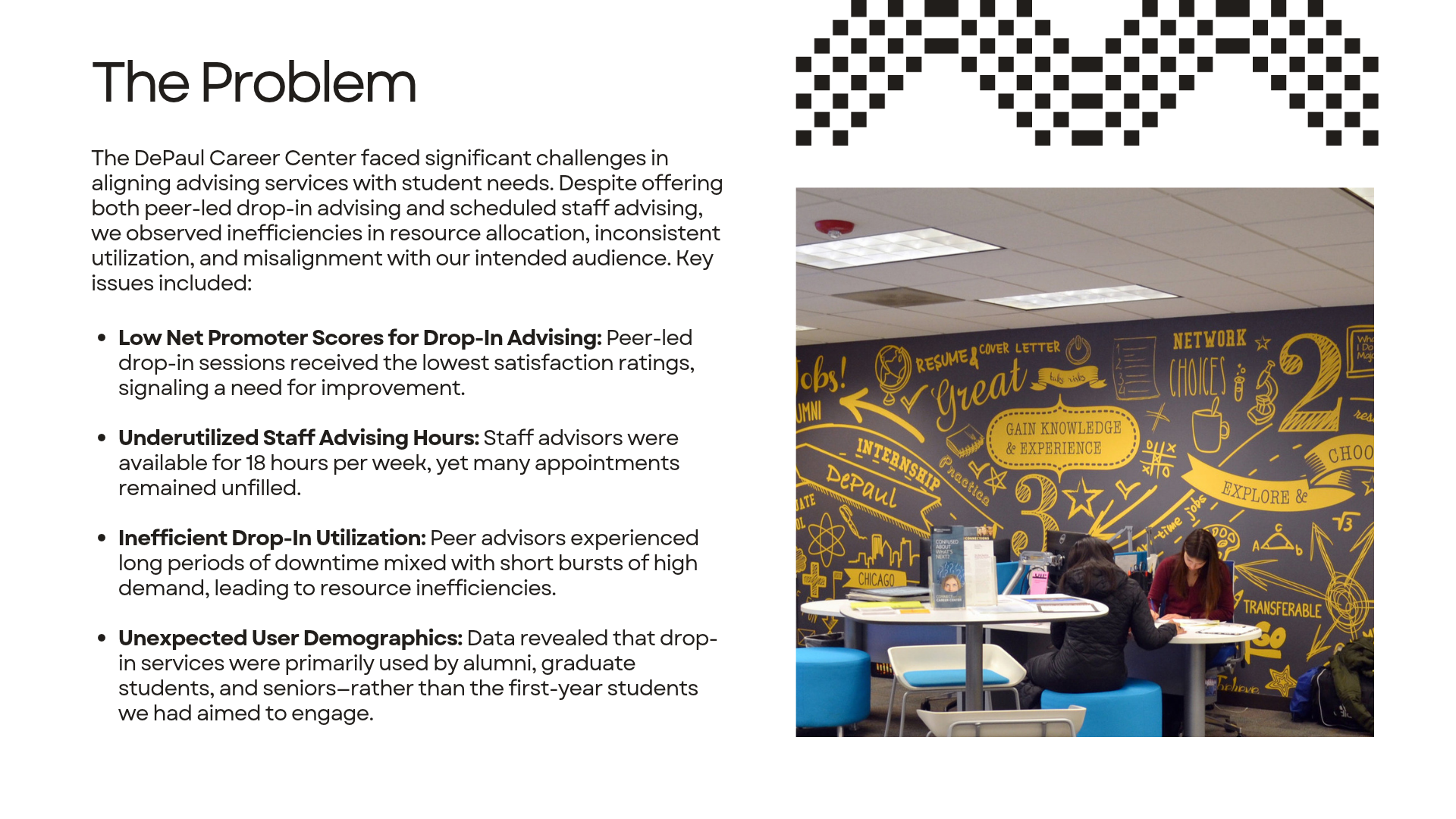
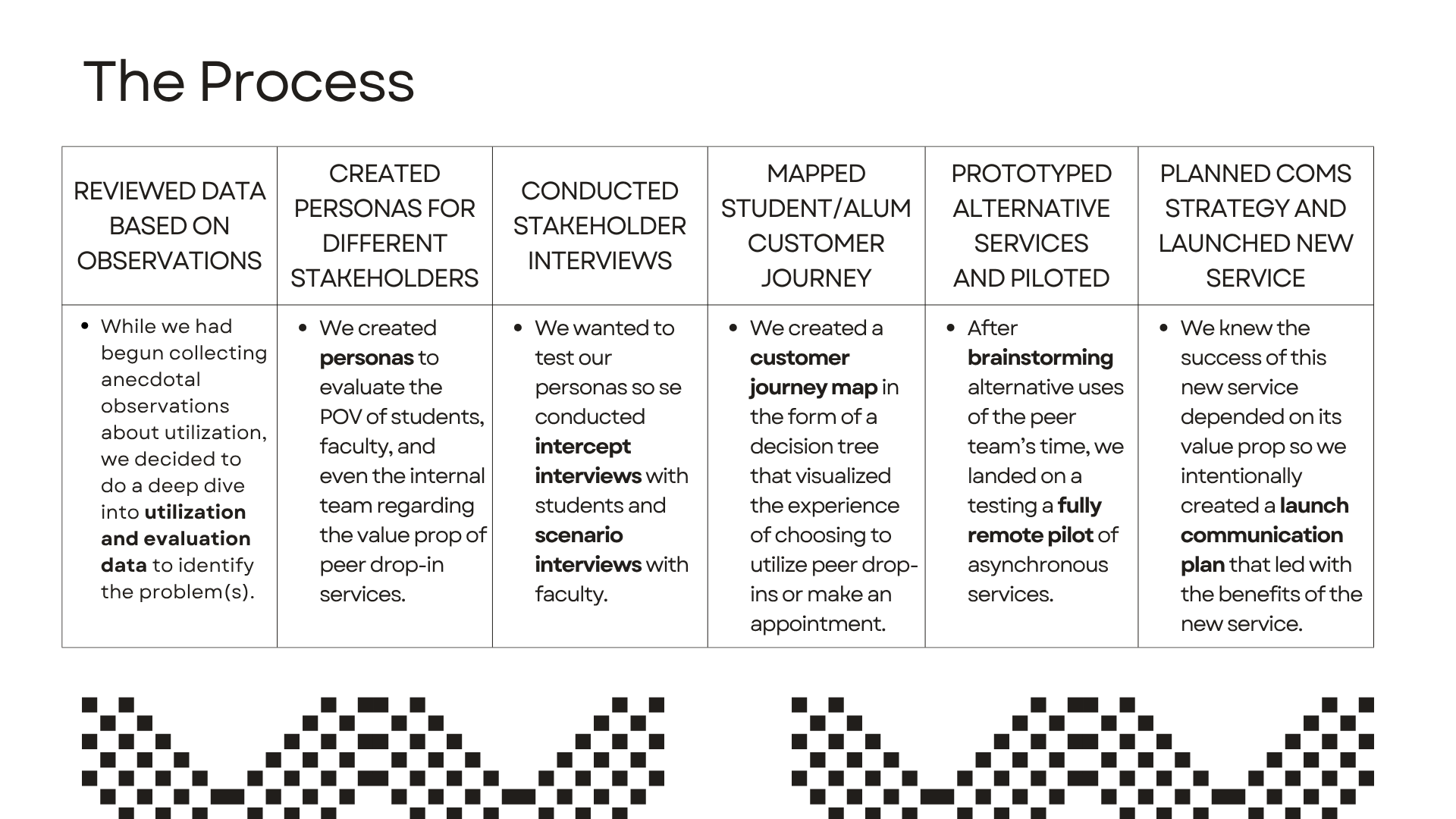
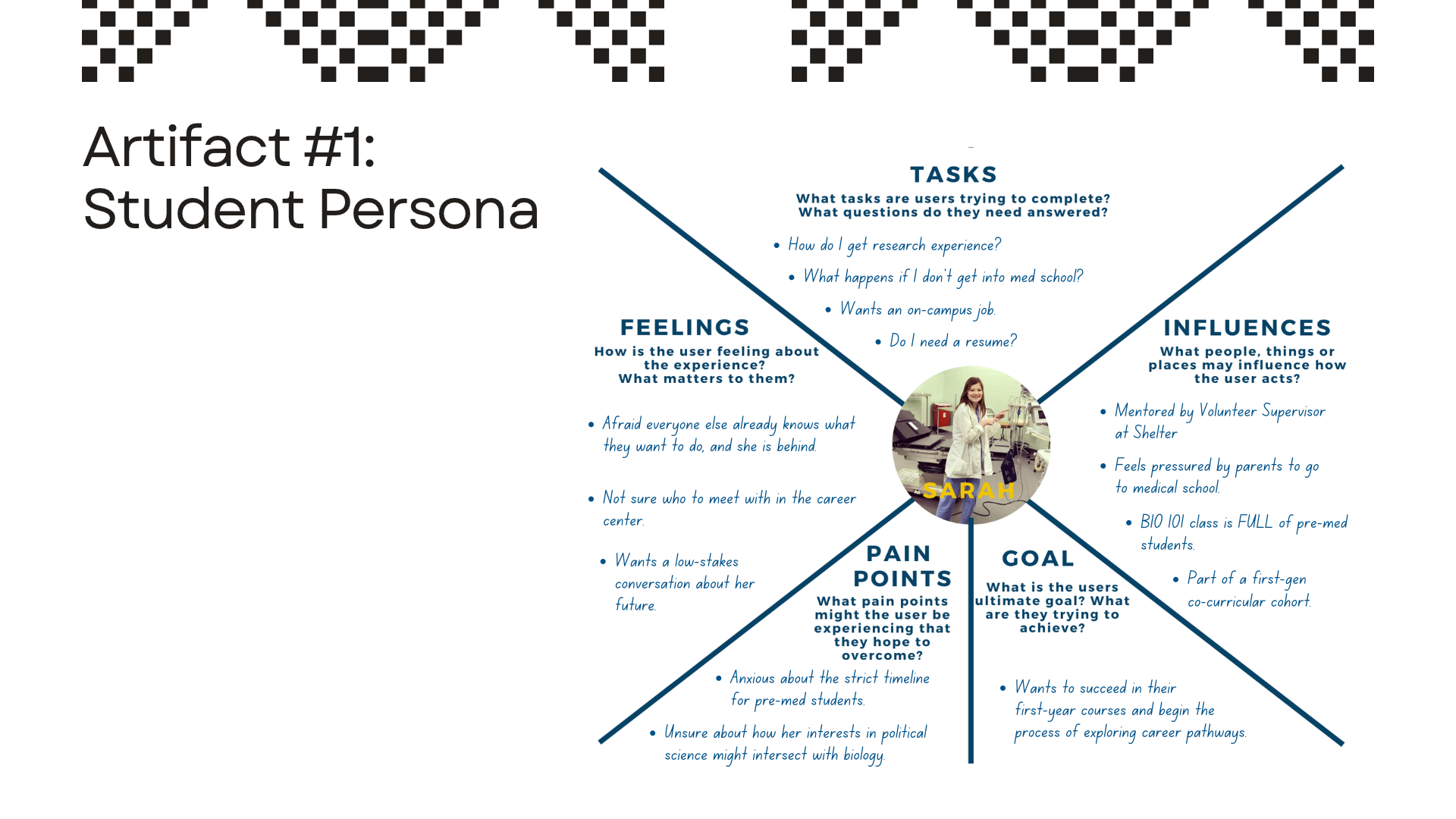
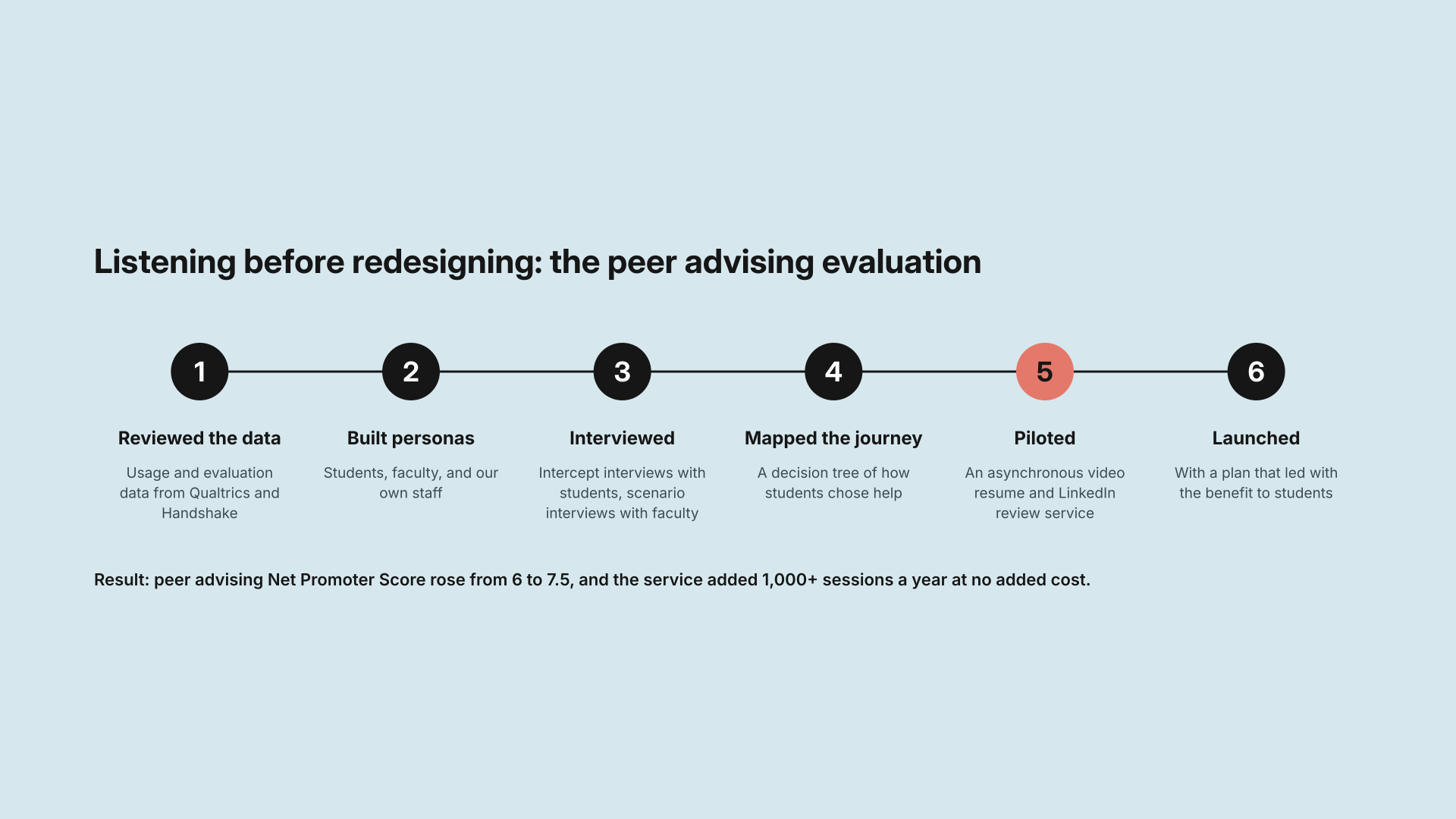
8 slides · swipe or scroll sideways · tap a slide to open it full size
03. A credential quality framework
Career Leadership Collective
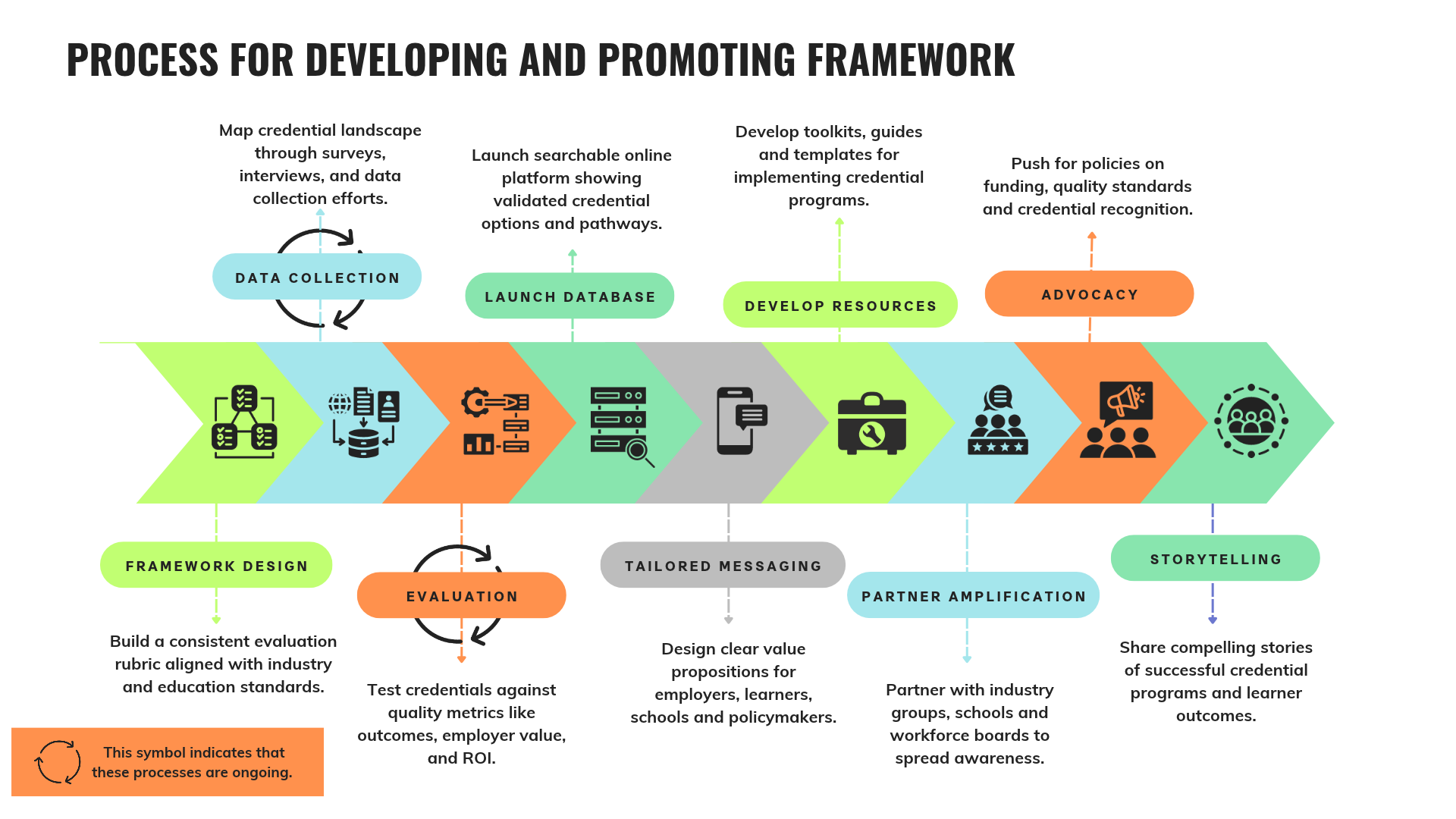
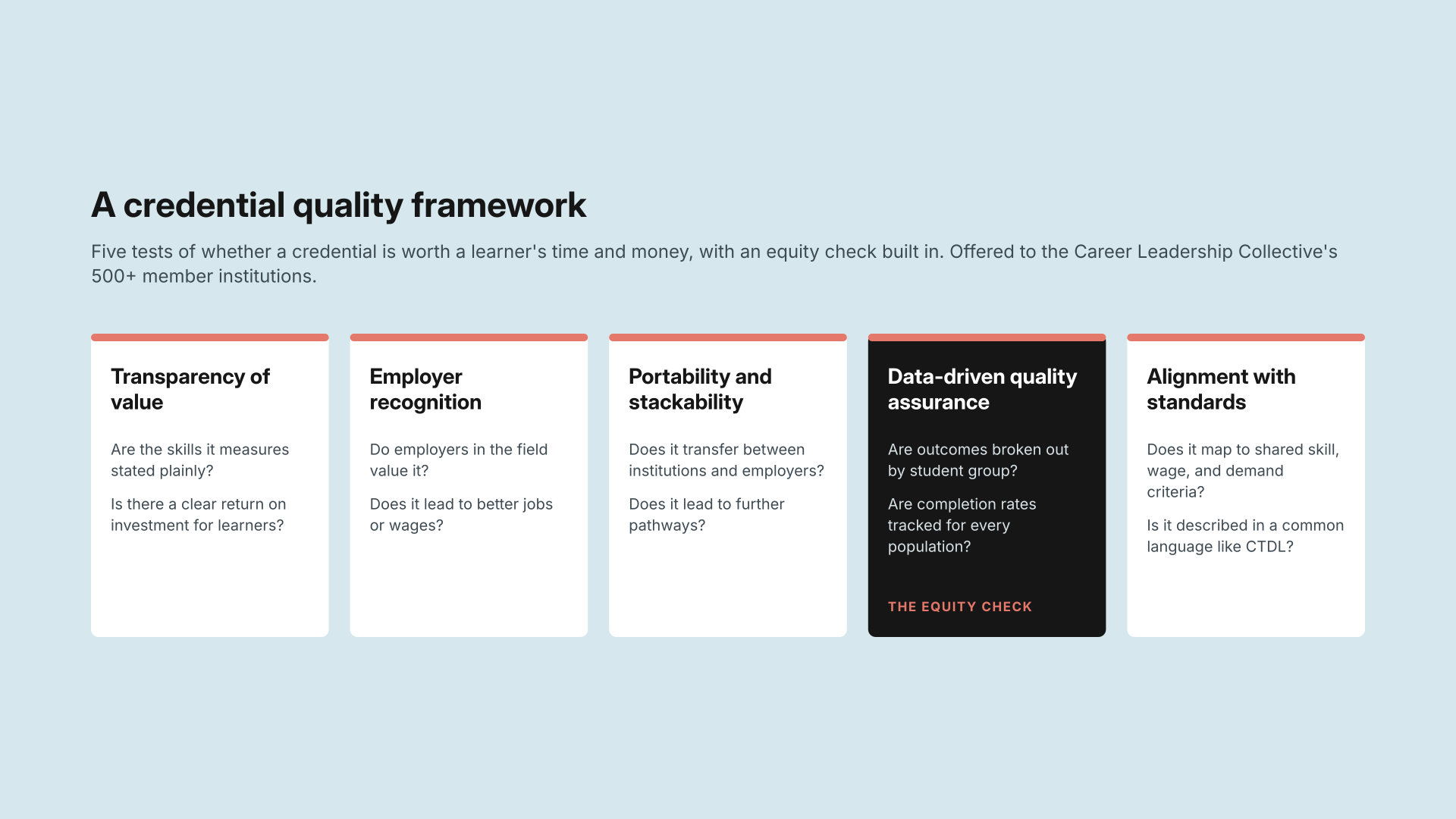
As short-term credentials multiplied, career centers needed a way to judge which ones were worth a learner's time and money. I designed a framework of five tests, each with plain questions an institution can answer, and built an equity check into it: outcomes must be broken out by student group, and completion tracked for every population. It was offered to the Collective's 500+ member institutions, along with a plan for data collection, an evaluation rubric, and resources to put it into practice. The slides below are from the original proposal.
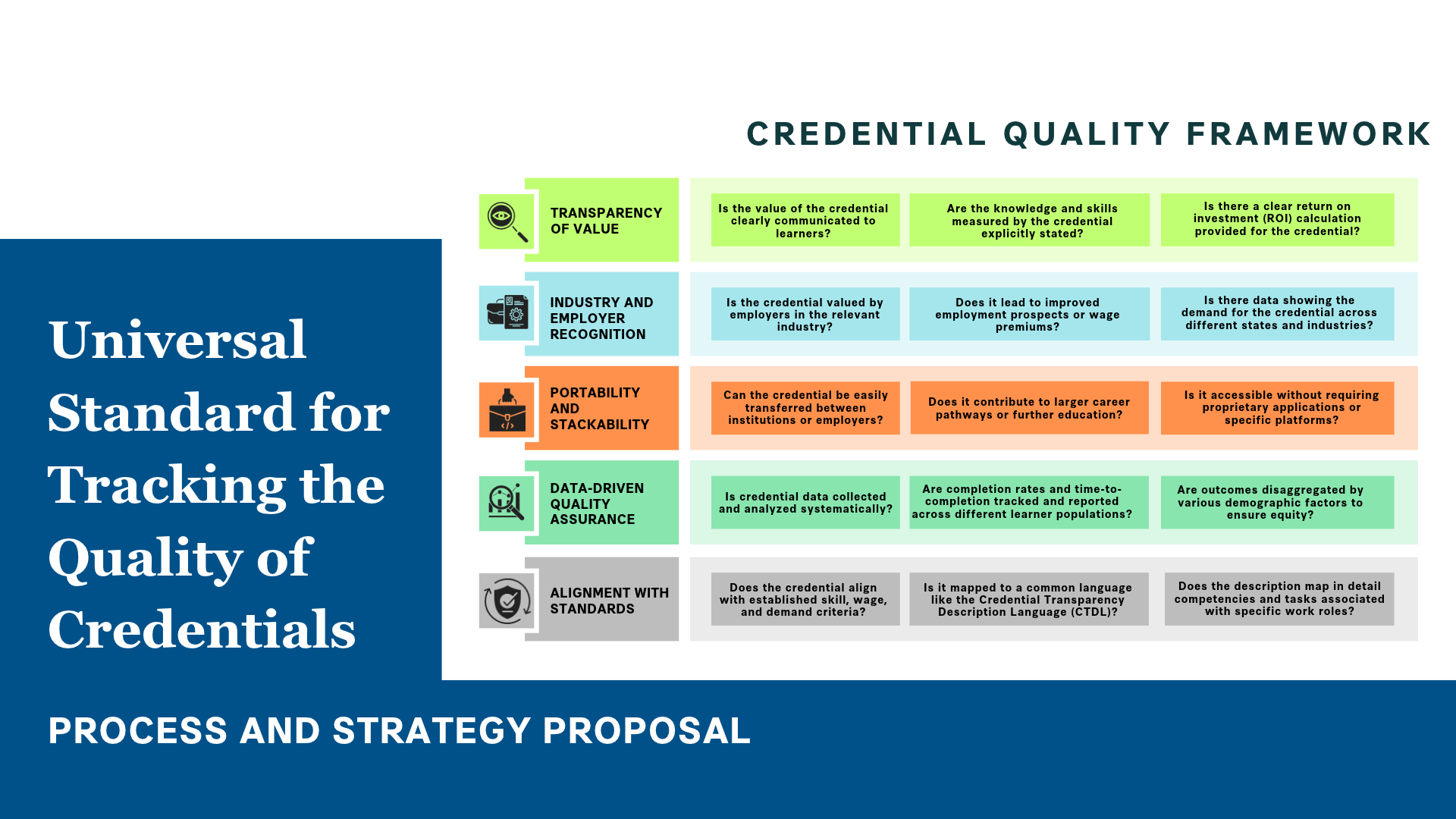
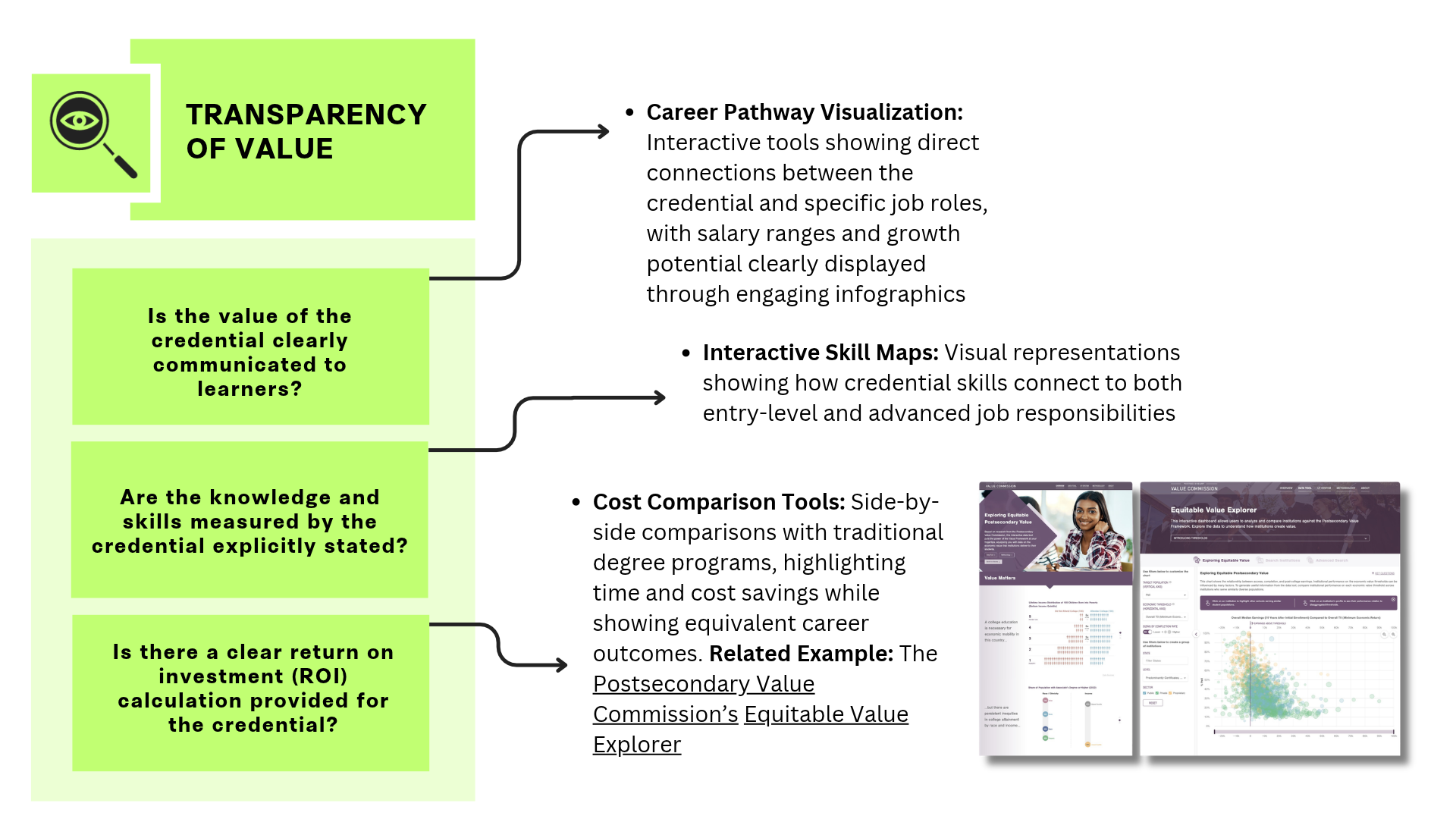
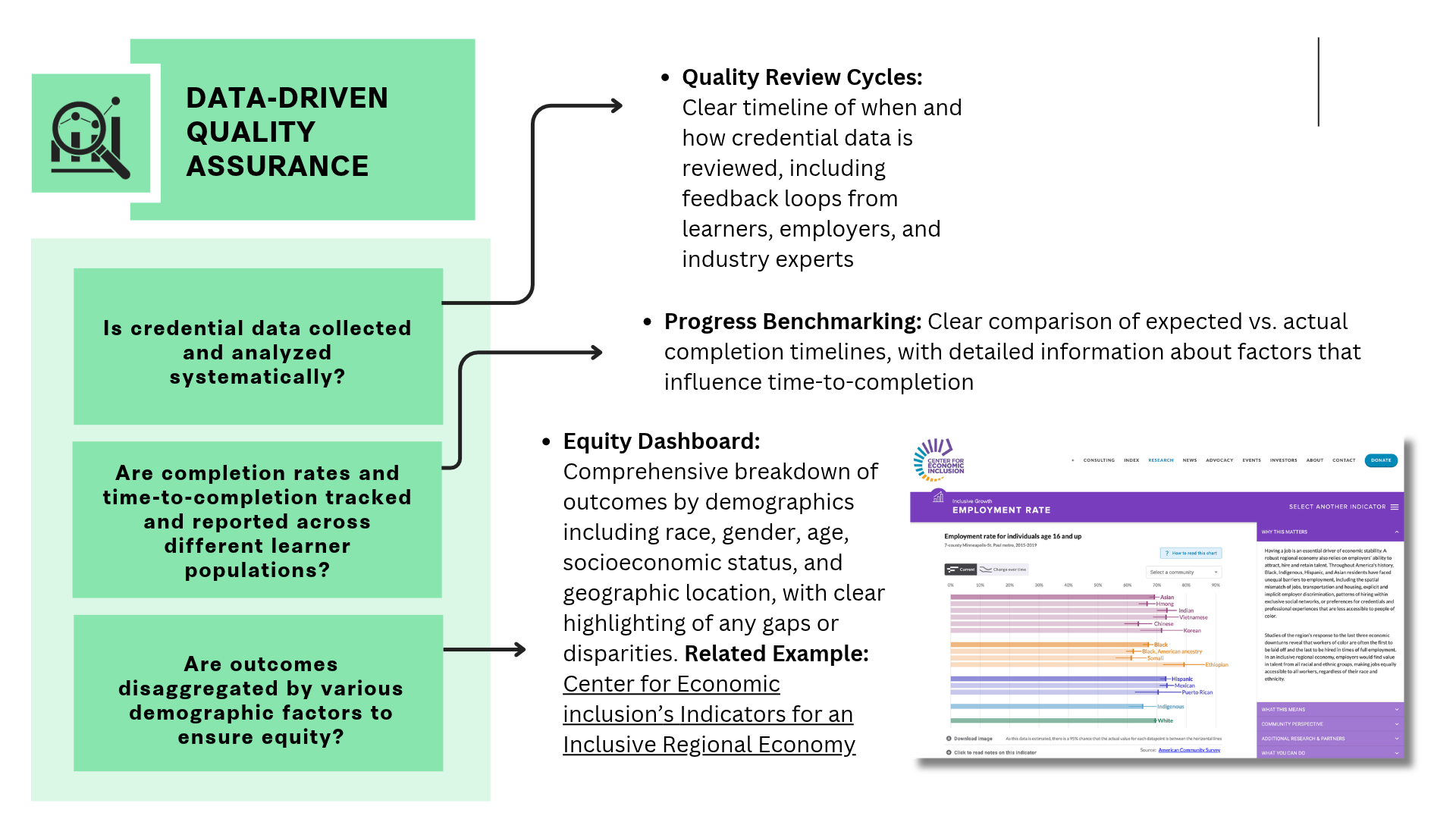
5 slides · swipe or scroll sideways · tap a slide to open it full size
04. Building outcomes with the people who own the decision, and running grants from both sides
CCIM Institute, DePaul University, University of Minnesota, Minneapolis College of Art and Design
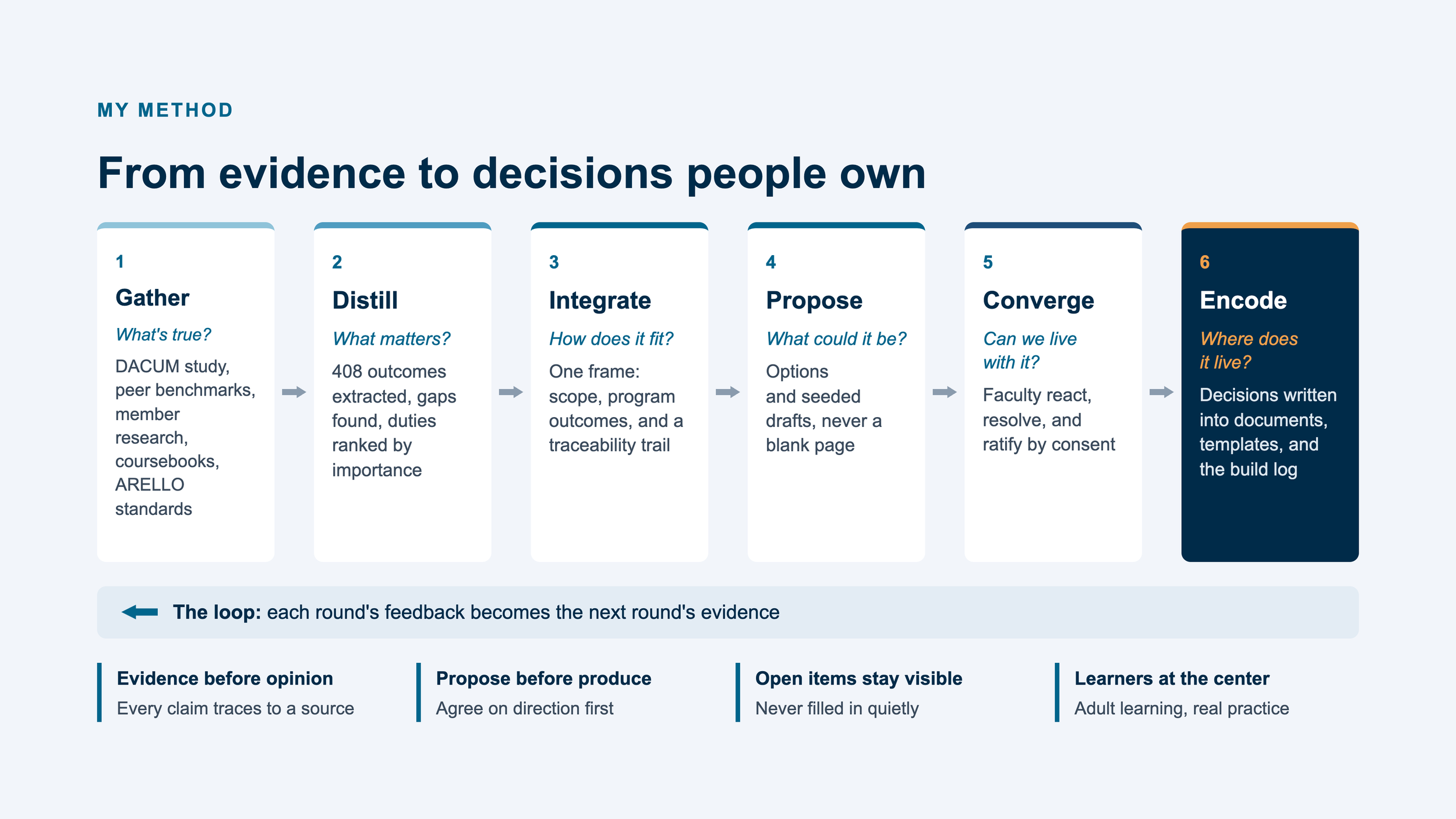
At a national credentialing organization governed by volunteers, staff draft and volunteers decide. My job is to give them evidence they trust and a process that keeps the decision with them.
Outcomes under volunteer governance
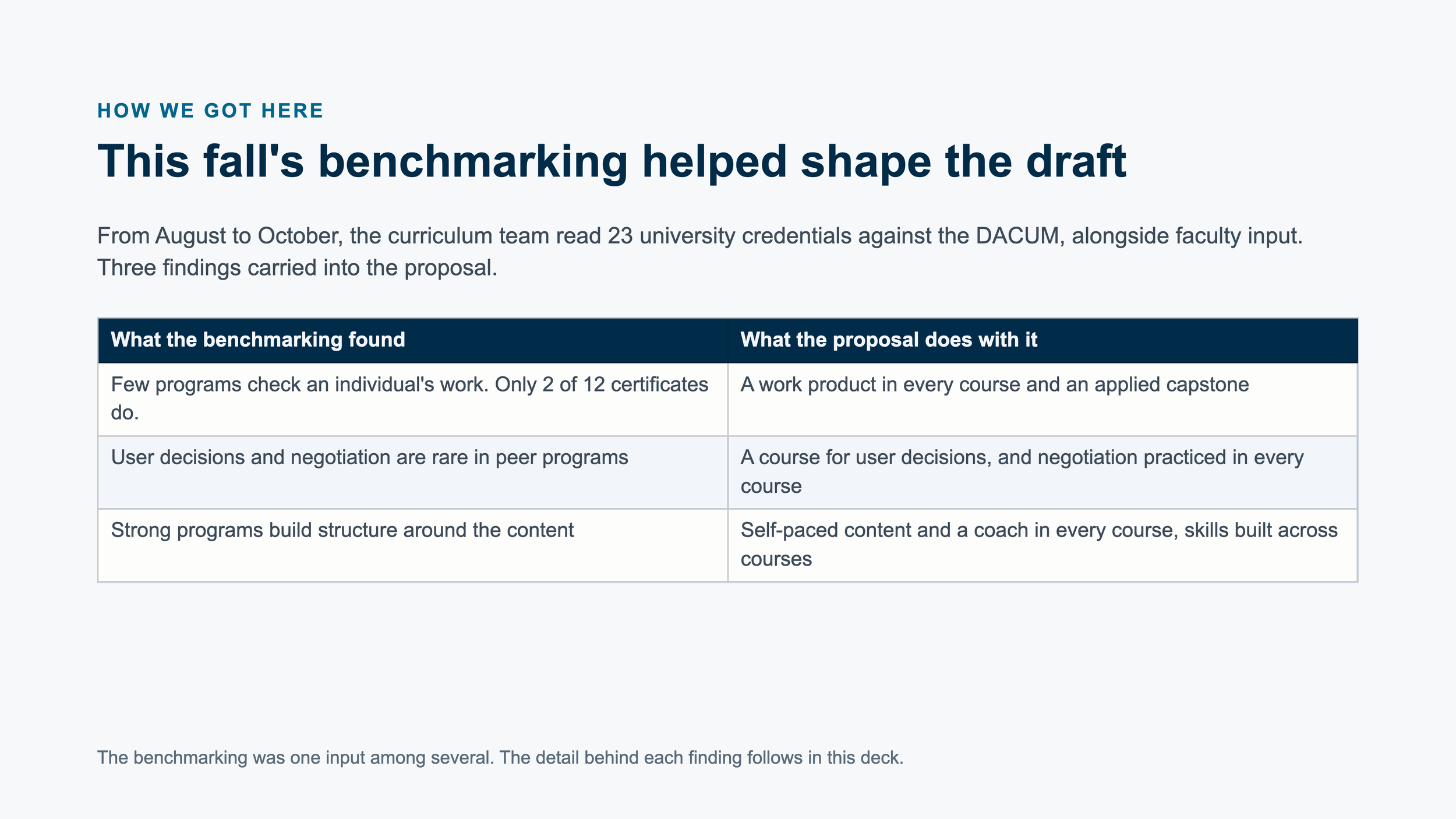
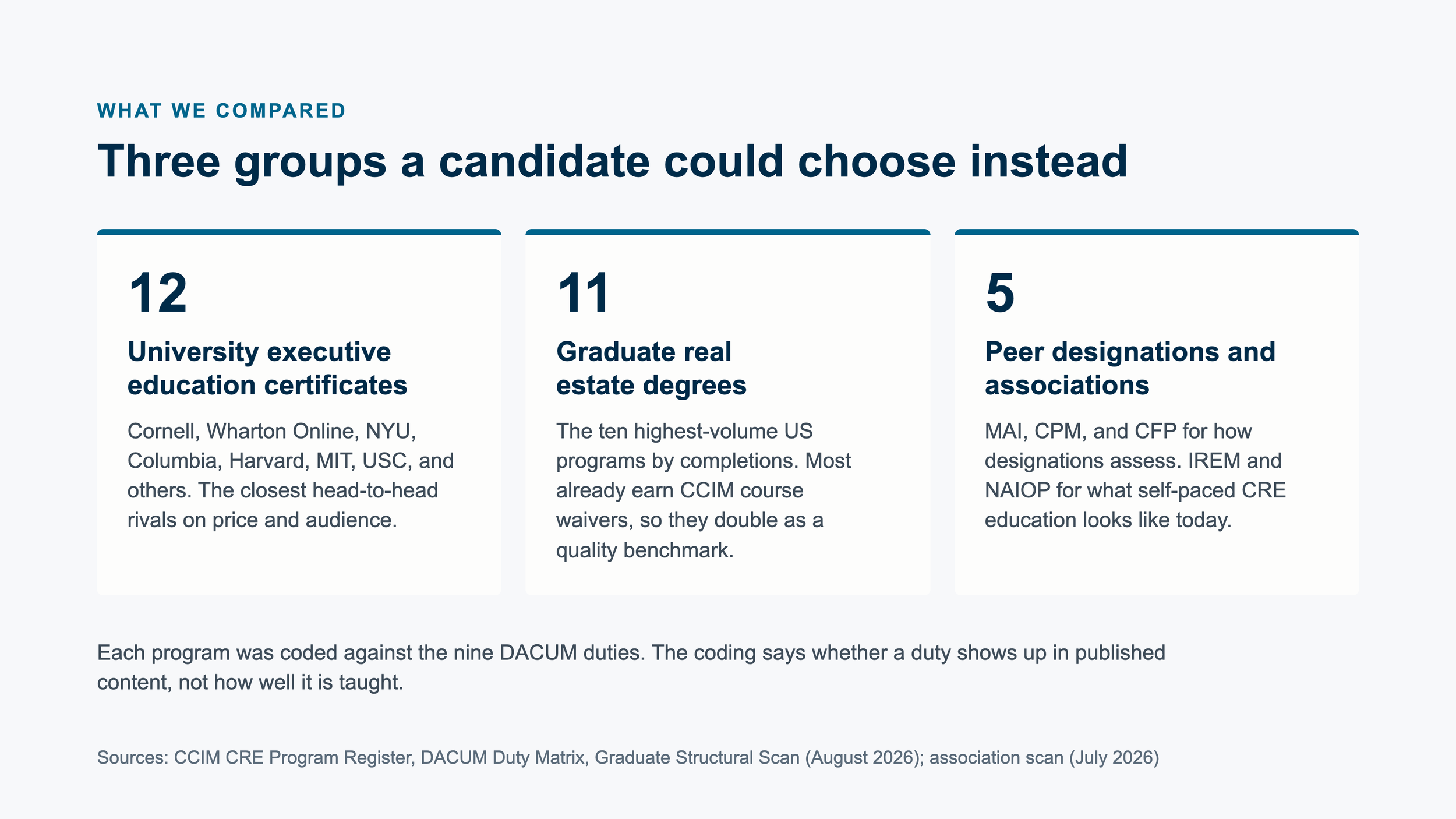
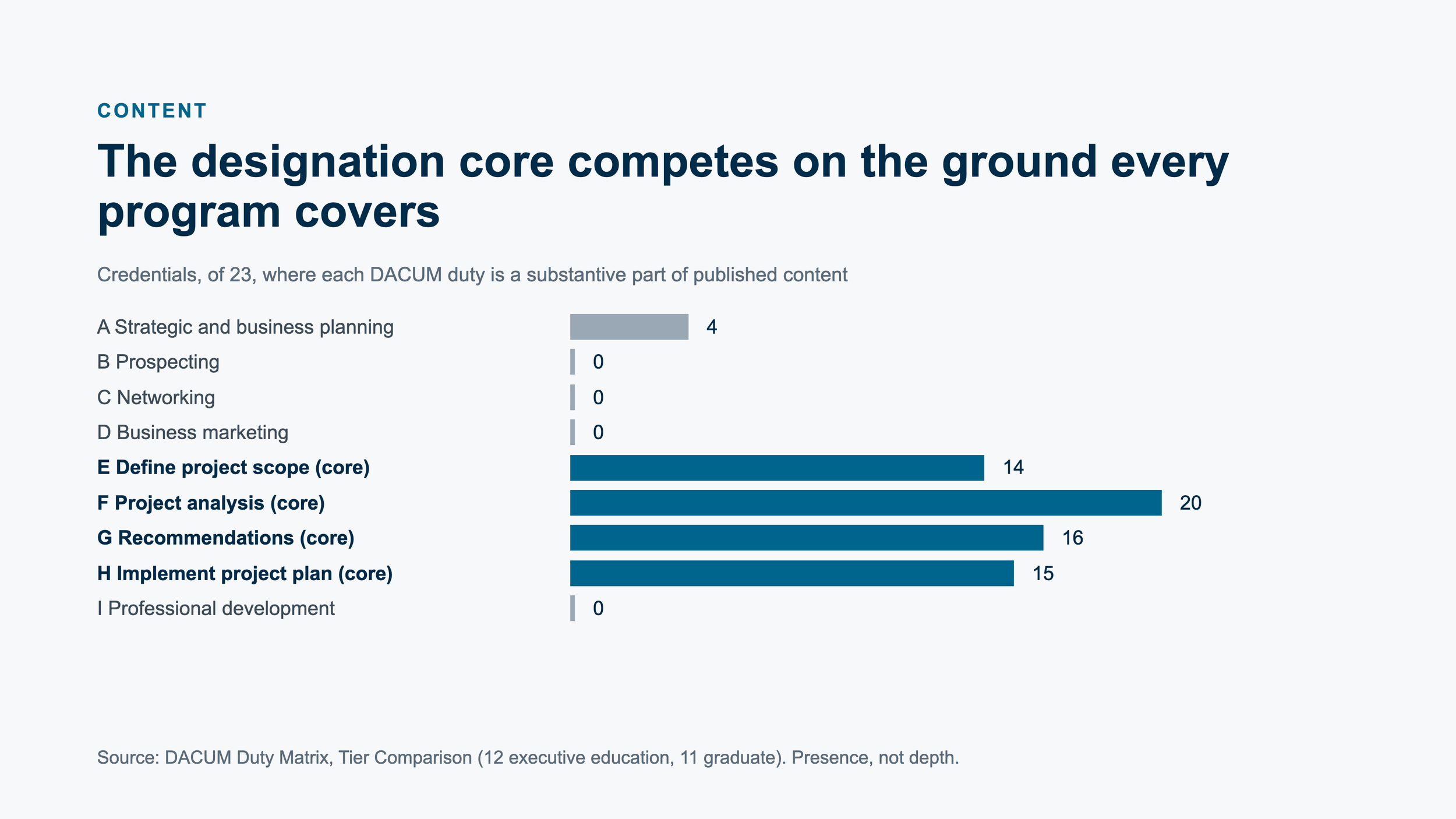
- Mapped 408 outcomes drawn from course content against an 88-task job analysis verified by 223 practitioners, showing what each course teaches, assesses, and verifies.
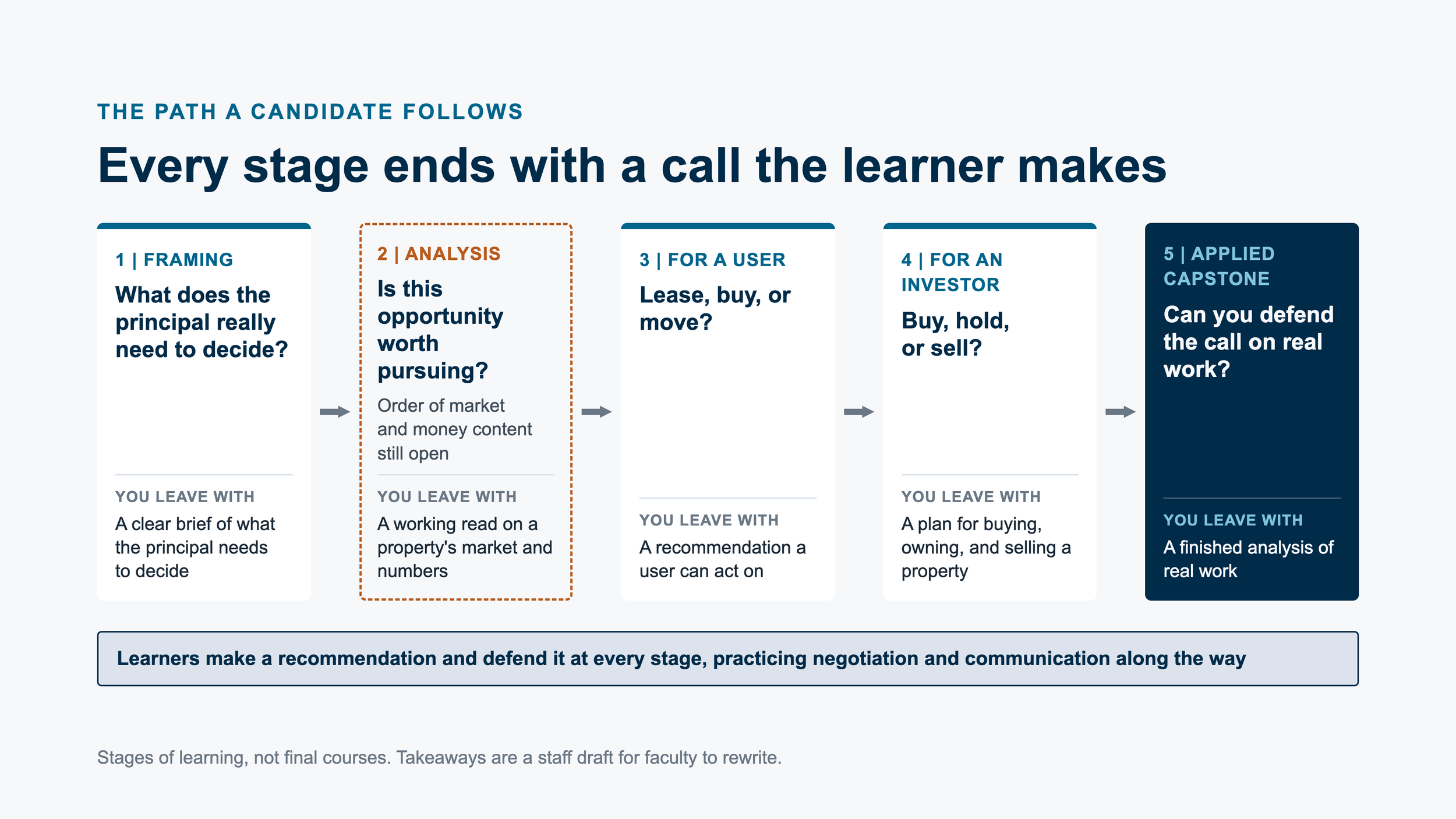
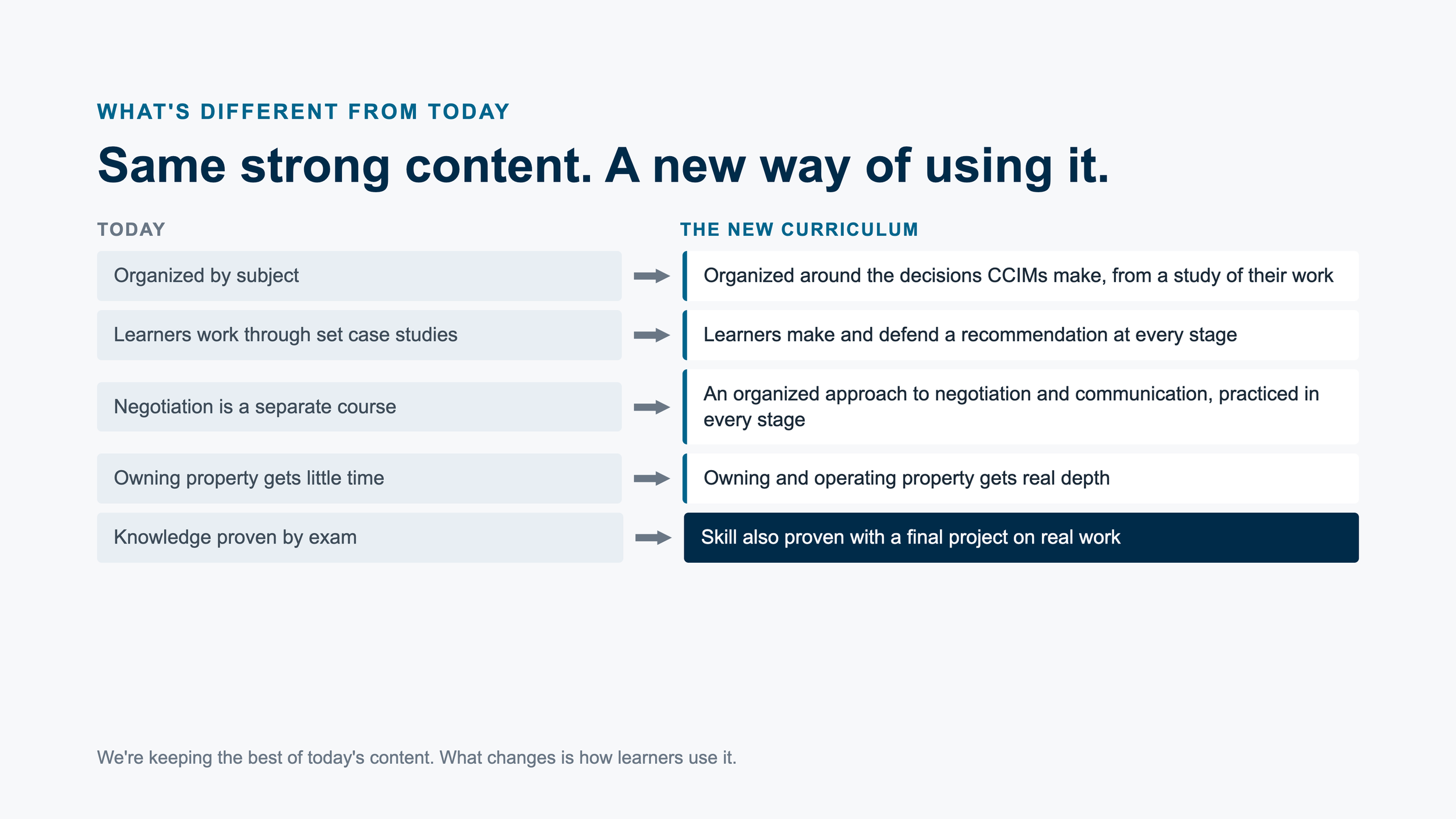
- Designed and facilitated the Program Outcomes Workgroup, bringing two volunteer leaders' frameworks together into one draft. The workgroup ratified 27 program outcomes in October 2026.
- Set a consent-based decision protocol (support, can live with it, can't live with it) that keeps staff drafts separate from ratified decisions.
- Serve as staff lead to the Curriculum Subcommittee, setting agendas and preparing reports.
Grantmaking from both sides
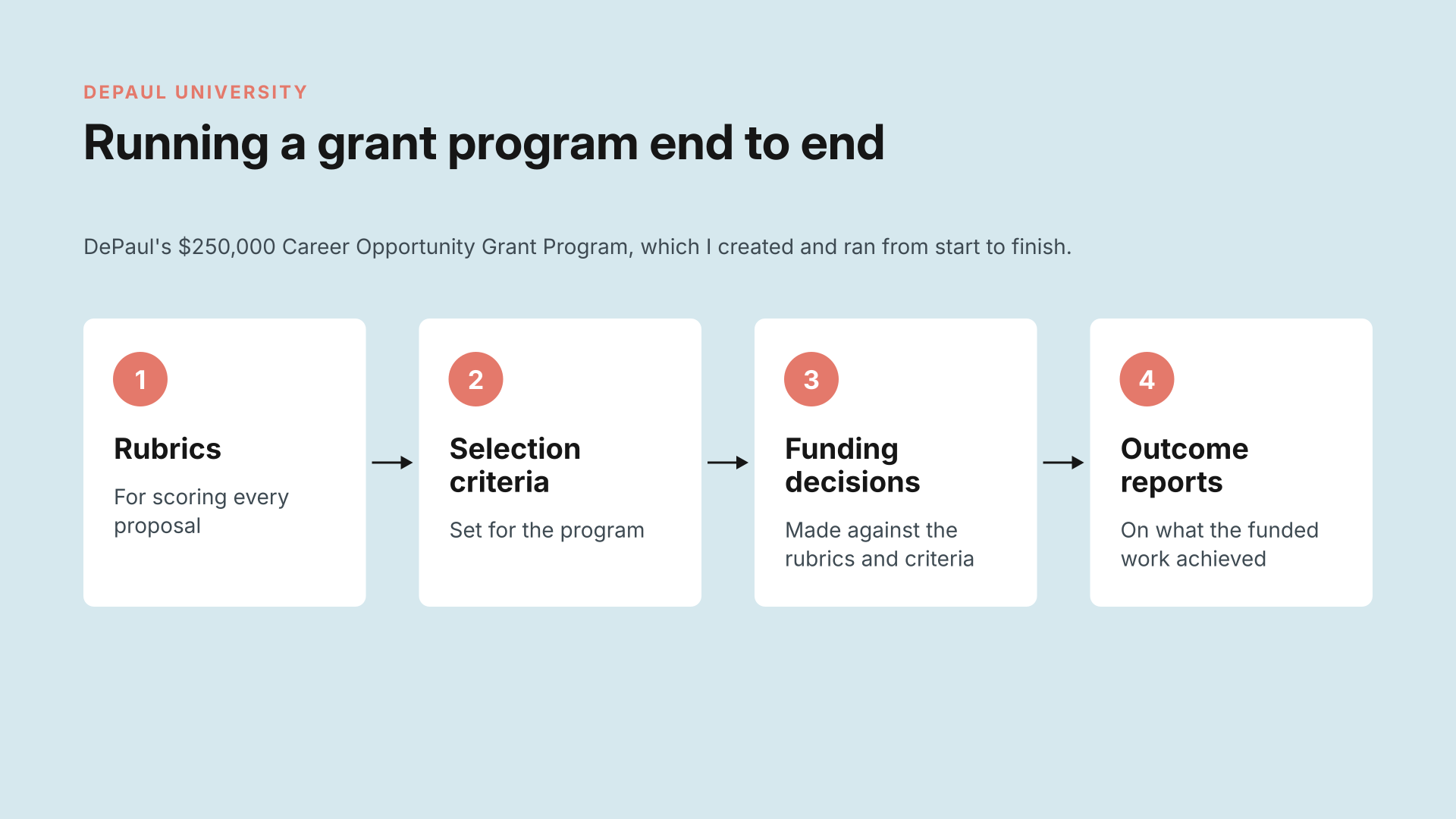
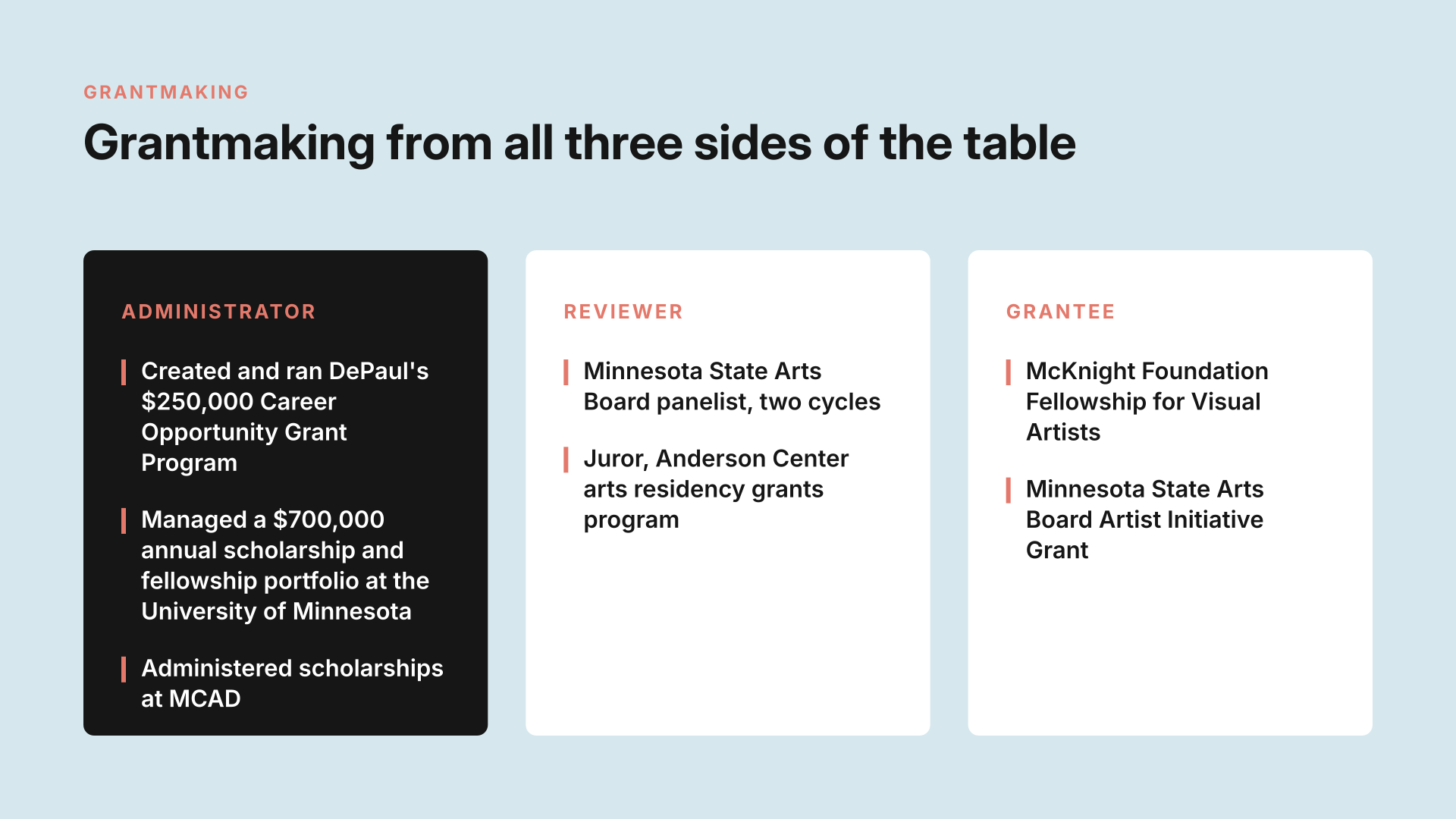
- Created and ran DePaul's $250,000 Career Opportunity Grant Program: rubrics, selection criteria, funding decisions, and outcome reports.
- Managed a graduate fellowship program at the University of Minnesota from recruitment and selection through fellow support, with a $700,000 annual scholarship and fellowship portfolio and a custom CRM for applications, selection, and impact reports.
- Scored proposals as a Minnesota State Arts Board panelist for two cycles, and served as a juror for the Anderson Center arts residency grants program.
- Received a McKnight Foundation Fellowship for Visual Artists and a Minnesota State Arts Board Artist Initiative Grant, so I know what reporting asks of a grantee.
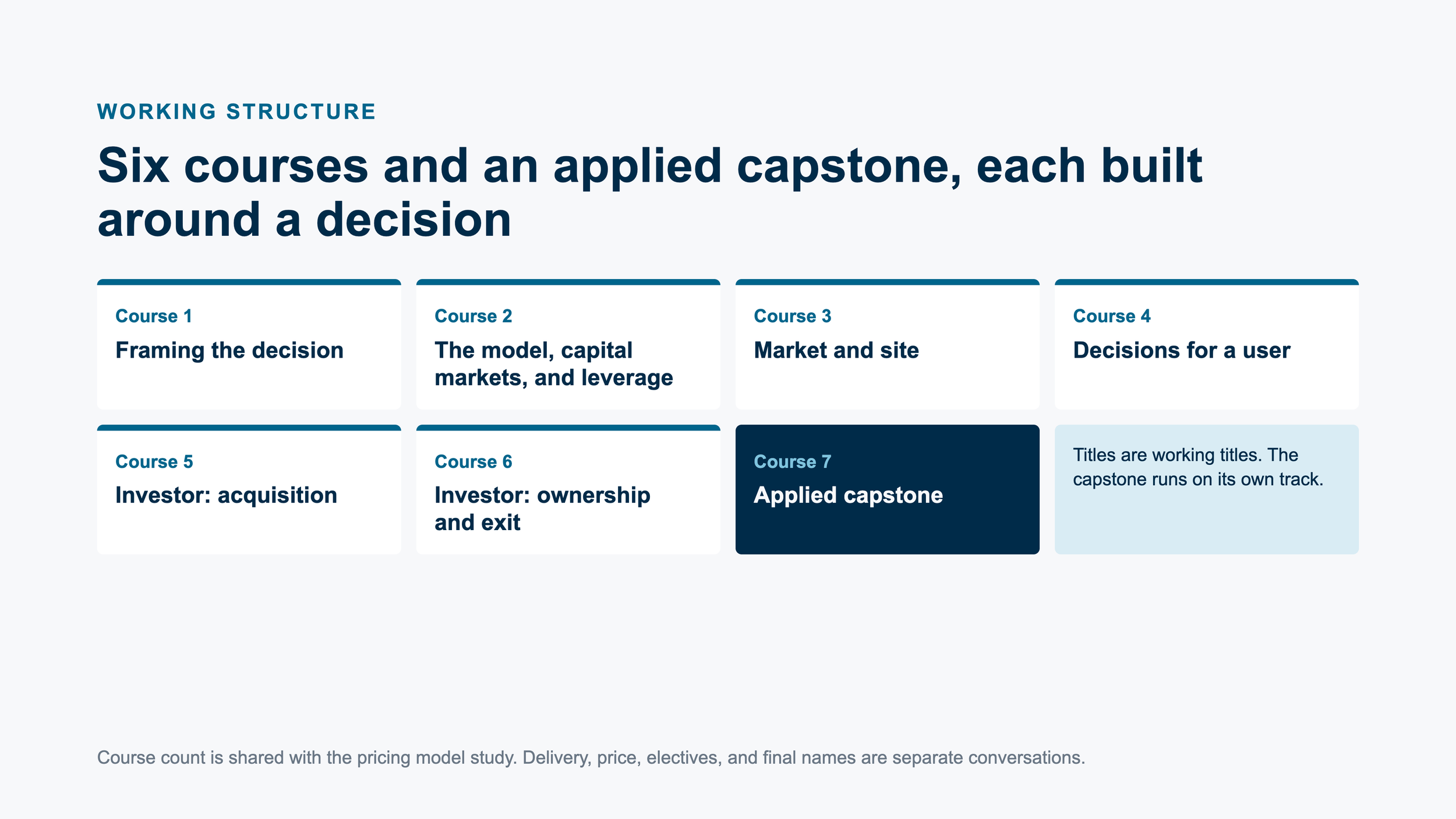
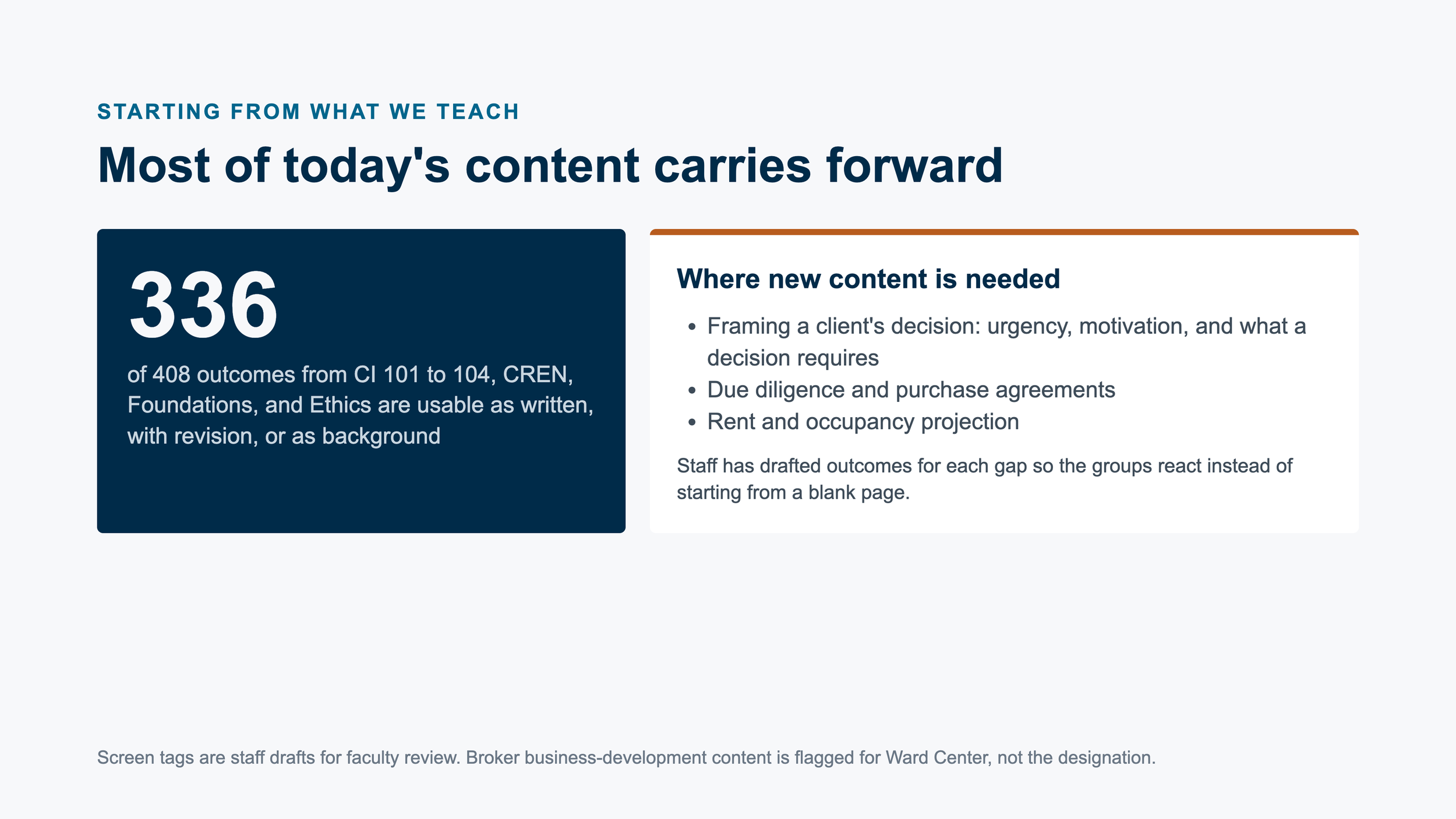
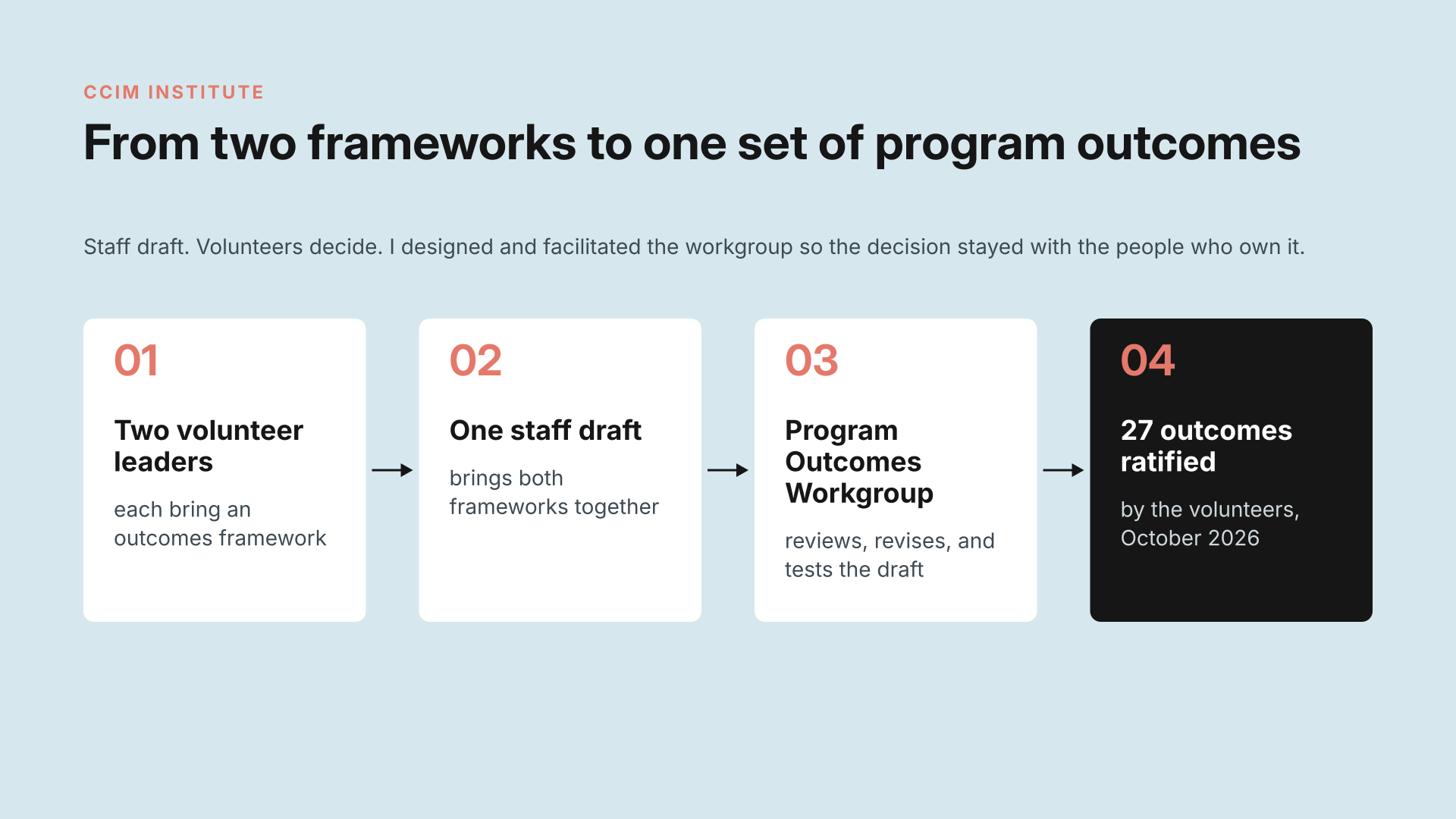
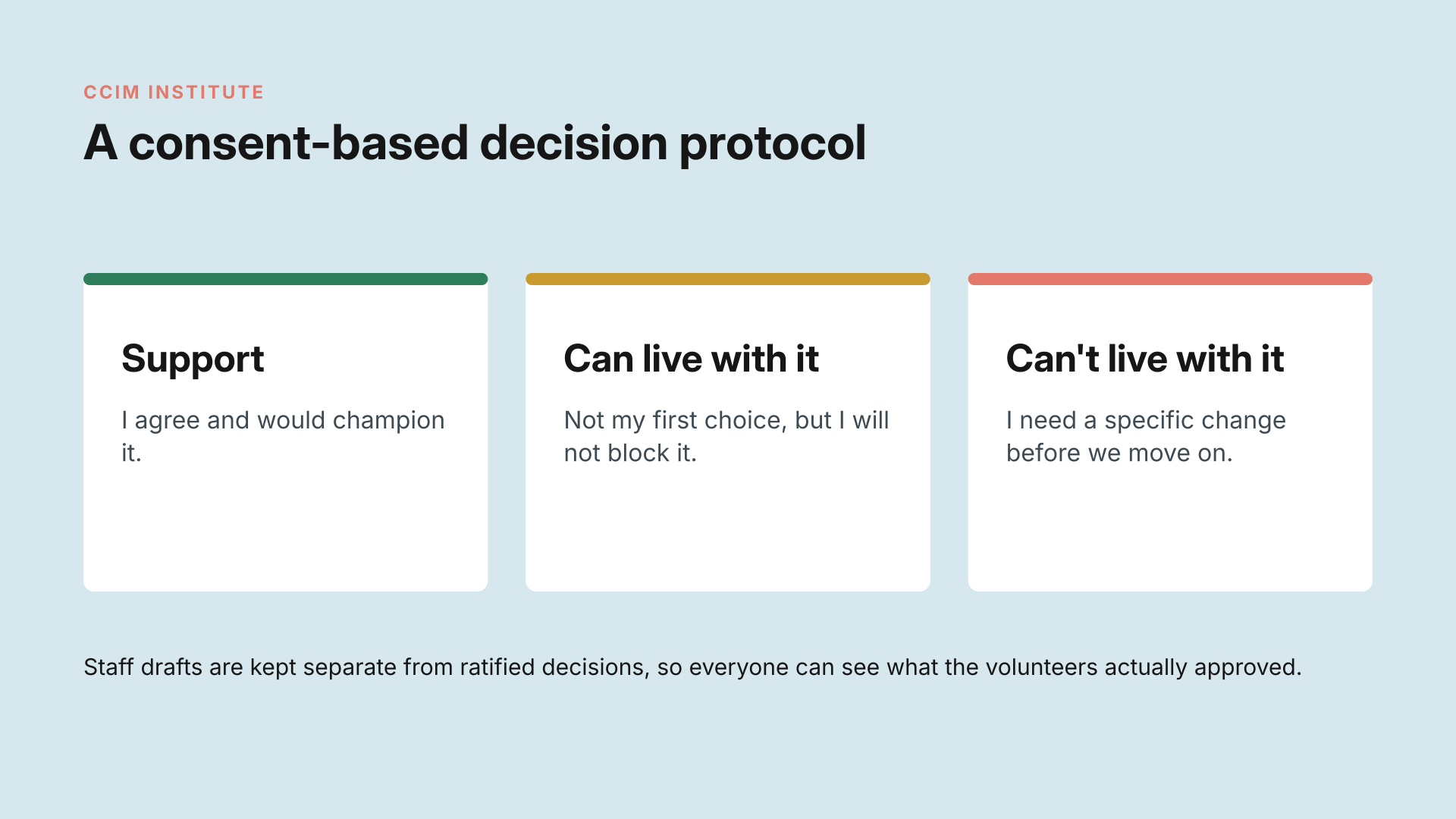
12 slides · swipe or scroll sideways · tap a slide to open it full size
05. Practice before the real conversation
CCIM Institute, Curriculum Program Manager
The problem
Commercial real estate professionals eventually have to defend an investment recommendation to a capital partner who is looking for holes in it. Most courses only ever ask learners to calculate the numbers. Our shared course platform could run only one generic AI persona, and every activity needed its own, so it couldn't give learners practice at that moment.
What I did
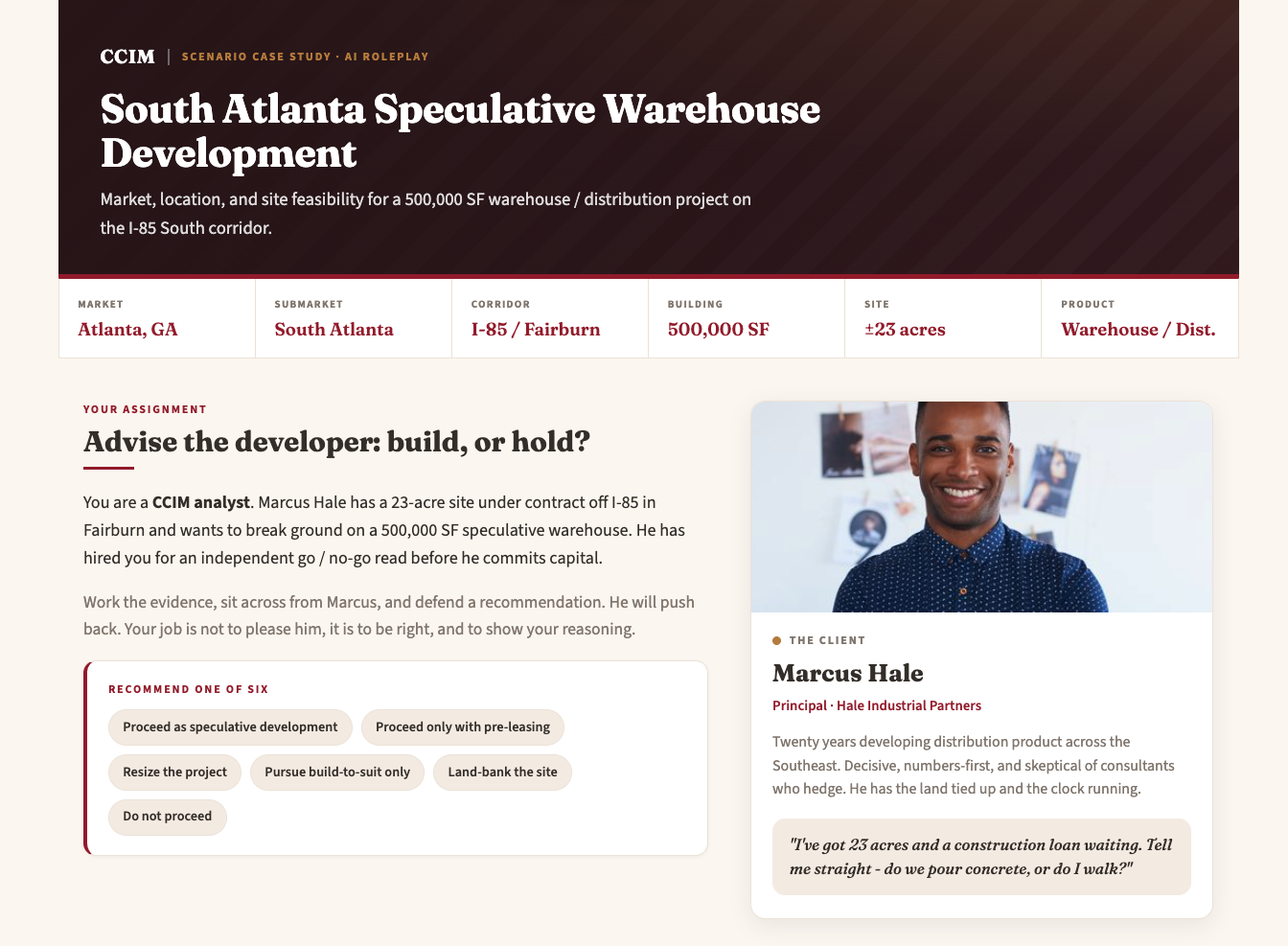
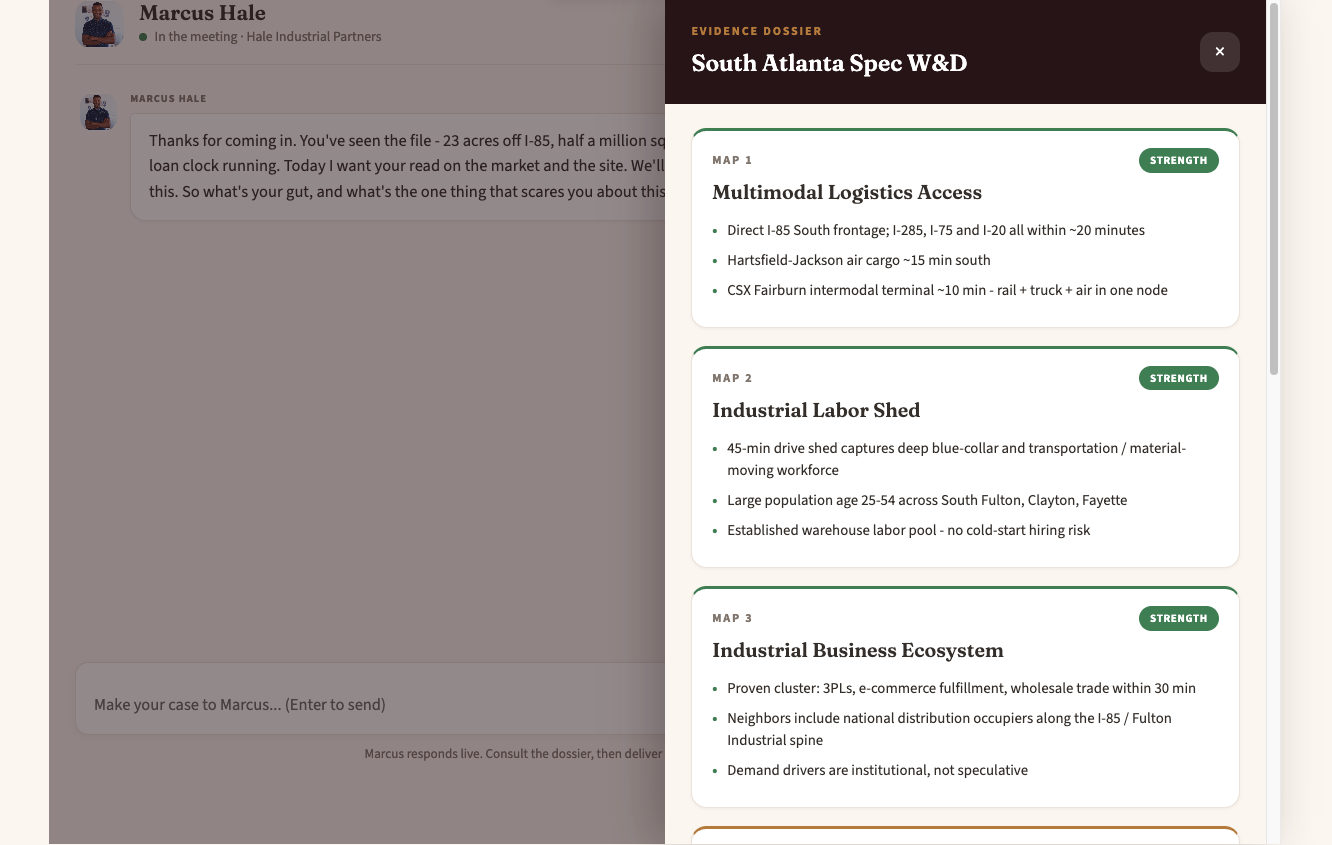
I designed and built Defend the Call, a roleplay on the Anthropic API and hosted on Netlify. Learners make a go or no-go call on a deal, then defend it to a skeptical AI capital partner, and they get scored feedback on their reasoning. Each activity sets up its own persona, so the challenge fits the case in front of the learner. I recruited senior instructors, mostly principals of brokerage and investment firms, to pilot it. I also wrote the AI guardrails and the AI-assisted course build SOPs that other staff designing courses now follow, so AI use doesn't depend on one person's judgment.
What changed
Practice that feels real used to require a live coach or a role-play partner. Now a learner can rehearse a hard conversation as often as they need before it happens for real, and the organization has standards in place for using AI in course building.
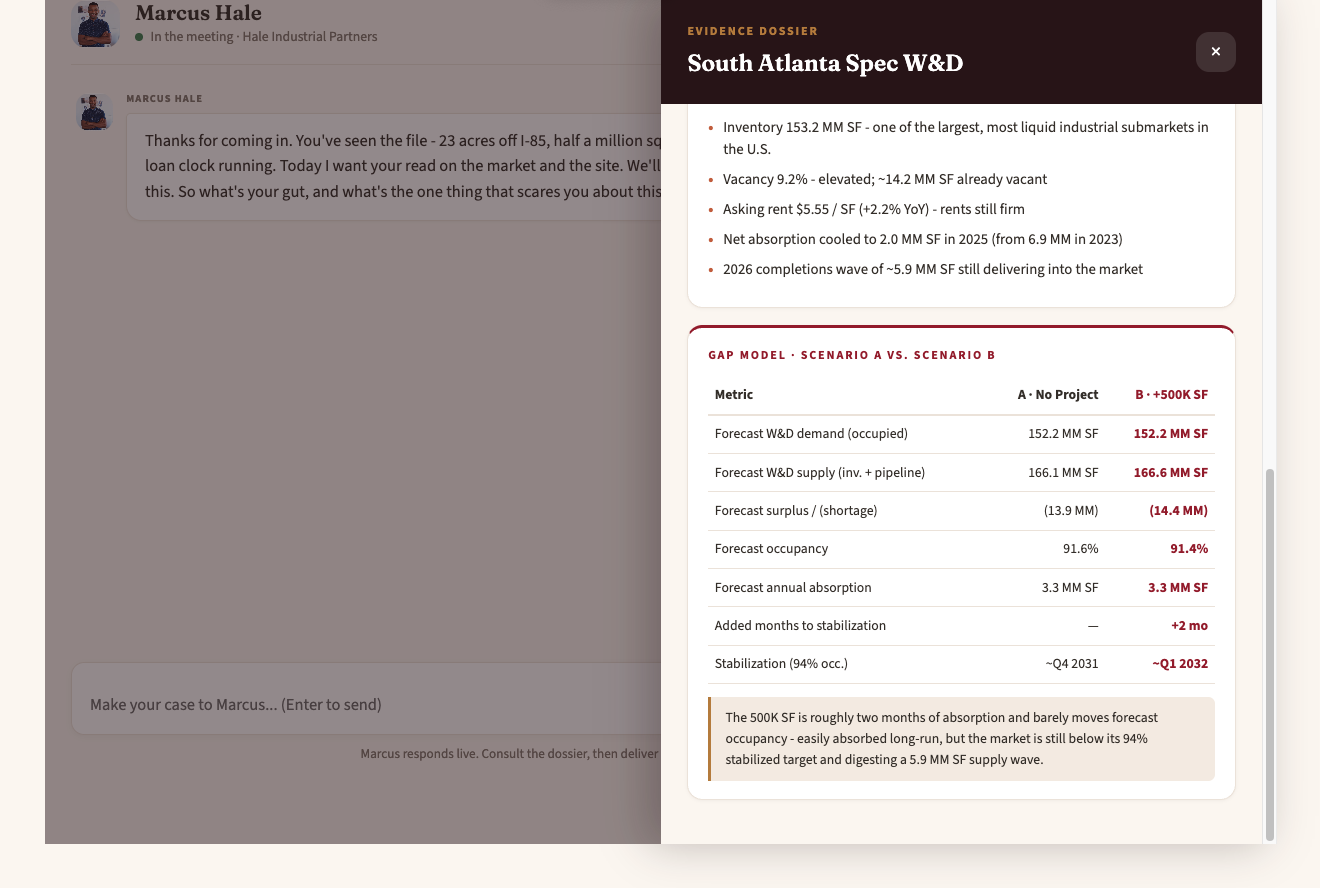
3 slides · swipe or scroll sideways · tap a slide to open it full size
Further reading and contact
My essay Beyond the Metrics We Inherit covers the DePaul measurement work in more depth.
Selected presentations
- AI, Tech, and the Future of Career Services, keynote, Career Leadership Collective, 2024
- Leveraging User Experience (UX) in Career Centers, Career Leadership Collective MASTERMIND Cohort, 2024
- Rethinking Student Engagement: Centering the Learner, Career Leadership Collective ASPIRE Cohort, 2023
- Building Relationships with Universities to Recruit Students with Disabilities, Disability:IN Chicagoland, 2021
- Driving Virtual Participation in a Career Exploration Program, Yellowdig Webinar, 2021
- Creating a Micro-Learning Online Career Library, Career Leadership Collective Accelerator, 2020
Toolkits: Strategic Planning for Career Centers and Leveraging AI in Career Services (Career Leadership Collective).