Student Success: Selected Work
I design the curriculum, support structures, and learning experiences that decide whether college pays off for the students with the least room for error. This work comes from inside colleges and universities, from consulting with more than 500 of them, and from building learning myself, now with AI.
- 200+ faculty in a career integration network built without a reporting line
- 93% retention for Future Forward participants, against an 81.8% institutional baseline
- 500+ institutions offered the toolkit built from that faculty model
- 27 program outcomes ratified by a volunteer faculty workgroup
How I think about this work
On AI. AI could become either extreme: the worst doctor's office, cold and transactional, diagnosing students from data, or the best Netflix, personalized, available anytime, and leading students back to people. The difference is design: guardrails, not gates; learning that asks students to interrogate what the tool gives them; and success measured by whether students leave more able to act on their own.
On access. Most accommodations are simply good design. When we build them in from the start, instead of making students ask, we reach everyone who was quietly struggling without them. Remove friction from access, and keep it in the thinking.
Jump to a case study
01 → Changing how faculty teach, and building curriculum that lasts
03 → Replacing the metrics we inherited, and redesigning around a Theory of Change
04 → Listening before redesigning
05 → A credential quality framework
01. Changing how faculty teach, and building curriculum that lasts
DePaul University, Career Leadership Collective, University of Texas Rio Grande Valley
Career learning reaches every student only when it lives inside the courses they already take. I built that from inside one university, packaged it for hundreds of others, and carried it to a Hispanic-Serving Institution myself.
The problem
At DePaul, career education reached the students who came looking for it. To reach every student, it had to live in the curriculum, and I had no authority over faculty.
What I did
- Ran a listening tour of the campus, then built a Faculty Ambassador Network of 200+ instructors across 40 departments, with three tiers (friends, champions, and ambassadors) so faculty could join at the level that fit them.
- Mapped career learning across the university's academic departments in 2018, sorted into exploration, skills, experience, and career toolkit courses, and designed a sequence of online, two-credit career courses.
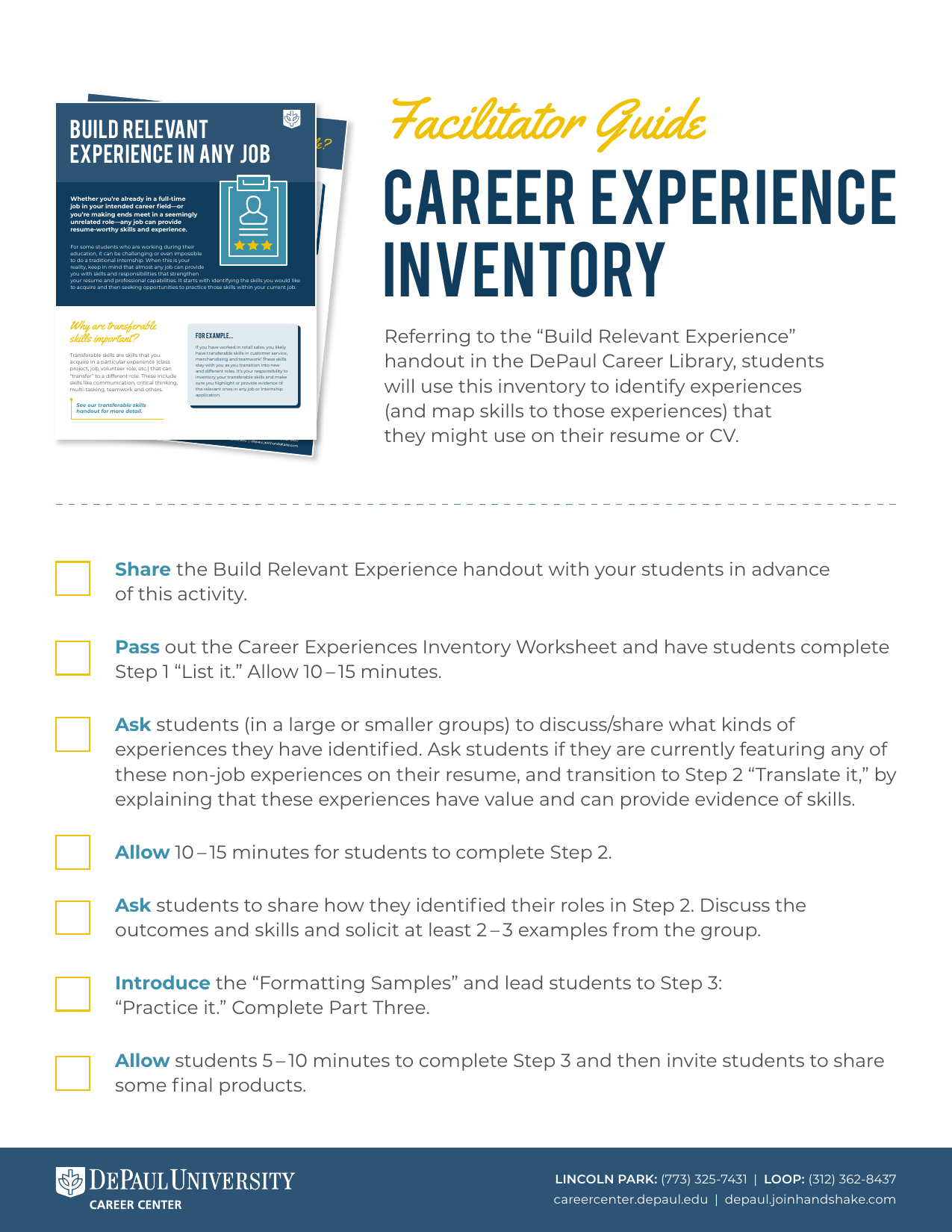
- Created peer-learning classroom activities with facilitator guides, built on the DePaul Career Library, that faculty download and run in their own courses (still offered on DePaul's site).
- At the Career Leadership Collective, turned the faculty network model into the Career Champions toolkit, offered to 500+ member institutions.
- Scripted and produced seven faculty development videos on career integration for the University of Texas Rio Grande Valley, offered by its career center to faculty.
What changed
Career curriculum integration at DePaul rose by 30%, and the university still offers its online career courses four years after I left. The same model then reached other institutions as a toolkit and a video series.
02. Belonging over content
DePaul University, Future Forward, in collaboration with program director Hilarie Longnecker
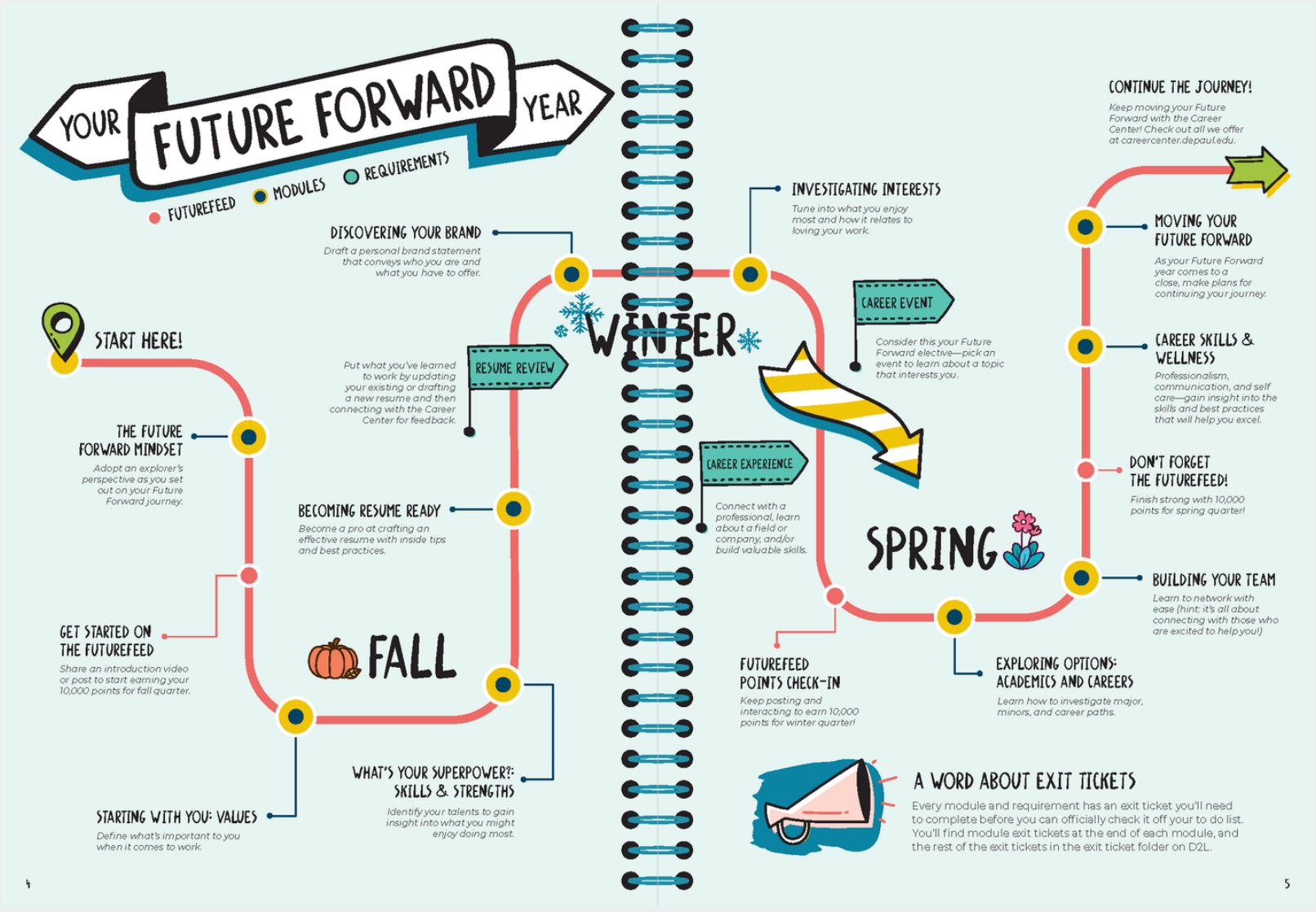
A year-long, fully asynchronous career exploration program for first-year, first-generation students, launched in fall 2020 and built for students who could not come to us during business hours. Future Forward received a 2022 NACE award.
What we learned
My early design treated the program as a knowledge drop: good content, delivered well. Testing with students moved it somewhere else. They stayed engaged when the program gave them community, connected their identity to their career exploration, and let them learn through experience, not when it gave them more information.
What I did
- Led the program's development and launch, turning an Enrollment Management request for a yield program into a year-long retention program.
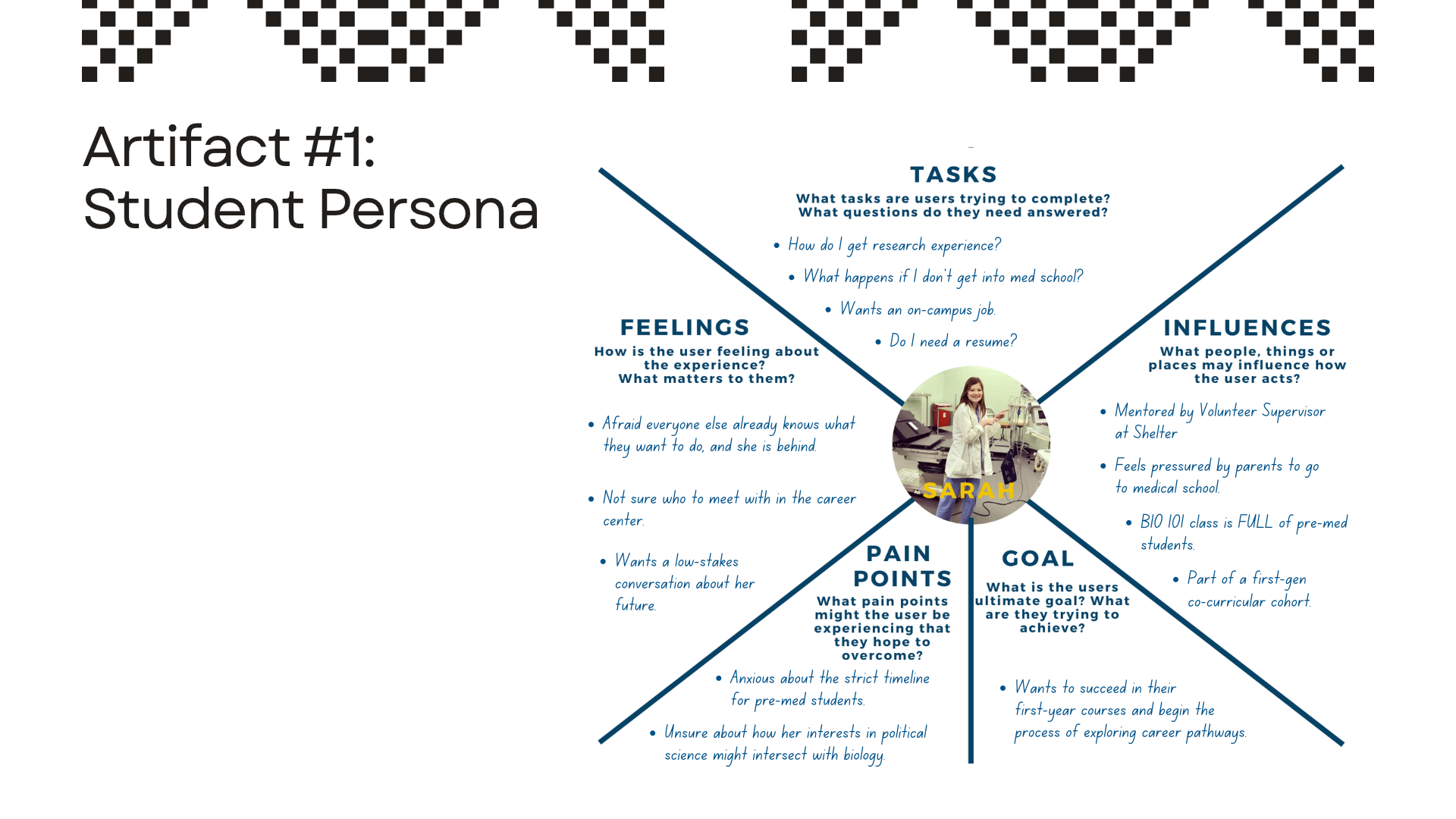
- Built learner personas and tested the program with students throughout its development.
- Shifted the design from delivering knowledge to building community, on the Yellowdig social learning platform, which I selected and integrated with university IT.
- Created the program's interactive workbook, the Future Forward Journal, and used game elements to keep students moving through the year.
What changed
Participants were retained at 93%, against an 81.8% institutional baseline, and 88% used career center services, compared with 16% of students the year before. The program grew from 350 students in its first cohort to more than 1,200 a year. The lesson shapes how I think about AI coaching today: students persist because they belong somewhere, so the tools we build should lead them back to people.
03. Replacing the metrics we inherited, and redesigning around a Theory of Change
DePaul University, Director of Career Education
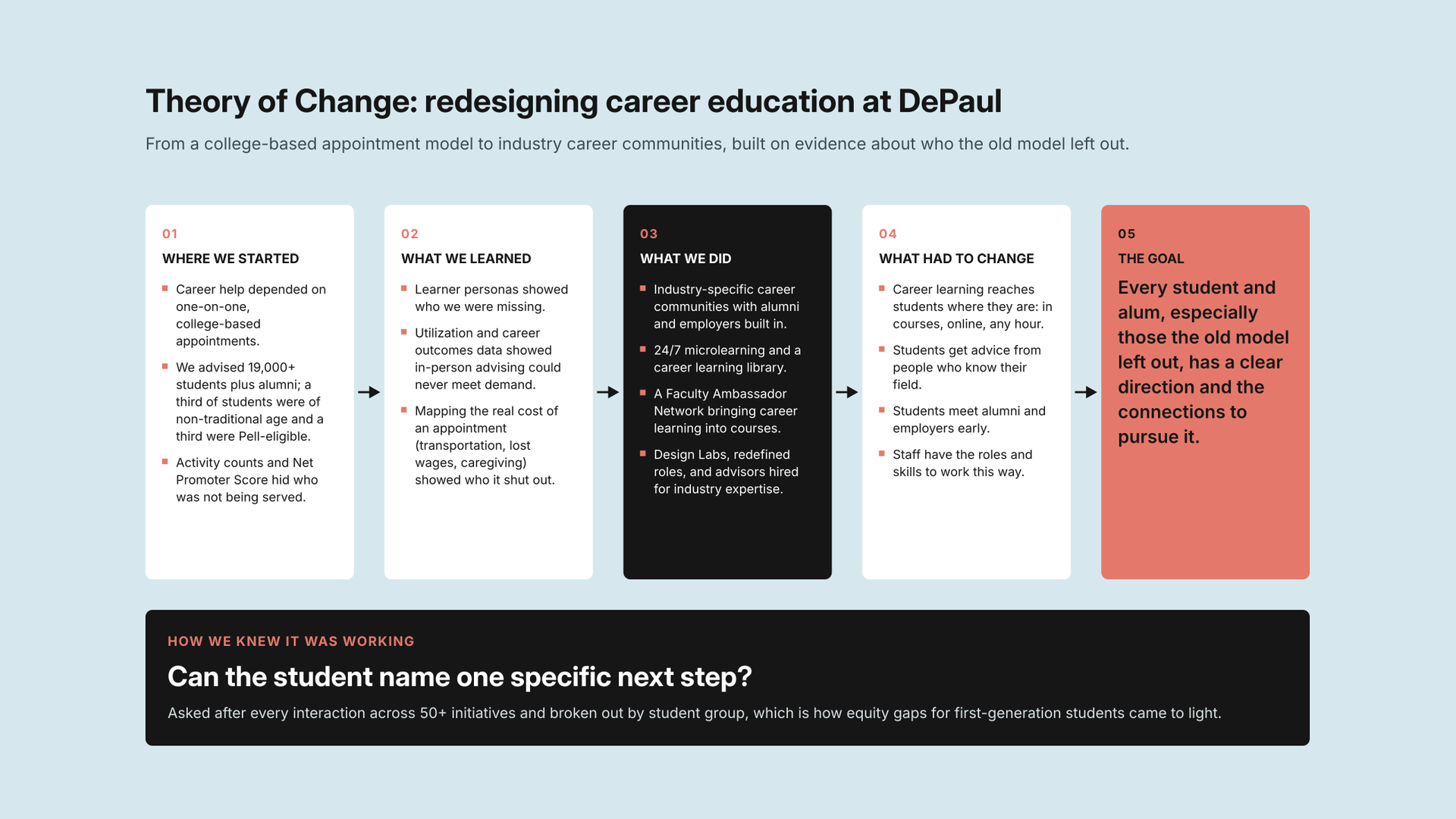
Our numbers told us how busy we were and how satisfied people felt, not whether anyone was better off. I changed what we measured, then used a Theory of Change to rebuild how the center was organized.
The problem
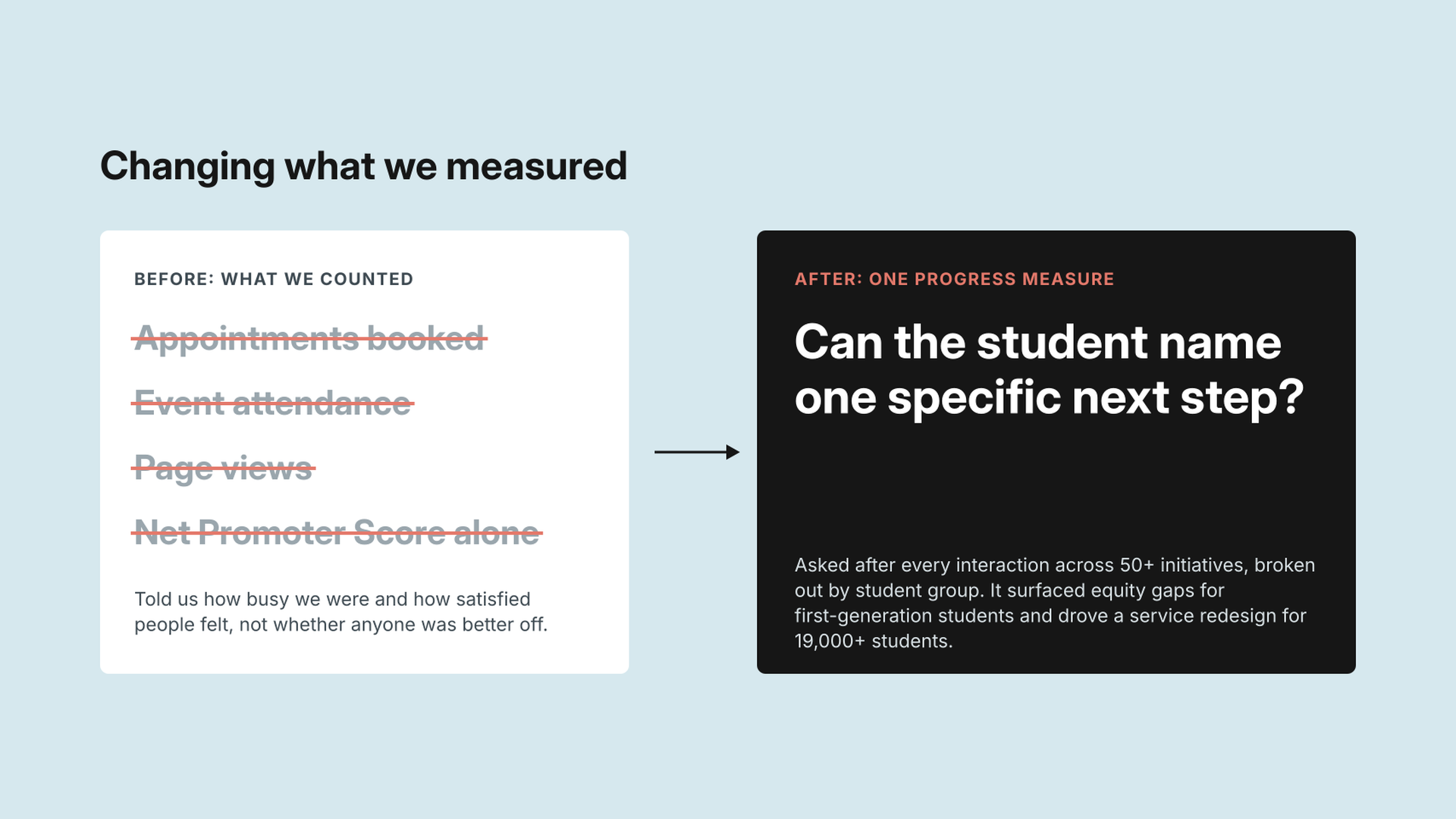
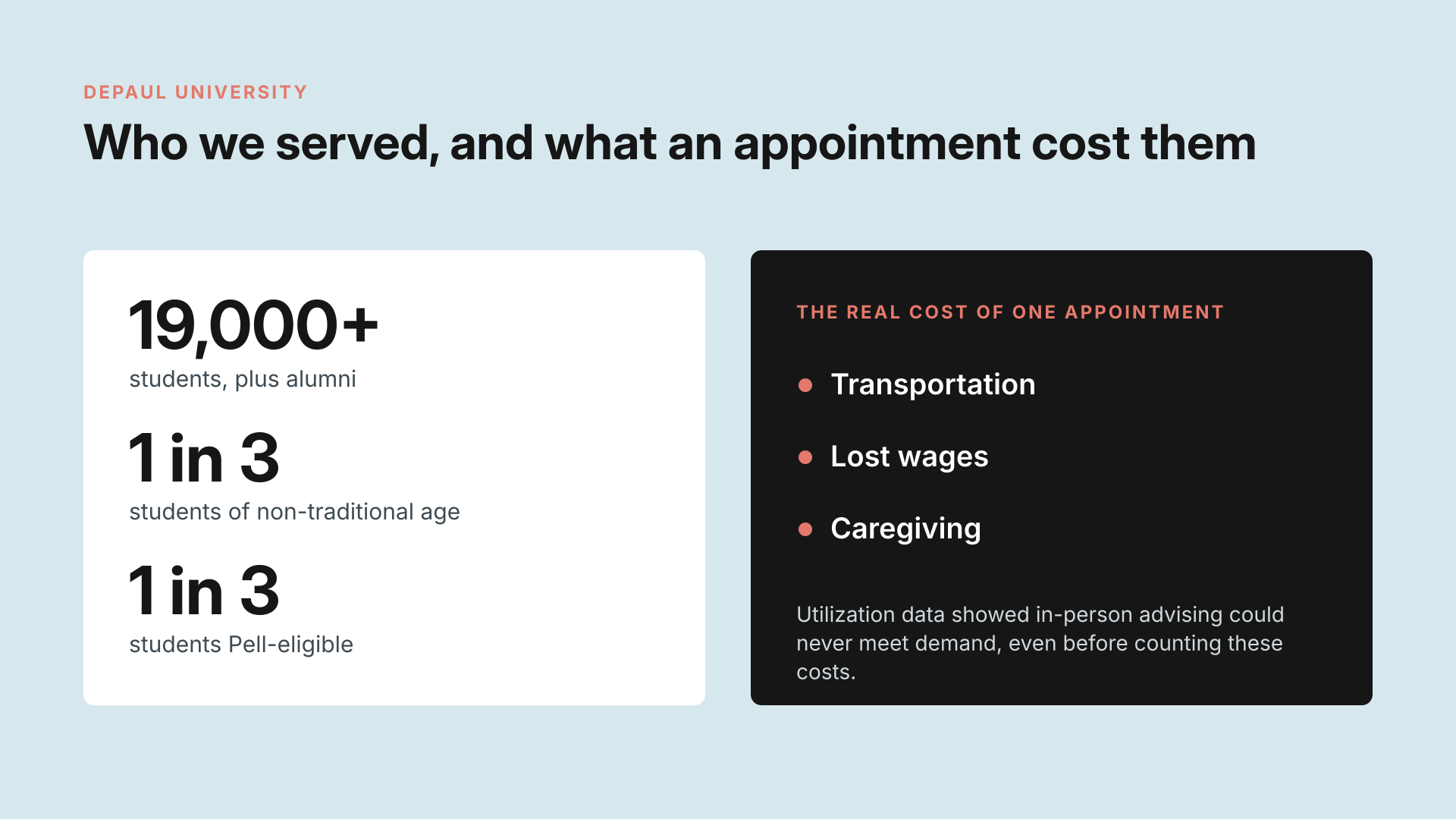
We advised more than 19,000 students plus alumni, and a third of our students were of non-traditional age and a third were Pell-eligible. Yet career help depended on one-on-one, college-based appointments. We counted appointments, event attendance, and page views, and tracked Net Promoter Score on its own. None of it told us who was not being served or whether an interaction helped anyone move forward.
What we learned
Learner personas showed who we were missing. Utilization and career outcomes data showed that in-person advising could never meet demand. Mapping the real cost of an appointment, including transportation, lost wages, and caregiving, showed who that model shut out.
What I did
- Replaced activity counts with one progress measure across 50+ initiatives: after any interaction, can the student name one specific next step?
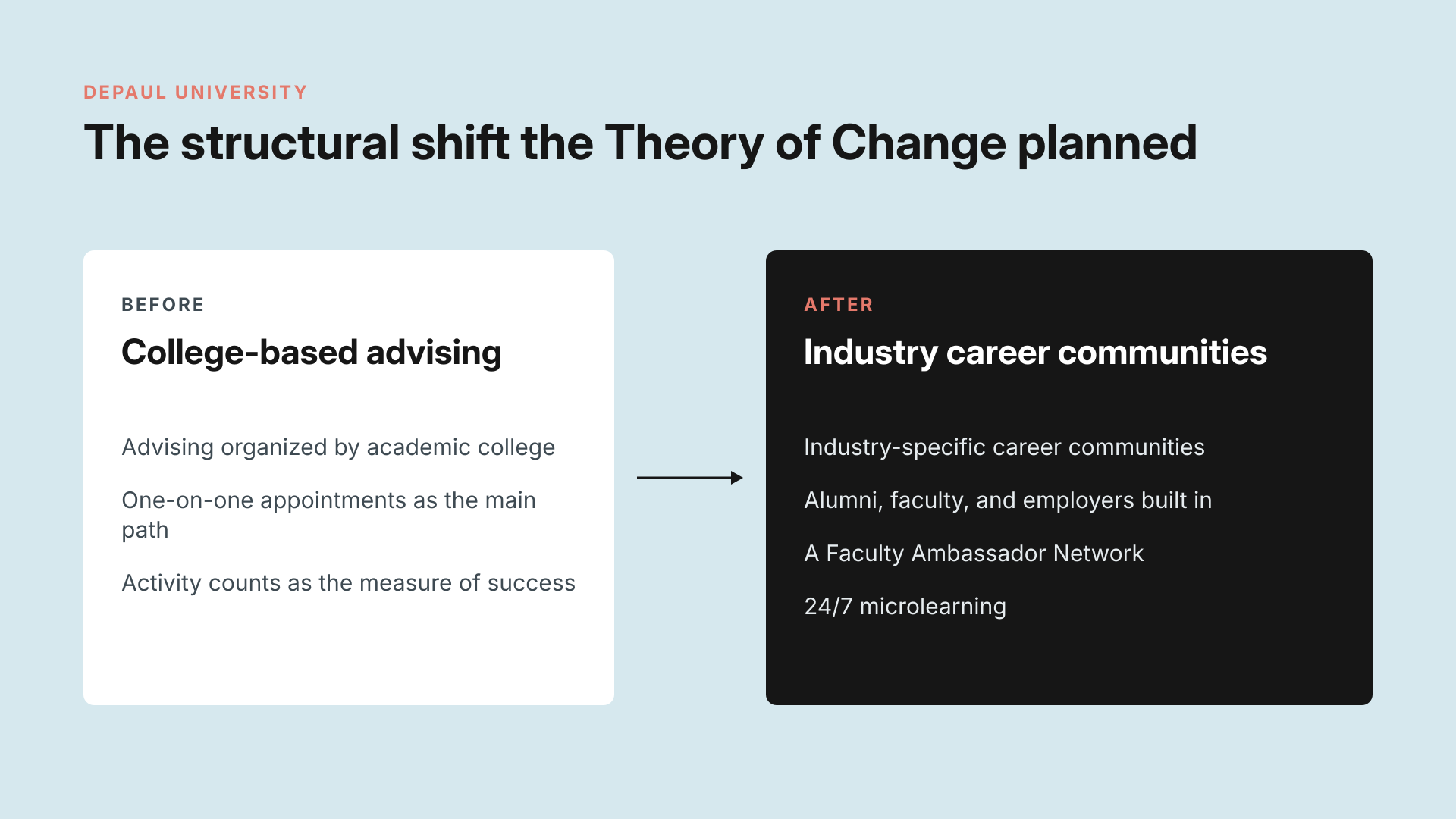
- Used a Theory of Change to plan the move from college-based advising to industry-specific career communities that brought in alumni, faculty, and employers, supported by 24/7 microlearning and a Faculty Ambassador Network.
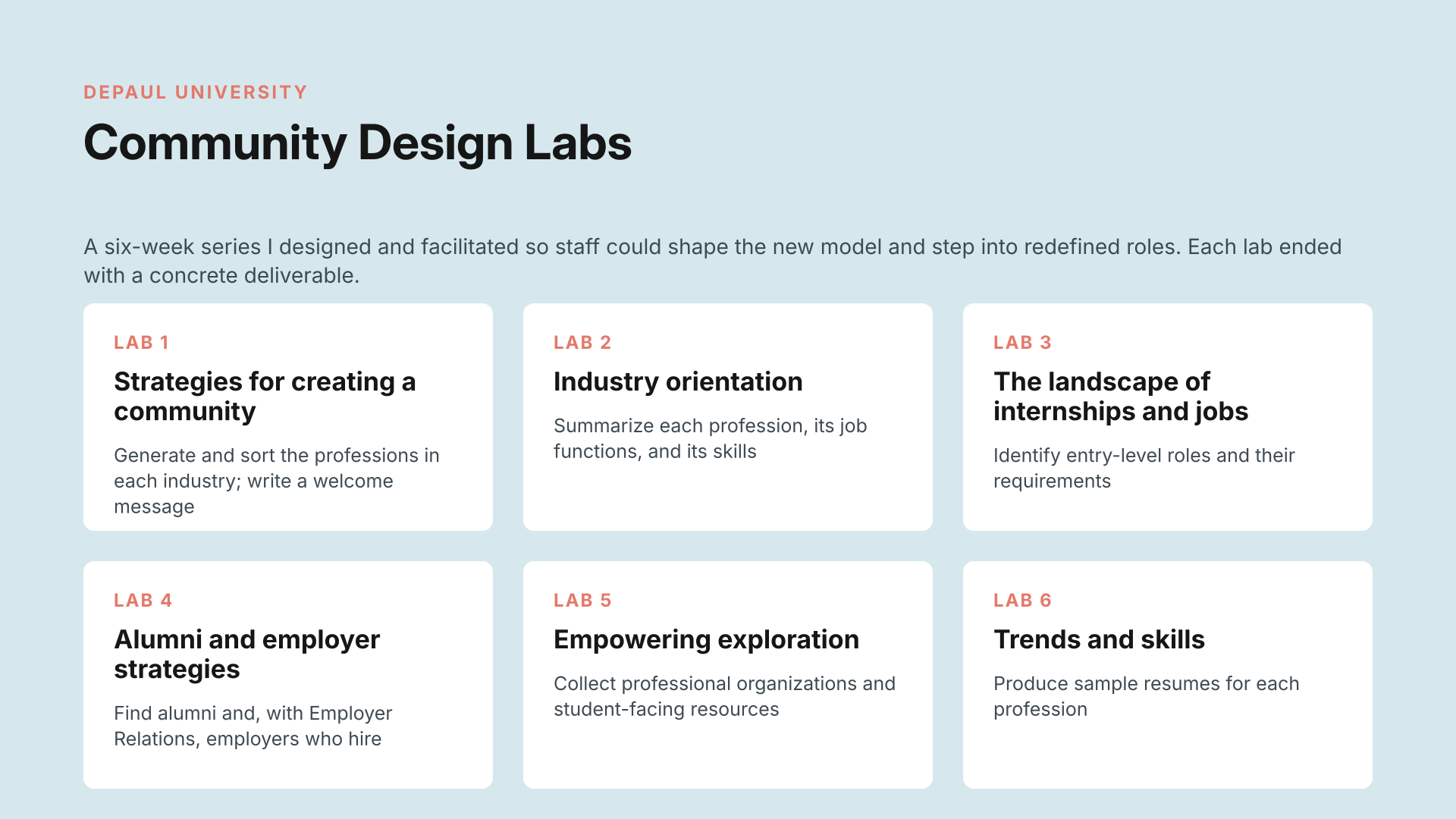
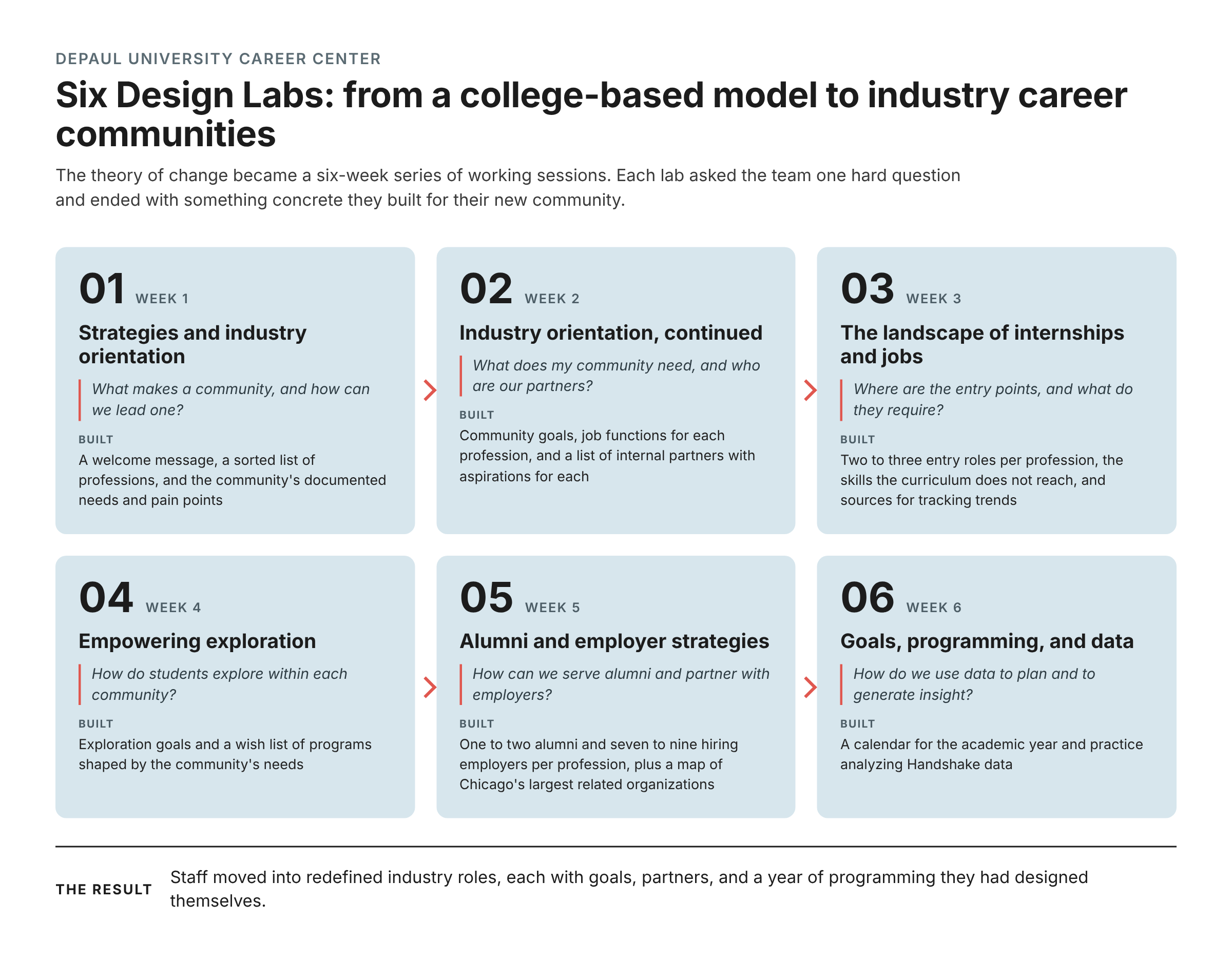
- Designed and facilitated the Design Labs that helped staff understand the new model, shape it, and move into redefined roles with clear competencies.
- Led the learning outcomes, success metrics, and assessment plan in the center's three-year strategic plan, and contributed to its data goal.
What changed
The progress measure surfaced equity gaps for first-generation students that the old numbers had hidden, and those findings drove a redesign of services for more than 19,000 students. I wrote about this approach in my essay Beyond the Metrics We Inherit.
5 slides · swipe or scroll sideways · tap a slide to open it full size
04. Listening before redesigning
DePaul University, peer advising redesign
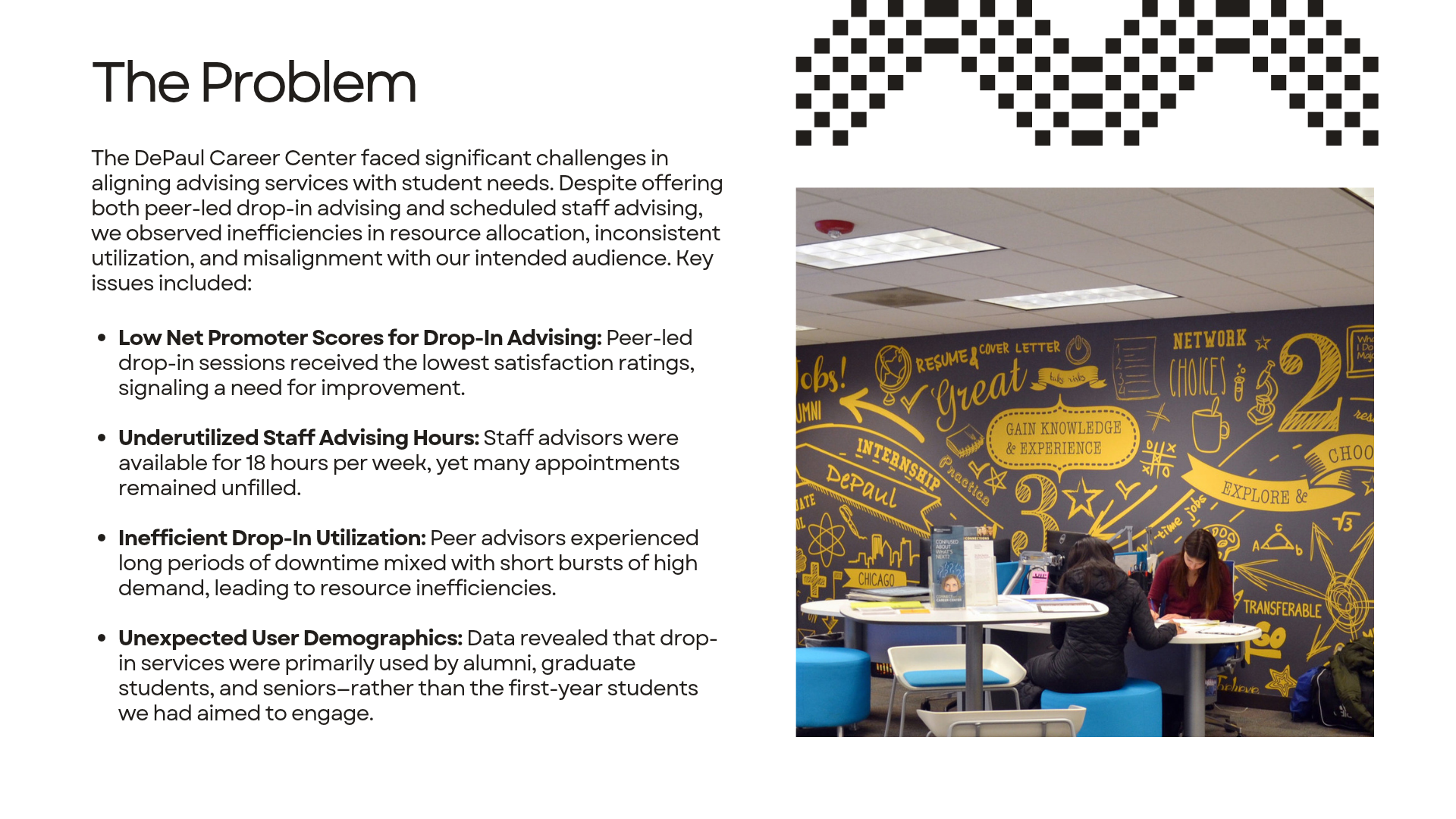
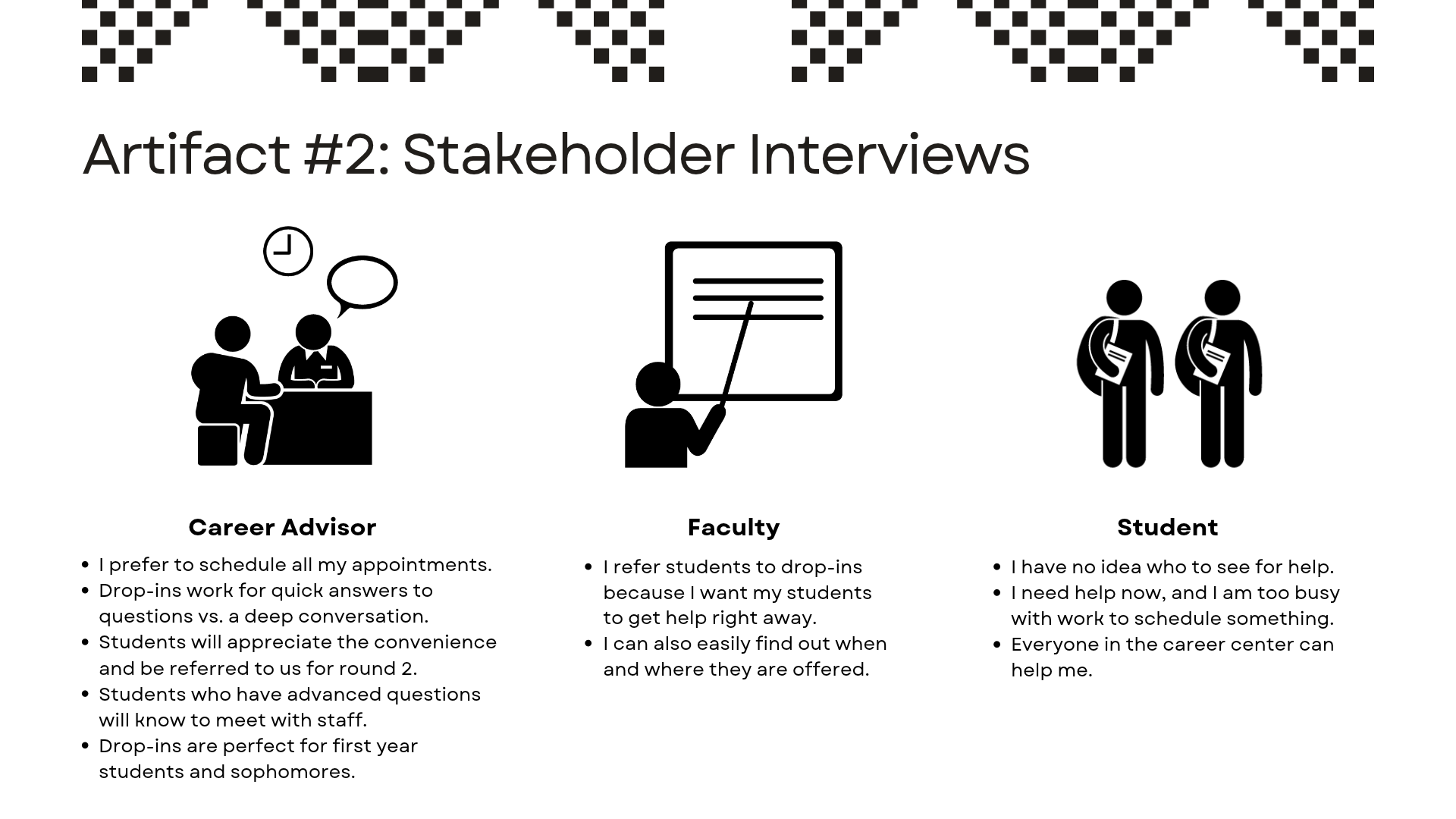
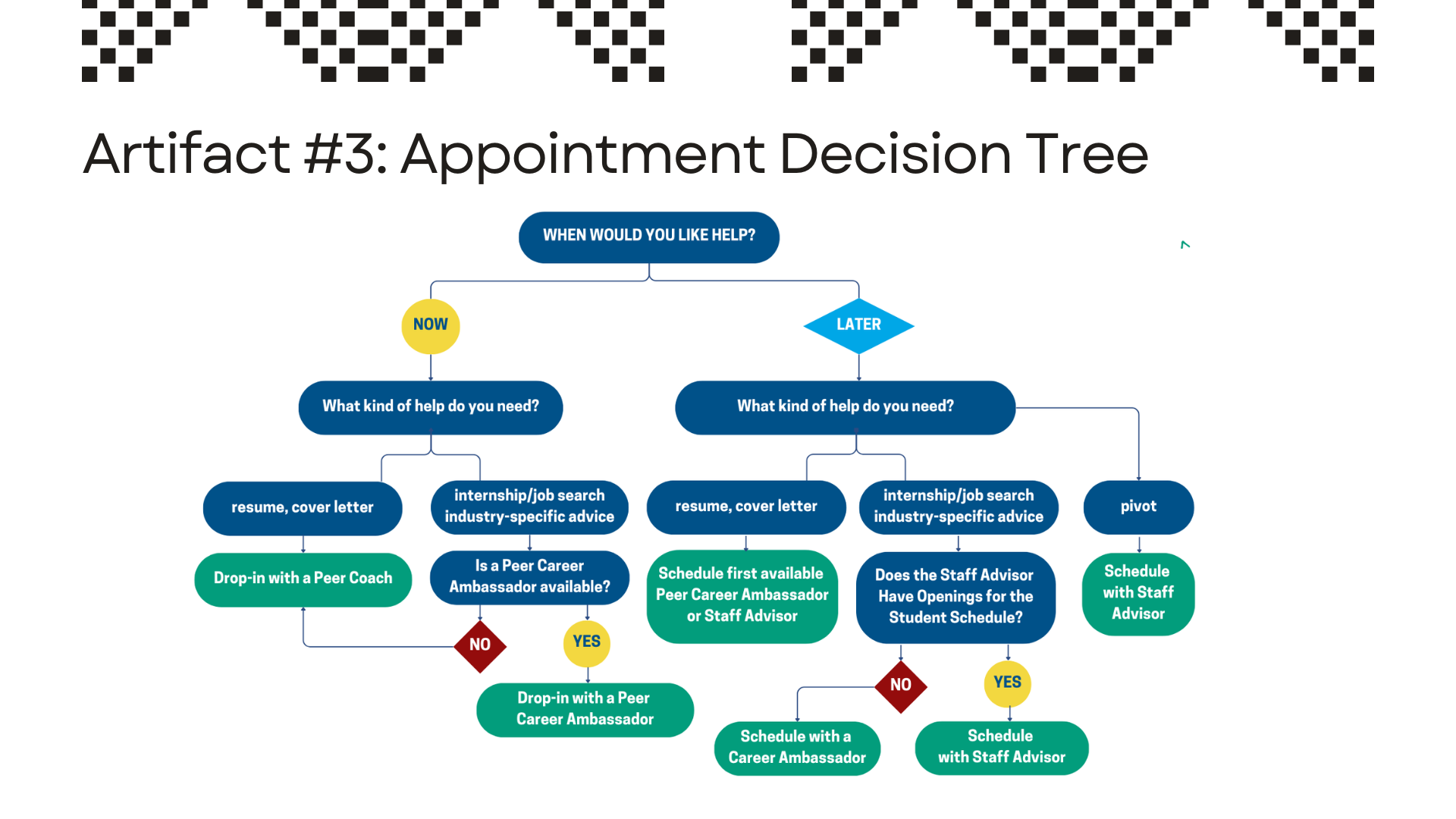
A service everyone assumed was working had the lowest satisfaction scores we offered. Instead of fixing the service we had, I asked the people using it, and the people sending students to it, what they actually needed.
What the data showed
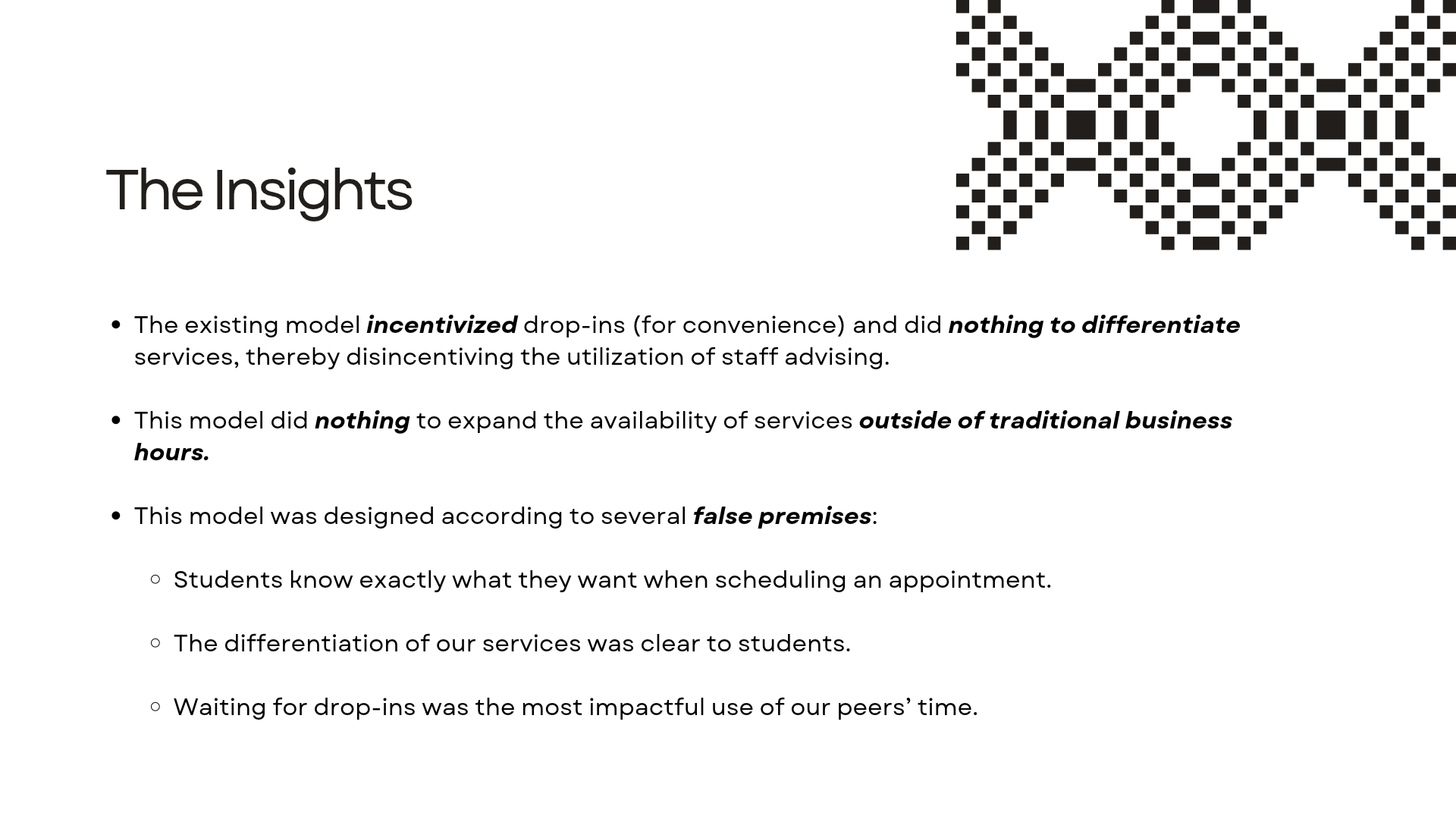
- Peer drop-in advising had our lowest Net Promoter Score.
- Staff advising hours went unfilled while peers sat idle, then faced long waits.
- Most drop-in users were alumni, graduate students, and seniors, not the first-year students the service was built for.
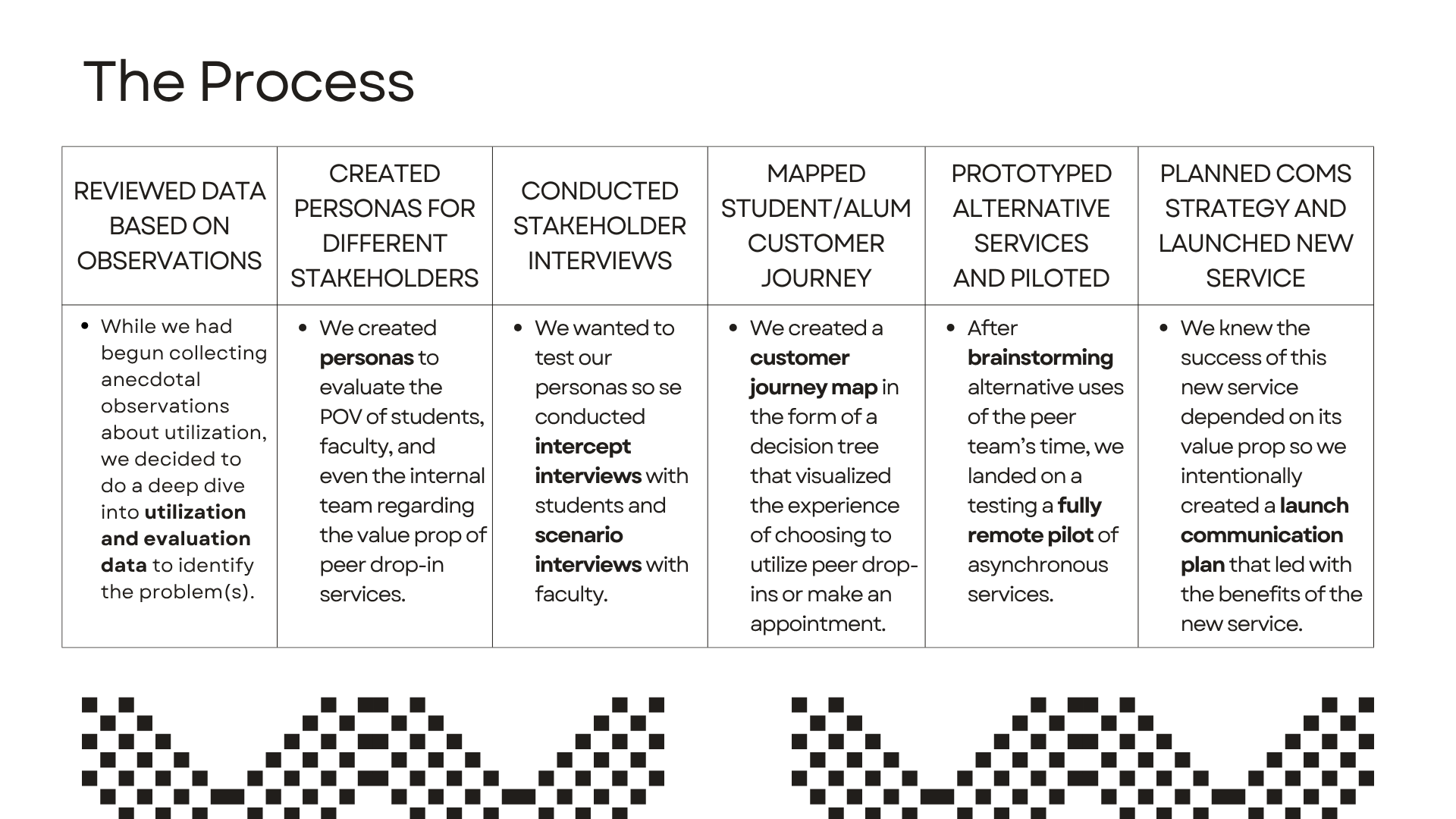
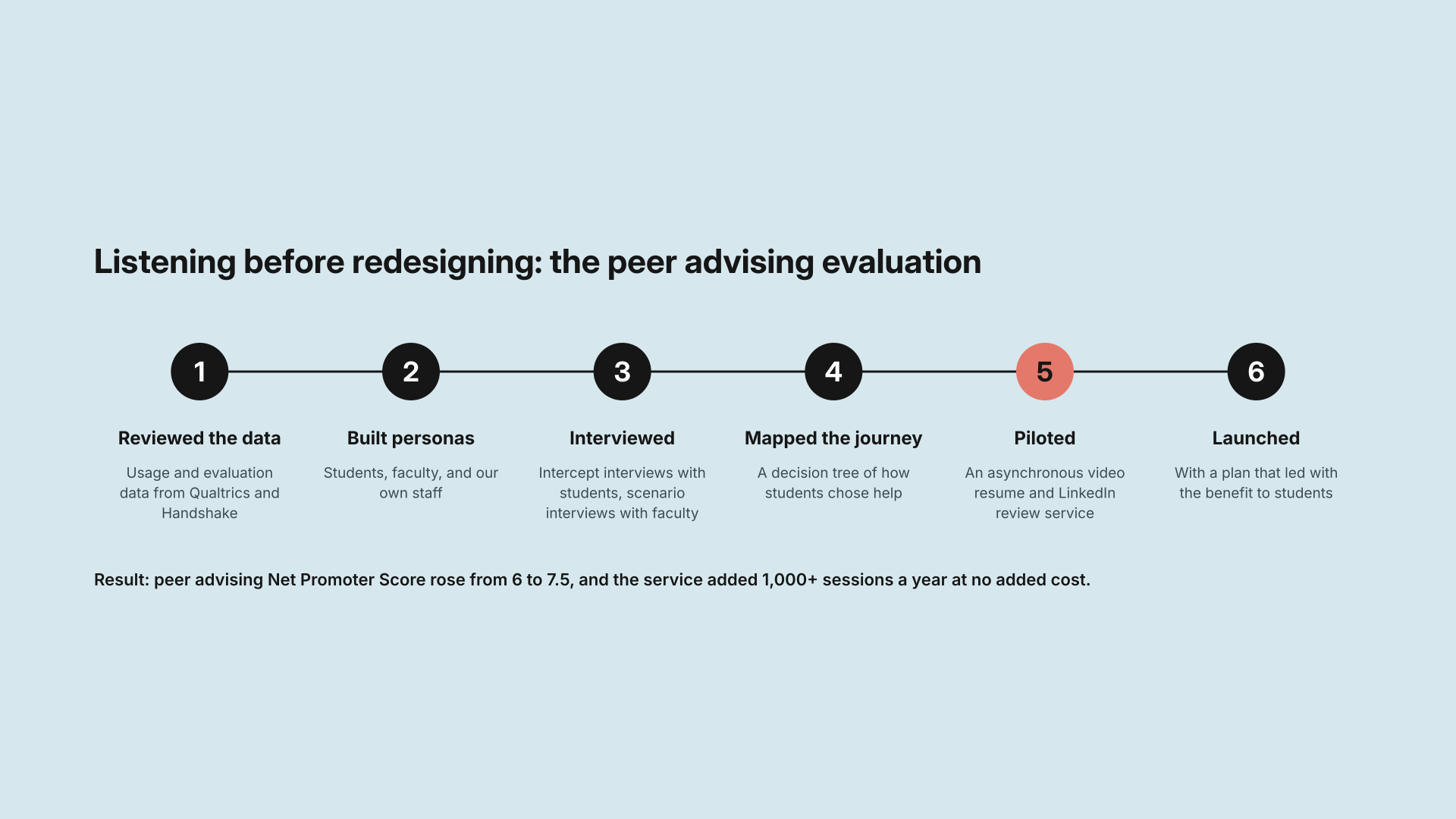
I designed and led the evaluation and the new service model, and collected and analyzed the Qualtrics and Handshake data, working with the associate director who led our peer team and the front desk coordinator whose observations started the inquiry.
What changed
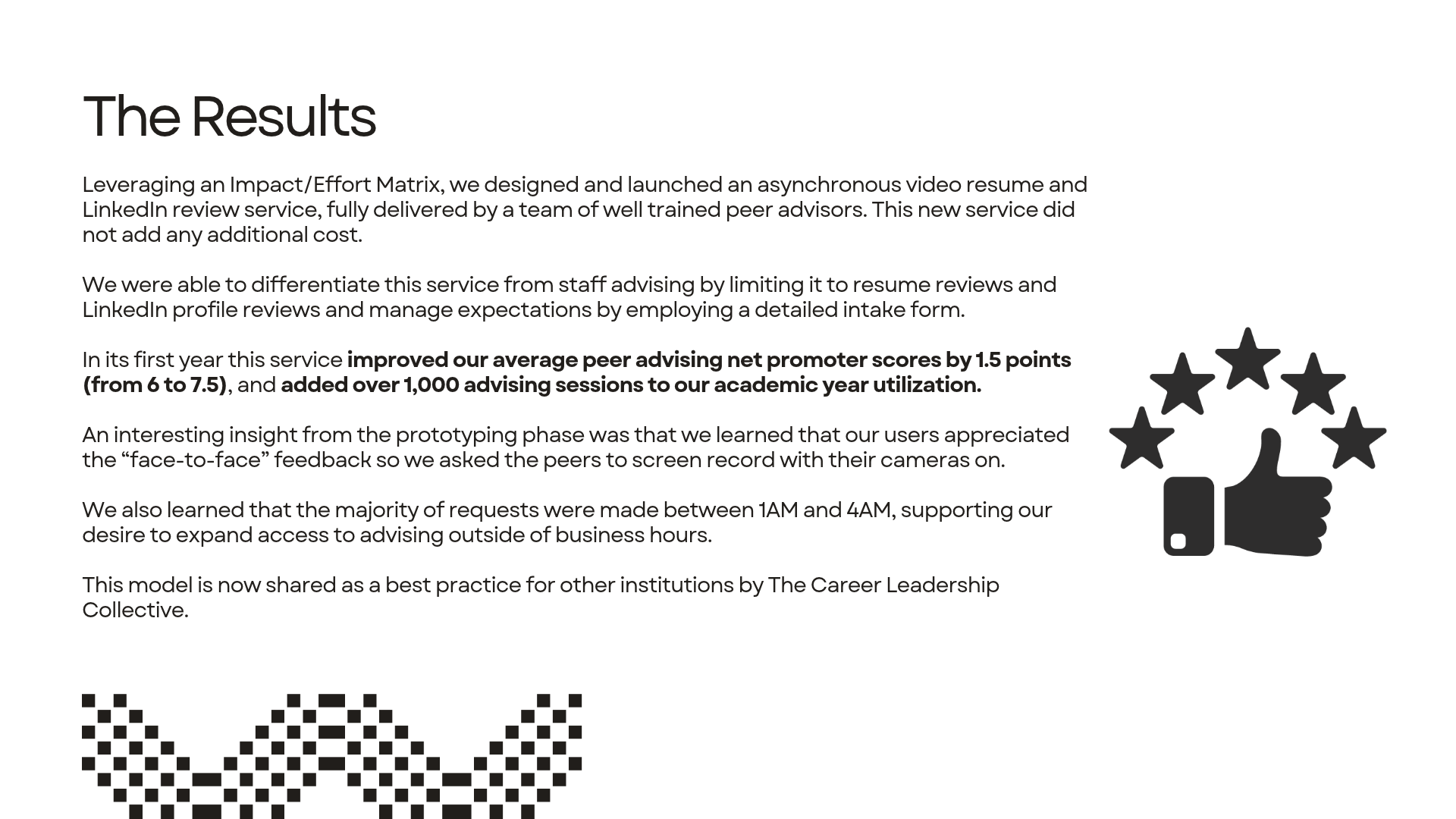
- Peer advising Net Promoter Score rose from 6 to 7.5 in the first year.
- The new asynchronous video resume and LinkedIn review service added more than 1,000 advising sessions a year at no added cost.
- Most requests arrived between 1 and 4 a.m., confirming the need for help outside business hours.
The Career Leadership Collective now shares this model with other institutions as a best practice, and I later trained member institutions in the same methods. The slides below are from the original case study.
8 slides · swipe or scroll sideways · tap a slide to open it full size
05. A credential quality framework
Career Leadership Collective
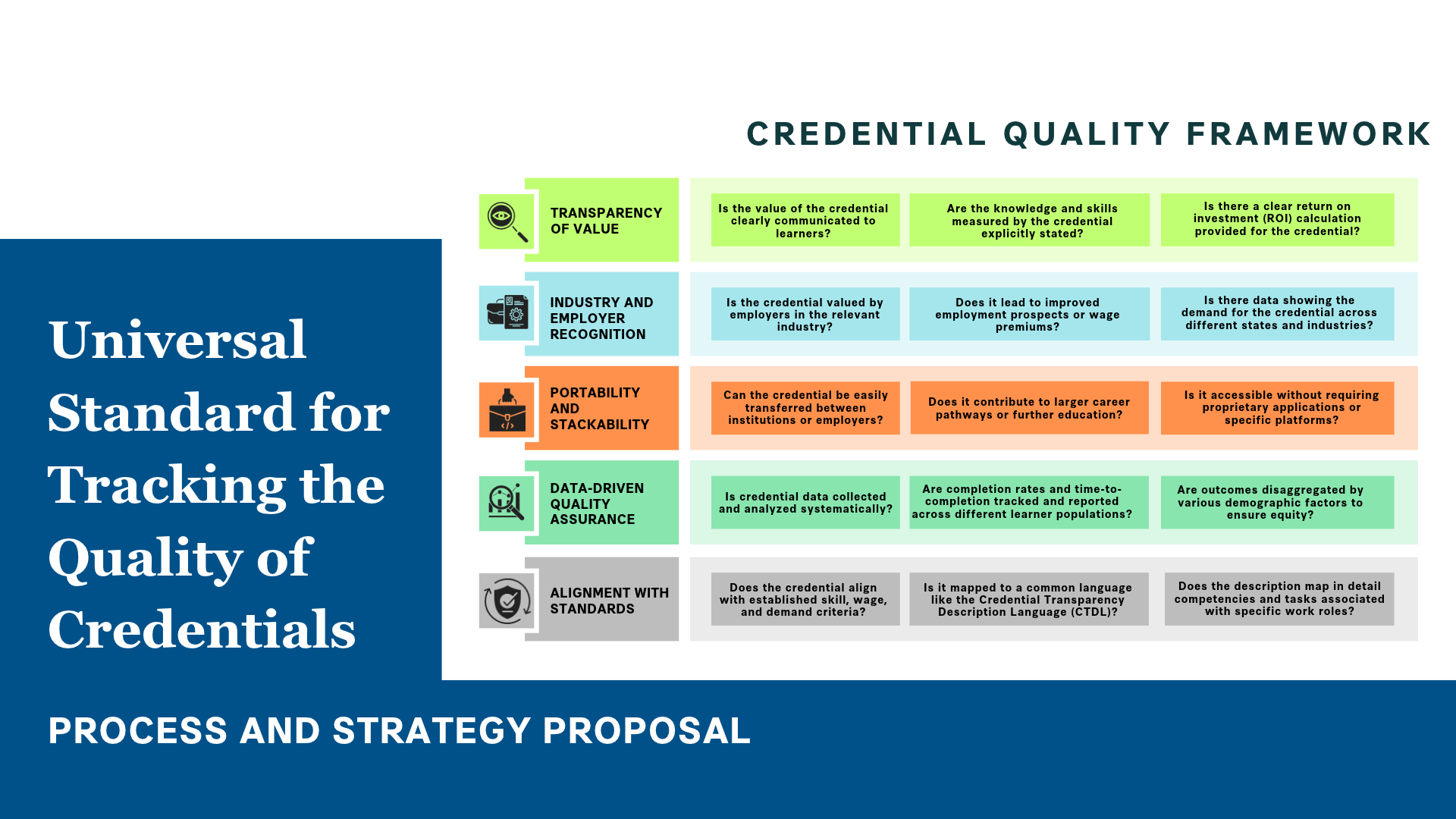
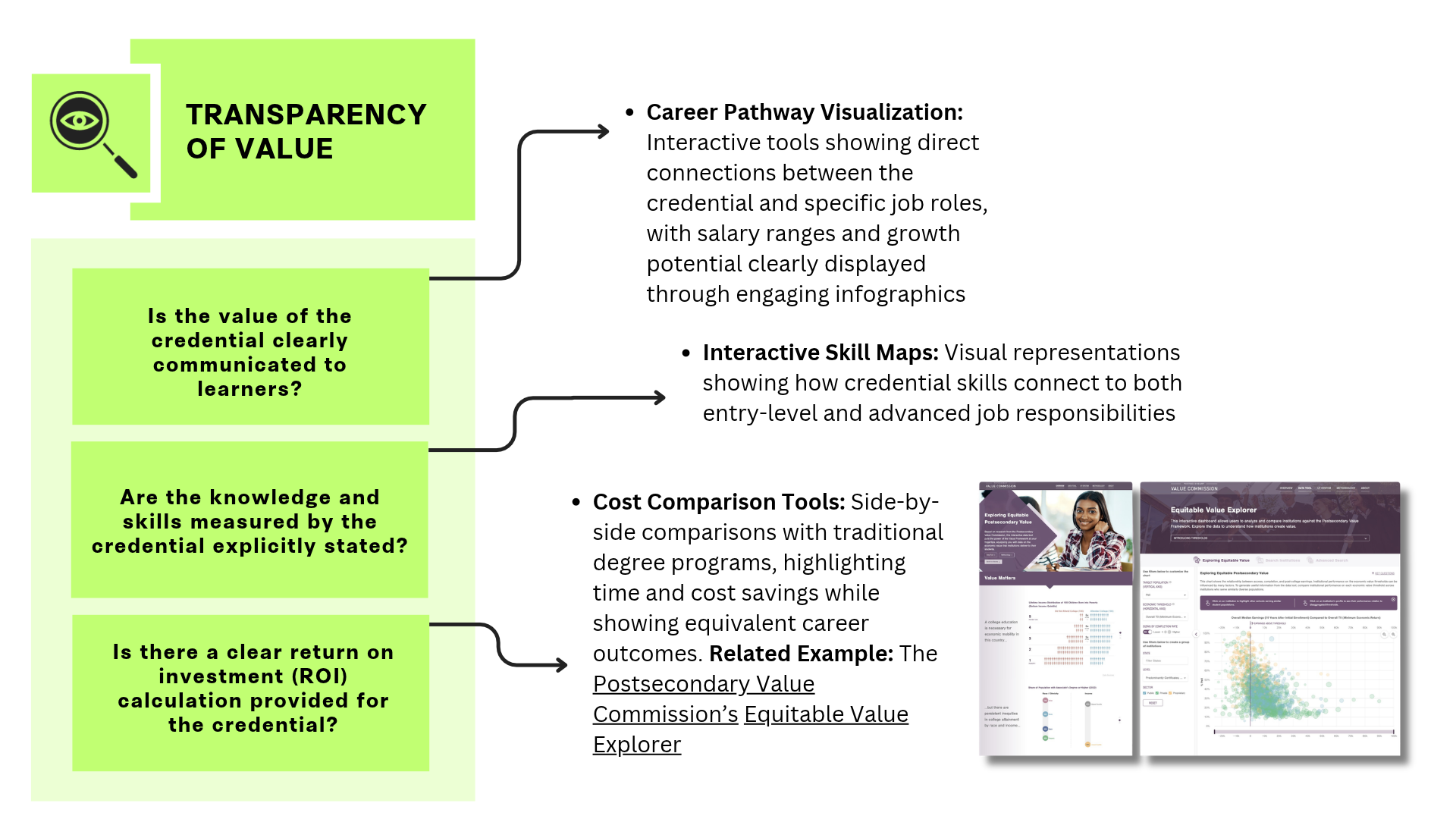
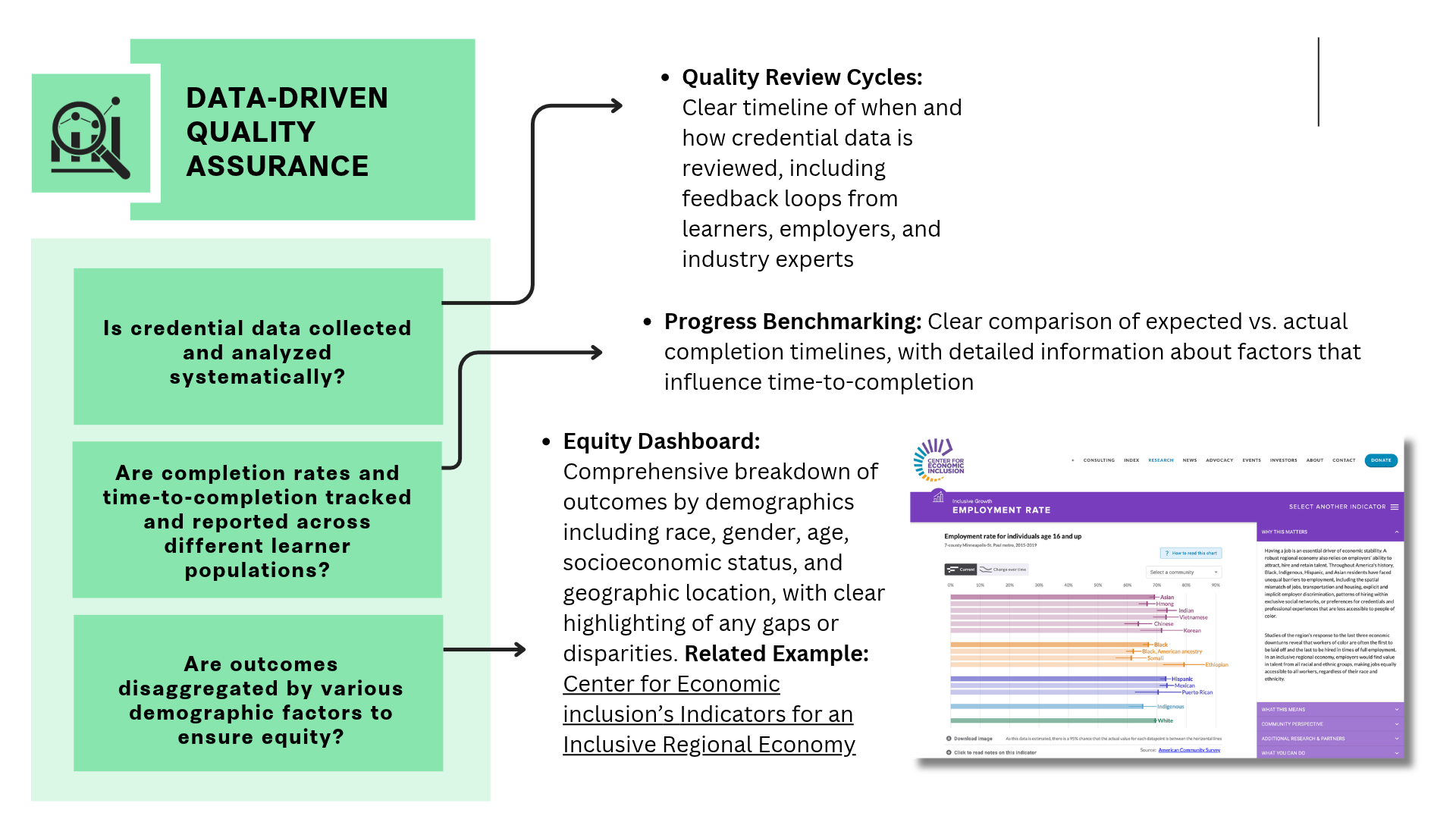
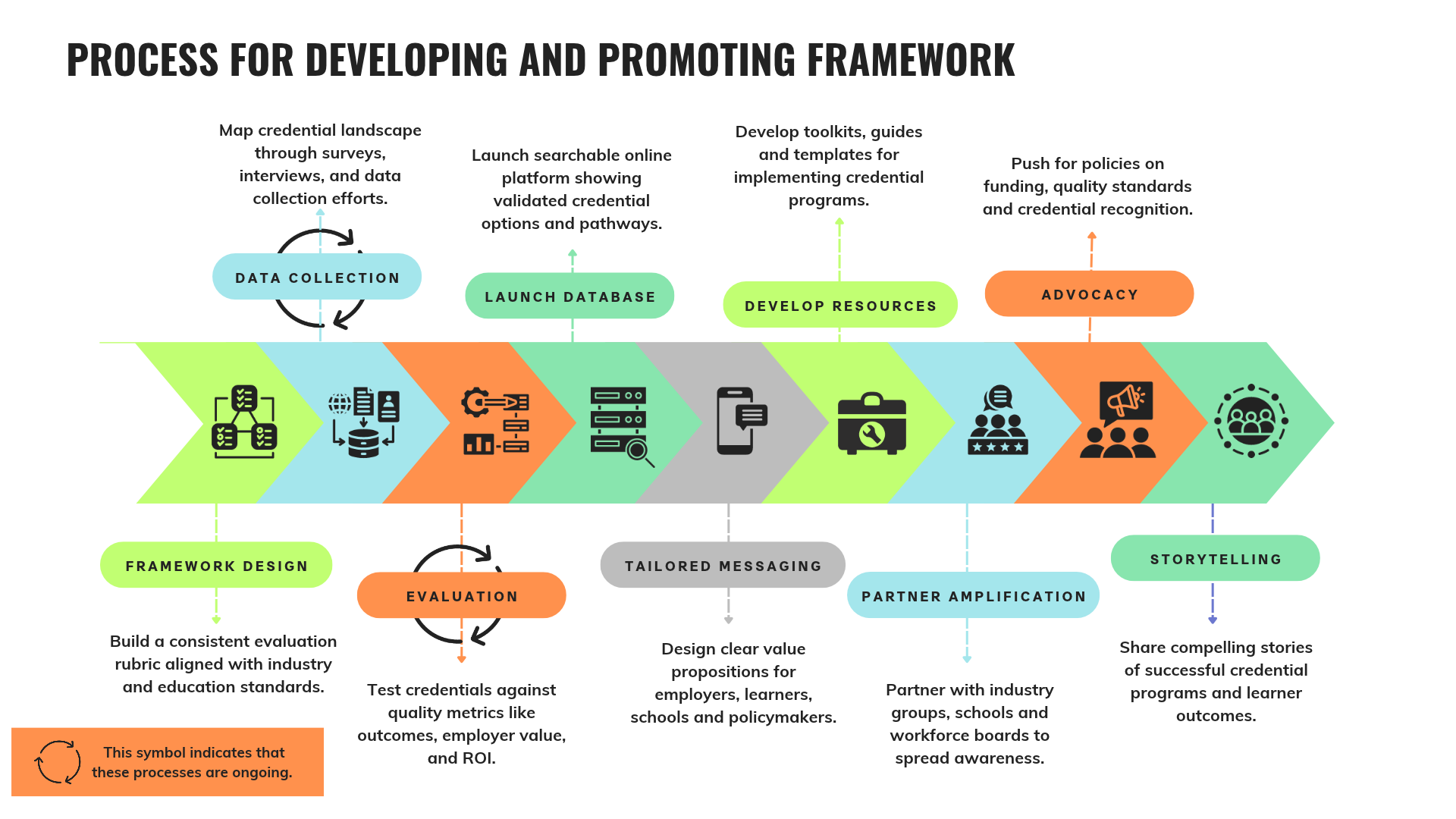
As short-term credentials multiplied, career centers needed a way to judge which ones were worth a learner's time and money. I designed a framework of five tests, each with plain questions an institution can answer, and built an equity check into it: outcomes must be broken out by student group, and completion tracked for every population. It was offered to the Collective's 500+ member institutions, along with a plan for data collection, an evaluation rubric, and resources to put it into practice. The slides below are from the original proposal.
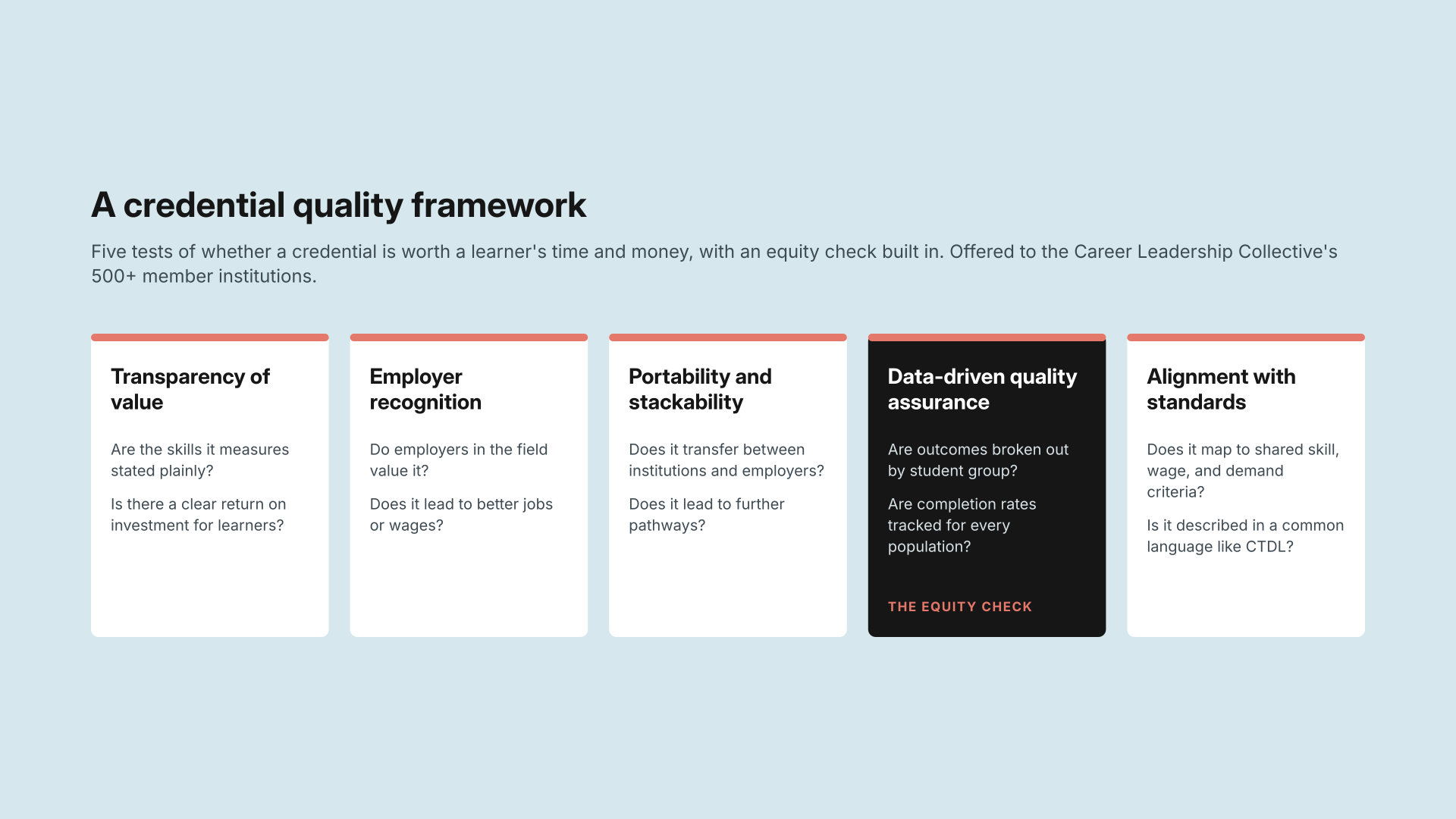
5 slides · swipe or scroll sideways · tap a slide to open it full size
06. Practice before the real conversation
CCIM Institute, Curriculum Program Manager
The problem
Commercial real estate professionals eventually have to defend an investment recommendation to a capital partner who is looking for holes in it. Most courses only ever ask learners to calculate the numbers. Our shared course platform could run only one generic AI persona, and every activity needed its own, so it couldn't give learners practice at that moment.
What I did
I designed and built Defend the Call, a roleplay on the Anthropic API and hosted on Netlify. Learners make a go or no-go call on a deal, then defend it to a skeptical AI capital partner, and they get scored feedback on their reasoning. Each activity sets up its own persona, so the challenge fits the case in front of the learner. I recruited senior instructors, mostly principals of brokerage and investment firms, to pilot it. I also wrote the AI guardrails and the AI-assisted course build SOPs that other staff designing courses now follow, so AI use doesn't depend on one person's judgment.
What changed
Practice that feels real used to require a live coach or a role-play partner. Now a learner can rehearse a hard conversation as often as they need before it happens for real, and the organization has standards in place for using AI in course building.
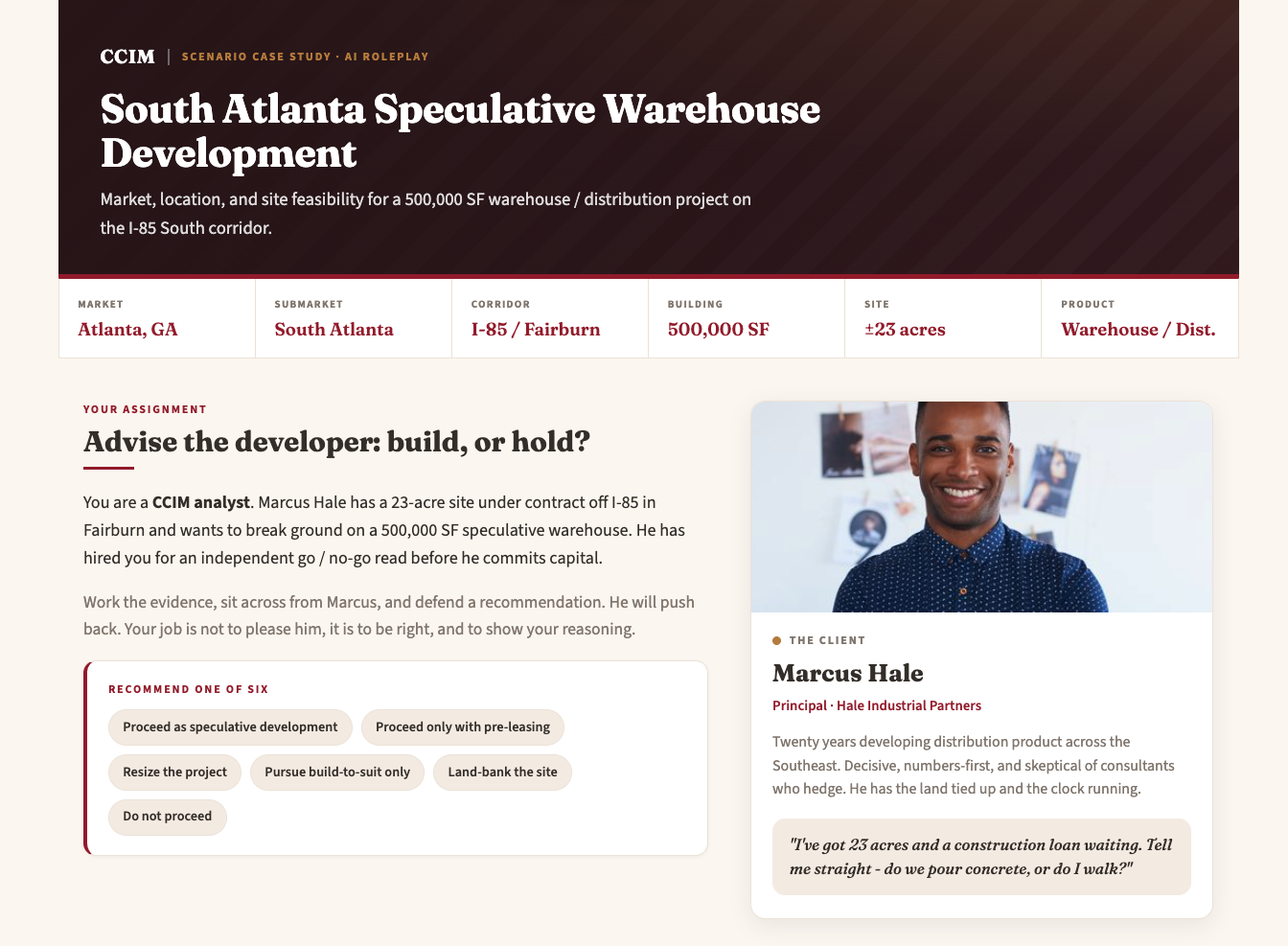
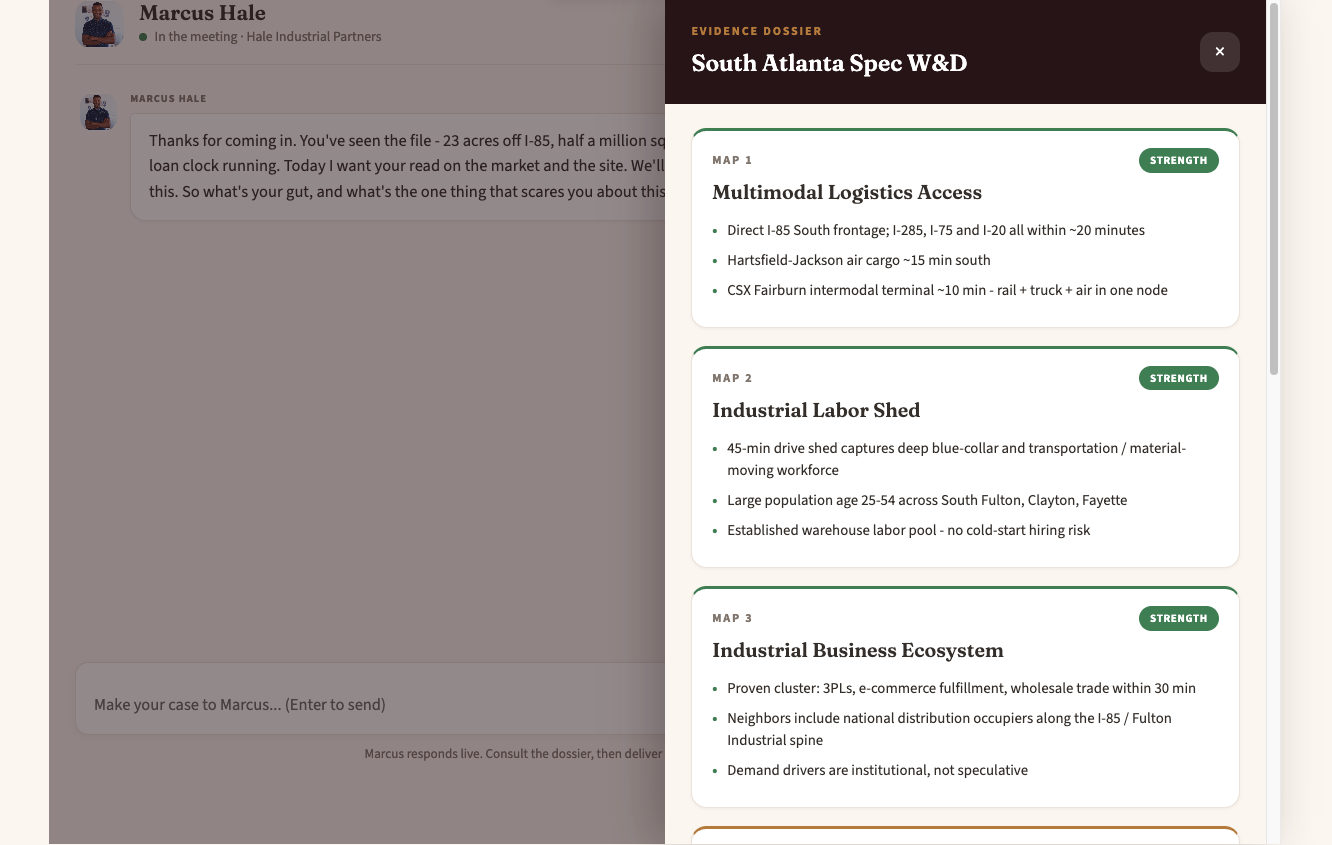
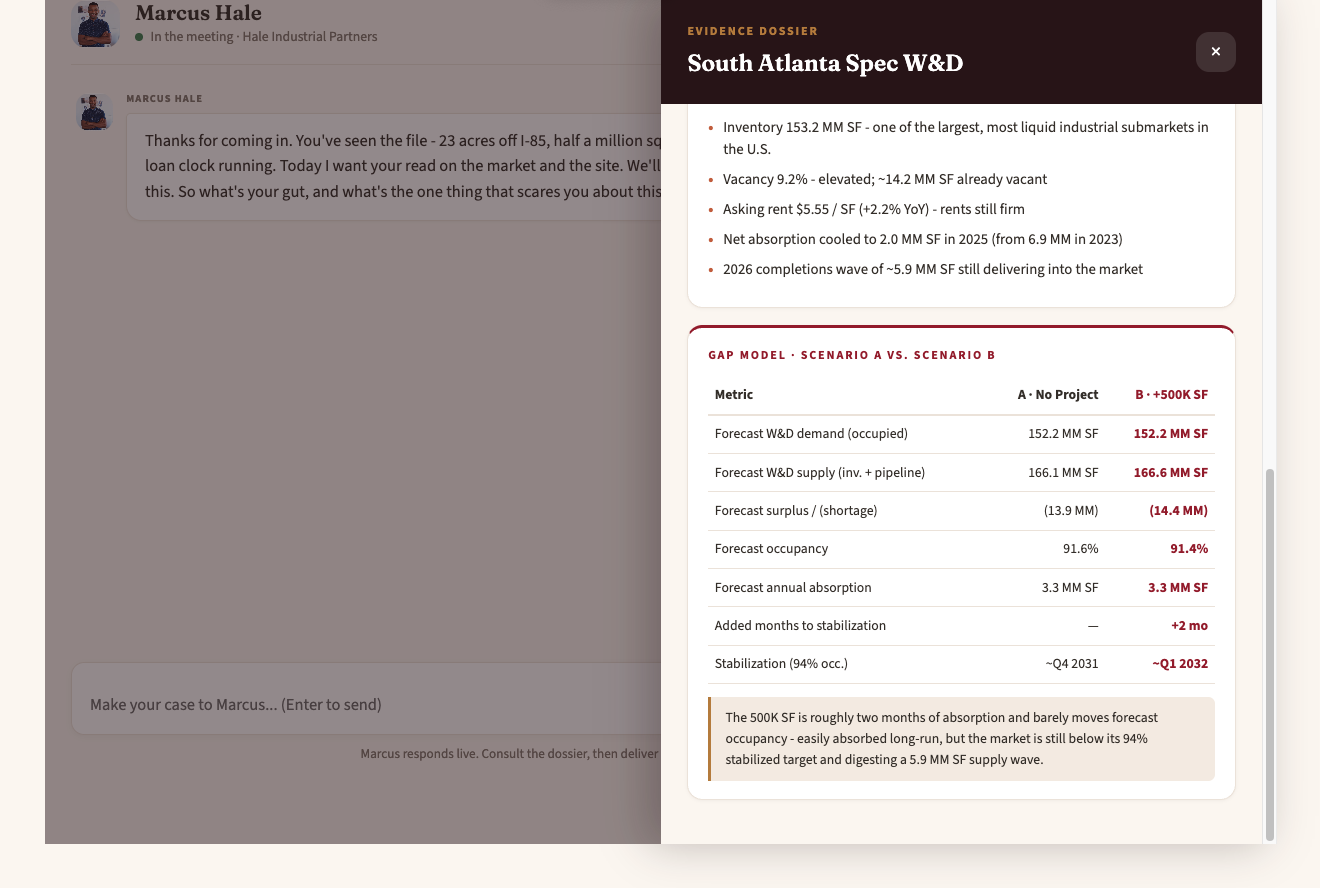
3 slides · swipe or scroll sideways · tap a slide to open it full size
Further reading and contact
My essay Beyond the Metrics We Inherit covers the DePaul measurement work in more depth.
Selected presentations
- AI, Tech, and the Future of Career Services, keynote, Career Leadership Collective, 2024
- Leveraging User Experience (UX) in Career Centers, Career Leadership Collective MASTERMIND Cohort, 2024
- Rethinking Student Engagement: Centering the Learner, Career Leadership Collective ASPIRE Cohort, 2023
- Disability Recruiting: College Students with Disabilities Share Their Experiences, Disability:IN Chicagoland, 2022
- Building Relationships with Universities to Recruit Students with Disabilities, Disability:IN Chicagoland, 2021
- Driving Virtual Participation in a Career Exploration Program, Yellowdig Webinar, 2021
- Creating a Micro-Learning Online Career Library, Career Leadership Collective Accelerator, 2020
- What Is Higher Education’s Biggest Responsibility Today?, Future of Skills, Pearson, 2018
Toolkits: Strategic Planning for Career Centers and Leveraging AI in Career Services (Career Leadership Collective).
Selected writing